|
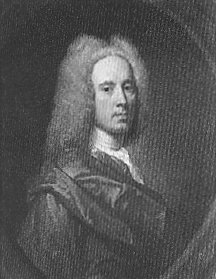 AIKMAN,
WILLIAM, a painter, of considerable merit, of the last century, was born, in
Aberdeenshire, October 24, 1682. His father was William Aikman of Cairney, a
man of eminence at the Scottish bar, who educated his son to follow his own
profession. But a predilection for the fine arts, and a love of poetry,
which gained him the friendship of Ramsay and Thomson, induced the youth to
give up studying for the law, and turn his attention to painting. Having
prosecuted his studies in painting for a time at home under Sir John Medina,
and also in England, he resolved to visit Italy, that he might complete his
education as an artist, and form his taste, by an examination of the classic
models of antiquity; and accordingly, in 1707, having sold his paternal
estate near Arbroath, that he might leave home untrammelled, he went to
Rome, where, during a period of three years, he put himself under the
tuition of the best masters. He afterwards visited Constantinople and
Smyrna, where the gentlemen of the English factory wished him to engage in
the Turkey trade; an overture which he declined; and returning to Rome, he
there renewed his studies for a time. In 1712, he revisited his native
country, and commenced practising his profession; but, though his works were
admired by the discerning few, he did not meet with adequate encouragement,
the public being too poor at that time to purchase elaborate works of art,
and the taste for such works being then too imperfectly formed. At this
period he formed an intimacy with Allan Ramsay, whose portrait he afterwards
painted. John, Duke of Argyle, who equally admired the artist and esteemed
the man, regretting that such talents should be lost, at length prevailed
upon Aikman, in 1723, to move with all his family to London. There, under
the auspices of his distinguished friend, he associated with the most
eminent British painters of the age, particularly Sir Godfrey Kneller, whose
studies and dispositions of mind were congenial with his own. The duke also
recommended him to many people of the first rank, particularly the Earl of
Burlington, so well known for his taste in architecture; and he was thus
able to be of much service to Thomson, who came to London soon after
himself, as a literary adventurer. He introduced the poet of "The
Seasons" to the brilliant literary circle of the day - Pope, Swift,
Gay, Arbuthnot, &co - and, what was perhaps of more immediate service,
to Sir Robert Walpole, who aimed at being thought a friend to men of genius.
Among the more intimate friends of Aikman, was William Somerville, author of
"The Chase," from whom he received an elegant tribute of the muse,
on his painting a full-length portrait of the poet in the decline of life,
carrying him back, by the assistance of another portrait to his youthful
days. This poem was never published in any edition of Somerville's works.
Aikman painted, for the Earl of Burlington, a large picture of the royal
family of England; all the younger branches being in the middle compartment,
on a very large canvas, and on one hand a full-length portrait of Queen
Caroline; the picture of the king (George II.) - that king who never could
endure "boetry or bainting," as he styled the two arts in his
broken English - intended for the opposite side, was never finished, owing
to the death of the artist. This was perhaps the last picture brought
towards a close by Aikman, and it is allowed to have been in his best style;
it came into the possession of the Duke of Devonshire by a marriage alliance
with the Burlingtan family. Some of his earlier works are in the possession
of the Argyle and Hamilton families in Scotland; his more mature and mellow
productions are chiefly to be found in England, and a large portion at
Blickling, in Norfolk, the seat of the Earl of Buckinghamshire; these are
chiefly portraits of noblemen, ladies, and gentlemen, friends of the earl.
He died June 4, 1731, at his house, in Leicester Fields, and by his own
desire, his body was taken to Scotland for interment; his only son, John (by
his wife Marion Lawson, daughter of Mr Lawson, of Cairnmuir, in Peeblesshire),
whose death immediately preceded his own, was buried in the same grave with
him, in the Greyfriars' churchyard, Edinburgh. A monument was erected over
the remains of Mr Aikman, with the following epitaph by Mallet, which has
been long since obliterated: - AIKMAN,
WILLIAM, a painter, of considerable merit, of the last century, was born, in
Aberdeenshire, October 24, 1682. His father was William Aikman of Cairney, a
man of eminence at the Scottish bar, who educated his son to follow his own
profession. But a predilection for the fine arts, and a love of poetry,
which gained him the friendship of Ramsay and Thomson, induced the youth to
give up studying for the law, and turn his attention to painting. Having
prosecuted his studies in painting for a time at home under Sir John Medina,
and also in England, he resolved to visit Italy, that he might complete his
education as an artist, and form his taste, by an examination of the classic
models of antiquity; and accordingly, in 1707, having sold his paternal
estate near Arbroath, that he might leave home untrammelled, he went to
Rome, where, during a period of three years, he put himself under the
tuition of the best masters. He afterwards visited Constantinople and
Smyrna, where the gentlemen of the English factory wished him to engage in
the Turkey trade; an overture which he declined; and returning to Rome, he
there renewed his studies for a time. In 1712, he revisited his native
country, and commenced practising his profession; but, though his works were
admired by the discerning few, he did not meet with adequate encouragement,
the public being too poor at that time to purchase elaborate works of art,
and the taste for such works being then too imperfectly formed. At this
period he formed an intimacy with Allan Ramsay, whose portrait he afterwards
painted. John, Duke of Argyle, who equally admired the artist and esteemed
the man, regretting that such talents should be lost, at length prevailed
upon Aikman, in 1723, to move with all his family to London. There, under
the auspices of his distinguished friend, he associated with the most
eminent British painters of the age, particularly Sir Godfrey Kneller, whose
studies and dispositions of mind were congenial with his own. The duke also
recommended him to many people of the first rank, particularly the Earl of
Burlington, so well known for his taste in architecture; and he was thus
able to be of much service to Thomson, who came to London soon after
himself, as a literary adventurer. He introduced the poet of "The
Seasons" to the brilliant literary circle of the day - Pope, Swift,
Gay, Arbuthnot, &co - and, what was perhaps of more immediate service,
to Sir Robert Walpole, who aimed at being thought a friend to men of genius.
Among the more intimate friends of Aikman, was William Somerville, author of
"The Chase," from whom he received an elegant tribute of the muse,
on his painting a full-length portrait of the poet in the decline of life,
carrying him back, by the assistance of another portrait to his youthful
days. This poem was never published in any edition of Somerville's works.
Aikman painted, for the Earl of Burlington, a large picture of the royal
family of England; all the younger branches being in the middle compartment,
on a very large canvas, and on one hand a full-length portrait of Queen
Caroline; the picture of the king (George II.) - that king who never could
endure "boetry or bainting," as he styled the two arts in his
broken English - intended for the opposite side, was never finished, owing
to the death of the artist. This was perhaps the last picture brought
towards a close by Aikman, and it is allowed to have been in his best style;
it came into the possession of the Duke of Devonshire by a marriage alliance
with the Burlingtan family. Some of his earlier works are in the possession
of the Argyle and Hamilton families in Scotland; his more mature and mellow
productions are chiefly to be found in England, and a large portion at
Blickling, in Norfolk, the seat of the Earl of Buckinghamshire; these are
chiefly portraits of noblemen, ladies, and gentlemen, friends of the earl.
He died June 4, 1731, at his house, in Leicester Fields, and by his own
desire, his body was taken to Scotland for interment; his only son, John (by
his wife Marion Lawson, daughter of Mr Lawson, of Cairnmuir, in Peeblesshire),
whose death immediately preceded his own, was buried in the same grave with
him, in the Greyfriars' churchyard, Edinburgh. A monument was erected over
the remains of Mr Aikman, with the following epitaph by Mallet, which has
been long since obliterated: -
Dear to the good and wise,
dispraised by none,
Here sleep in peace the father and the son.
By virtue as by nature close allied
The painter’s genius but without the pride.
Worth unambitious, wit afraid to shine
Honour’s clear light, and friendship's warmth divine.
The son, fair-raising, knew too short a date;
But O how more severe the parent's fate!
He saw him torn untimely from his side,
Felt all a father’s anguish - wept, and died.
The following verses, in
which Thomson bewails him with all the warmth of grateful friendship, are
only partially printed in that poet's works: -
O could I draw, my friend, thy
genuine mind,
Just as the living forms by thee designed!
Of Raphael's figure, none should fairer shine,
Nor Titian's colours longer last than thine.
A mind in wisdom old, in lenience young,
From fervid truth, whence every virtue sprung;
Where all was real, modest, plain, sincere;
Worth above show, and goodness unsevere.
Viewed round and round, as lucid diamonds show,
Still, as you turn them, a revolving glow;
So did his mind reflect with secret ray,
In various virtues, Heaven’s eternal day.
Whether in high discourse it soared sublime
And sprung impatient o’er the bounds of time,
Or wandering nature o’er with raptured eye,
Adored the hand that turned yon azure sky:
Whether to social joy he bent his thought,
And the right poise that mingling passions sought,
Gay converse blest, or, in the thoughtful grove,
Bid the heart open every source of love:
In varying lights, still set before our eyes
The just, the good, the social, and the wise.
For such a death who can, who would refuse,
The friend a tear, a verse the mournful muse?
Yet pay we must acknowledgement to Heaven,
Though snatch’d so soon, that AIKMAN e’er was given.
Grateful from nature’s banquet let us rise,
Nor leave the banquet with reluctant eyes;
A friend, when dead, is but removed from sight,
Sunk in the luster of eternal light;
And, when the parting storms of life are o’er,
May yet rejoin us on a happier shore.
As those we love decay, we die in part;
String after string is severed from the heart;
Till loosened life at last – but breathing clay –
Without one pang is glad to fall away.
Unhappy he who latest feels the blow,
Whose eyes have wept o’er every friend laid low;
Dragged lingering on from partial death to death,
And, dying, all he can resign is breath.
On his style of painting, Aikman seems to
have aimed at imitating nature in her most simple forms; his lights are
soft, his shades mellow, and his colouring mild and harmonious. His touch
has neither the force nor the harshness of Rubens; nor does he, like
Reynolds, adorn his portraits with the elegance of adventitious graces. His
compositions are distinguished by a placid tranquility, rather than a
striking brilliancy of effect; and his portraits may be more readily
mistaken for those of Kneller than for the works of any other eminent
artist. |



