|
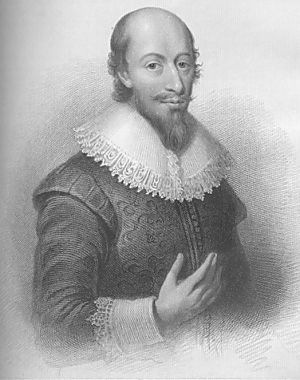 GORDON, ROBERT, of Straloch,
an eminent geographer and antiquary, was born at Kinnundy in Aberdeenshire,
on the 14th September, 1580. He was the second son of Sir John
Gordon of Pitlurg, a gentleman who long stood high in the favouor of his
sovereign, James VI., as appears, amongst other circumstances, from some
curious letters addressed to him by that monarch, in one of which he is
laid under contribution, though in the most affectionate terms, for a
horse for the king’s approaching marriage, and in another is warmly
invited to the baptism of the unfortunate Charles I. GORDON, ROBERT, of Straloch,
an eminent geographer and antiquary, was born at Kinnundy in Aberdeenshire,
on the 14th September, 1580. He was the second son of Sir John
Gordon of Pitlurg, a gentleman who long stood high in the favouor of his
sovereign, James VI., as appears, amongst other circumstances, from some
curious letters addressed to him by that monarch, in one of which he is
laid under contribution, though in the most affectionate terms, for a
horse for the king’s approaching marriage, and in another is warmly
invited to the baptism of the unfortunate Charles I.
Robert Gordon received the
first rudiments of his education at Aberdeen, and having passed the usual
course of the humanity, mathematical, and philosophical classes, was the first
graduate of the Marischal university, then recently founded by George earl
of Marischal. In 1598, being in his eighteenth year, he was sent to Paris
to complete his education. Here he remained for two years. On his father’s
death, which happened in 1600, he returned to Scotland, and in 1608,
having married a daughter of Alexander Irvine of Lenturk, he bought the
estate of Straloch, ten miles north of Aberdeen, and now devoted himself
to the pursuit of his favourite studies, geography, history, and the
antiquities of Britain. To the first of these he seems to have been
especially attached, and it was his perseverance, industry, and accuracy
in this science, then in an extremely rude state, which first obtained him
the celebrity which he afterwards enjoyed. There were only at this time
three maps of Scotland in existence, all of them so rude and inaccurate as
to be wholly useless. The inaccuracy of these sketches had been long
known, and was the subject of great and universal complaint. Urged on by
this, and the general dissatisfaction, Mr Gordon employed himself in
making geographical surveys by actual mensuration; a labour which
none of his predecessors had ever subjected themselves to. He has,
therefore, the merit of being the first who applied this indispensable but
tedious and laborious process for securing accuracy in topographical
surveys, to Scotland.
One consequence of Mr
Gordon’s zeal and industry in these patriotic pursuits, was a great
extension of his celebrity, which at length even reached the royal ear. In
1641, king Charles was applied to by the celebrated map and atlas
publishers, the Bleaus of Amsterdam, for his patronage of an atlas of
Scotland, which they were then contemplating, and requesting his majesty
to appoint some qualified persons to assist them with information for the
intended work; and, in especial, to arrange and amend certain geographic
sketches of one Timothy Pont, [Son of Mr Robert Pont, minister of the West
Kirk, Edinburgh.] of which they had been previously put in possession, but
in a confused and mutilated state. This task, king Charles, in the
following flattering letter, devolved upon Mr Gordon. "Having lately
seen certain charts of divers shires of this our ancient kingdom, sent
here from Amsterdam, to be corrected and helpit in the defects thereof,
and being informed of your sufficiency in that art, and of your love both
to learning and to the credit of your nation; we have therefore thought
fit hereby, earnestly to entreat you to take so much pains as to revise
the said charts, and to help them in such things as you find deficient
thereuntil, that they may be sent back by the direction of our chancellor
to Holland; which, as the same will be honourable for yourself, so shall
it do us good and acceptable service, and if occasion present we shall not
be unmindful thereof. From our palace of Holyrood house, the 8th October,
1641."
Mr Gordon readily undertook
the task thus imposed upon him, and in 1648, the atlas was published with
a dedication from Mr Gordon to Sir John Scott of Scotstarvit, who had
greatly encouraged and forwarded the work. A second edition of this atlas,
which was long the standard book of reference for Scotland, and its
numerous islands, was published in 1655, and a third in 1664. It is now,
of course, superseded by later and more scientific surveys.
The work consists of 46
maps, general and particular, with ample descriptions and detached
treatises on the antiquities of Scotland. Of such importance was this
undertaking considered, that, wild and disordered as the times were, Mr
Gordon was during its progress made a special object of the care and
protection of the legislature. An act of parliament was passed exempting
him from all new taxations, and relieving him from the quartering
of soldiers. To carry this law into effect, orders were issued from tine
to time by the various commanders of the forces in North Britain,
discharging all officers and soldiers, as well horse as foot, from
troubling or molesting, or quartering on Mr Robert Gordon of Straloch, his
house, lands, or tenants, and from levying any public dues on the said Mr
Robert Gordon, or on any of his possessions.
The charts exclusively
executed by Mr Gordon were,: 1st. A chart of Great Britam and Ireland,
taken from Ptolemy, and the most ancient Roman authors. 2d. A map of
ancient Scotland, as described in the Roman Itineraries. 3d. A map of
modern Scotland. 4th. A map of the county of Fife, from actual Survey and
mensuration. 5th. A map of the counties of Aberdeen and Banff, with part
of the county of Kincardine. 6th. A large map or geographical view, taken
from actual survey,of the most inland provinces of Scotland, lying between
the river Tay and the Murray frith. 7. A large map, from actual survey, of
eh most northern, mountainous, and inaccessible parts of Scotland,
including part of the island of Sky. To all of these Mr Gordon appended
treatises, descriptive of every thing remarkable contained within their
various bounds – towns, castles, religious houses, antiquities, rivers,
lakes, &c., and occasionally introducing some interesting accounts of
the most distinguished families in the different counties.
One of the treatises
alluded to is particularly curious, from its containing an attempt to
overturn the commonly received opinion as to the ultima Thule of the
Romans. This tract, which is entitled "De Insula Thule Dissertatio,"
endeavours to show that none of the Orkney or Shetland islands, and still
less Iceland answers to Ptolemys chart of Thule; and Mr Gordon concludes
it by giving it as his opinion, that the island of Lewis the most westerly
of the Hebrides, is the real Thule of the ancient Romans. Besides these
meritorious works, Mr Gordon wrote many detached pieces of much interest
and value; none of which, however, though many extracts have been made
from them, have yet been published. Amongst the most important of these
are, a critical letter in Latin to Mr. David Buchanan, containing
strictures on the histories of Boyce, Buchanan, and Knox, and on Buchanan’s
treatise, "De jure Regni apud Scotos;" and a preface intended to
be prefixed to a new edition of Spottiswood’s history. The 1ast work of
any importance which he undertook, was a history of the family of Gordon.
This work, however, is incorrect in many important particulars, and in
many instances erroneous with regard to its historical facts, especially
previous to the year 1403. When Mr Gordon undertook this work he was far
advanced in years, led a retired life, and had no ready access to those
documents and records which alone could have encured accuracy,
circumstances which may be admitted as some apology in the case of a man
who had already done so much, and had rendered such important services to
his country. Mr Gordon finally closed a long and active life in August,
1661, having then attained the 8lst year of his age. It is much to be
regretted, that he did not, as he appears to have contemplated, write an
account of his own times, which embraces one of the most important periods
of Scottish history. There was no one better fitted for this task, as well
from the talents which he possessed, as from the uncommon opportunities
which he enjoyed, of studying the leading characters and events of these
stirring times, for his superior judgment, peaceable demeanour, and
generally judicious conduct, gained him the confidence and esteem of all
parties, and thus brought him often in contact, as an adviser and
mediator, with the chief men of both the factions which then distracted
the state. With the view of compiling such a work as has been alluded to,
Mr Gordon had collected a vast quantity of ~interesting documents relative
to the Montrose wars. These his son, Mr James Gordon, afterwards employed,
in compiling such an account as his father had contemplated. This work,
which was never published, and which contains the transactions of the
northern part of Scotland beyond the Forth, from 1637 to 1643, is now in
the Advocates’ Library, at Edinburgh.
As has been already said,
Mr Gordon, though residing in the very midst of civil war and commotion,
was not only permitted to live in quiet, and to pursue his studies without
interruption, but was frequently summoned to attend the meetings of the
commissioners appointed by parliament, and by the general assemblies of
the church.
One of these invitations
from the earl of Marischal and general Middleton, besides showing the
importance which was attached to Mr Gordon’s advice, is sufficiently
curious in itself. It is addressed "to the right honourable, the
laird of Stralloch," and runs as follows:- "Right Honourable, in
regard we are called to be here for the time, for taking course for what
may concern the public, &c. these are, therefore, to desire that you
will be here at Aberdeen on Friday next, the 3d of October, 1645, when we
shall meet you there. So looking assuredly for your meeting us, as you
will testify your affection to the business, and have us to remain your
affectionate friends. (signed) MARISCHAL, JOHN MIDDLETON."
Another extract, still more
interesting, from one of many letters addressed to Mr Gordon, by lord
Gordon, craving his advice and assistance, will not only show the
deference which was paid to his candour and judgment; but will also show
how fully they were appreciated by both parties. Lord Gordon, who was
afterwards killed at Alford, after earnestly soliciting a meeting for
advice, adds, "If I be too far engaged, or be not well advised, my
friends and I both may find the prejudice. In conscience this is no
draught, but a mere necessity, which I hope you will consider. I do
neither envy you in enjoying your furred gown nor the fireside, I promise
you, but do earnestly wish to see you."
Besides his other
accomplishments, Mr Gordon was a profound classical scholar, and wrote
Latin with much readiness and elegance. |



