 A
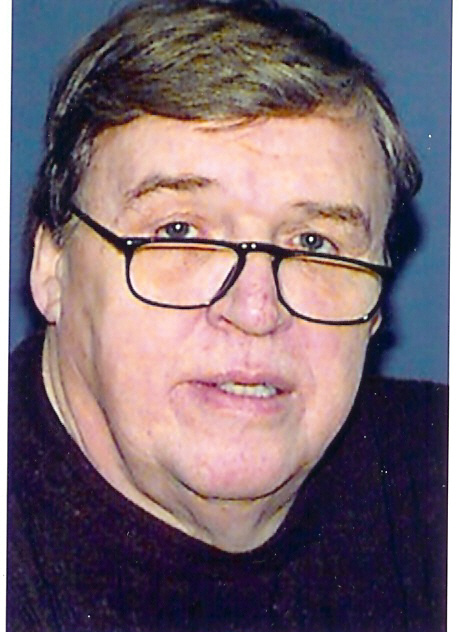
CHAT WITH MICHAEL HORIGAN A
CHAT WITH MICHAEL HORIGAN
Author
of ELMIRA, Death Camp of the North
(ISBN 0-8117-1432-2)
By Frank R. Shaw, FSA Scot, Atlanta,GA, USA
Q: Michael Horigan, welcome to the pages of The Family
Tree! How does one go about finding records of their loved ones who
were guests of Elmira’s Barracks No. 3? Is there a list of POWs who lived
and died there? Do records exist showing arrival dates at Elmira and dates
of departure or death? If so, how does one obtain these records?
A:
The best single source
for these records is the National Archives in Washington, D.C. There is a
list of POWs who lived and died in Elmira. It shows arrival dates and
dates of departure or death. It is on microfilm, and a copy may be
purchased. The problem is that some parts of the microfilm are faded and
the spelling of names is not always correct. Also, the Chemung County
Historical Society (415 E. Water St., Elmira, N.Y. 14901; Tel:
607-734-4167) has a record of those who died in the camp. There is an
outside chance that something is available at the U.S. Army Military
History Institute at Carlisle Barracks, Carlisle, Pennsylvania.
Q: Much has been talked about in the South as to how the
POWs got home from Elmira at the end of the Civil War. We’ve been told for
years that they walked home after signing a pledge of allegiance to the
United States. However, your book corrects this old tale with proof that
they were put on trains and sent as far south as possible. What, in your
research, did you learn about this subject? Are lists of those POWs
available?
A:
Records of how
prisoners departed from Elmira can be found in Record Group 110, National
Archives. If you go there, ask for Michael Musick or someone in his
department. Time of departure of individual POWs is indicated on
microfilm. As I said in the book, they departed, after taking an oath of
allegiance, incrementally in groups of about 500.
Q: You have written a most unusual book on Elmira’s
Barracks No. 3 that acknowledges there was deliberate retaliation on the
part of Edwin Stanton, Secretary of War for the North, and those under his
command. Would you please explain the phrase “Camp Retaliation”?
A: "Camp Retaliation" was Secretary Stanton's policy of deliberately
depriving Elmira's POWs of rations, delaying additional winter clothing
and blankets, and failing to immediately initiate a project to correct the
unsanitary condition of Foster's Pond and the construction of additional
winter barracks. Stanton, in my opinion, was driven by his hatred for the
Confederacy and a belief that Union POWs at Andersonville (Georgia) were
deliberately being starved.
Q: My grandfather, Pvt. John W. Shaw, along with hundreds
of others, was captured at Fort Fisher, NC in January 1865. What records
indicate he and his fellow Confederates were transported to Elmira? If by
ship, are there “passenger lists” indicating on which ships they were
carried north? How did they eventually get to Elmira, and to what seaport
were they sent?
A: He most likely was transported north on a steamer to New York City and
then brought to Elmira on the Erie Railroad, which he boarded at Jersey
City, New Jersey. A passenger list is most likely available at the
National Archives, but I don't have the Record Group file number.
Q: Your book goes into detail about conditions and
circumstances at Elmira. What are the differences between the atrocities
at Elmira and those in Andersonville relative to prison conditions,
availability of food, medical supplies, etc.?
A: The differences are "day and night." Elmira was an agricultural center
with no food shortages. Fruits, vegetables, livestock, dairy products,
and grains played a vital part in the community's economy. The town was a
center of lumber production and coal was mined in nearby Pennsylvania.
Add to this that it was a railroad transportation hub untouched by the
shot and shell of war. Clearly, Andersonville lacked all these things.
The war was fought in the South and the result was the destruction of
thousands of acres of farmland. Also, the South's railroad transportation
grid was primitive and crucial junctions were destroyed by the Union
armies. Add to this the Union's control of the Mississippi River after the
fall of Vicksburg, the naval blockade of all Southern seaports, and
Sherman's march to the sea. All this resulted in Andersonville being
deprived of the essentials that sustained life. An added dimension that
exacerbated conditions at Andersonville was the strange frame of mind of
Capt. Henry Wirz.
Q: Ulysses Grant along with others decided that Southern
prisoners would no longer be exchanged for Northern POWs. He wrote, “If we
hold those caught they amount to no more than dead men.” You state in the
book that “the fate of all Southern prisoners would be sealed in
mid-August” due to this decision. Please elaborate.
A: There is a certain chilling logic to Grant's thinking. In his letter to
Gen. Benjamin Butler in August 1864, he rationalized (correctly) that the
incarceration of Confederate soldiers would cut into the South's manpower.
To me, there was a dual meaning to Grant's words. First, men in a prison
setting were as useless to the South as dead soldiers on the field of
battle; i.e., they could not fight again. Second, many of the men
incarcerated in Elmira became what I referred to in the book as "walking
corpses." This is why I used Grant's words for the title of the
chapter.
Q: What was Foster’s Pond?
A: Foster's Pond was a backwater that ran the length of the prison camp.
At that point the Chemung River flowed from west to east and the channel
from the river to the pond was at the east end of the pond. It became a
miasmic dumping ground for hospital waste, mess house waste, and human
waste. Because of a water table, it proved to be a source of death and
illness for the prisoners. This is because there were nine wells drilled
inside the camp, and the deepest well was just 22 feet and the shallowest
one being fifteen feet. The drinking water poisoned hundreds of prisoners.
It was suggested just after the camp opened that a channel be constructed
from the river to the west end of the pond. Delays resulted in this
project being put off until late October. The channel was completed on
January 1, 1865.
Q: What was “Special Orders No. 336” and the subsequent
consequences?
A: "Special Orders No. 336" was issued on October 3, 1864, by Col.
Benjamin F. Tracy, the Elmira post commander. It stated that all beef was
to be rejected if it did not meet certain "standards." Some 1,200 to 2,000
pounds of beef were rejected on a daily basis. The rejected beef was sold
to local butchers who in turn sold it for consumption to the citizens of
Elmira. The order remained in place for the duration of the camp's
existence and, in my opinion, contributed to a state of malnutrition that
plagued the camp.
Q: Who was Major Sanger and what did he mean when he wrote,
“I now have charge of 10,000 Rebels a very worthy occupation for a
patriot, particularly adapted to elevate himself in his own estimation,
but I think I have done my duty having relieved 386 of them of all earthly
sorrow in one month.”
A: Maj. Eugene F. Sanger was the camp's chief surgeon from the time of his
arrival in early August 1864 to December 22, 1864. A gifted physician, he
was a controversial and enigmatic figure. He was a man of blunt talk and
direct action. Sanger clashed with Tracy from the beginning of their
relationship, and I never was able to discover the origin of their feud.
It is clear to me that Sanger never quite grasped the fact that a strange
pastiche of the military is that you have to cooperate with people you
intensely dislike. I concluded that his letter admitting being responsible
for 386 deaths was something he wrote while experiencing severe stress. I
say this because it was Sanger who blew the whistle on the horrible
conditions of the camp's hospital in particular and the prison barracks in
general. Why would he do this if he truly thought his duty was "to relieve
prisoners of all earthly sorrow"? Admittedly, he remains a mystery.
Q: What remarkable and commendable role did John W. Jones
play at Elmira?
A: John W. Jones was a runaway slave who settled in Elmira in the 1840s.
Serving as sexton of First Baptist Church, he was part of the Abolitionist
movement in Elmira in the 1850s. During the time of the prison camp, John
W. Jones was in charge of burying Confederate prisoners. He did so nine at
a time. He carefully marked the grave numbers, names, military unit, and
date of death. Remarkably, there are only seven unknowns among the just
under 3,000 dead in the Confederate section of Elmira's national cemetery.
For this, we can thank John W. Jones.
Q: Michael, your research is worthy of a PhD. Your 16-page
bibliography indicates the depth of the scholarly research that would make
any historian proud. As I look back on those war- torn years in our young
nation, I am reminded over and over again that Scotland’s National Bard,
Robert Burns, speaks of “man’s inhumanity to man”. Yet, you speak just as
candidly about Americans’ inhumanity to Americans during the Civil War.
Well said! Before I close, let me say that those of us in the South have
our own death camp problems to deal with - Andersonville. You are
courageous to write this book on Elmira, your hometown, and I cannot help
but ask if you have been criticized or reproached by anyone for doing so?
Finally, I thank you for sharing this information and tell us, please,
what you have in store for us in the future. Another book, perhaps? Do you
have any final comments for our readers?
A: There are those in Elmira who disagree with my thesis. They fall back
on a book on the Elmira prison camp that was written by Clay Holmes in
1912. Holmes, a prominent Elmiran, has his place in Elmira's history, and
his defenders are very much a part of the legacy of the prison camp. Clay
Holmes defended the administration of the prison camp and concluded that
everything possible was done for the POWs. I respectfully disagree with
Holmes and his defenders. As for your question of another book, I really
don't see one in the offing. My final comment is that I hope those who
read the book enjoy it. Also, I am available for speaking engagements. |



