 Fair
fa’ your honest, sonsie face, Fair
fa’ your honest, sonsie face,
Great chieftain o’ the puddin’ race!
Aboon them a’ ye tak your place,
Painch, tripe, or thairm;
Weel are ye worthy of a graceAs
lang’s my airm. …
…Ye Powr’s, wha mak mankind your care,
And dish them out their bill o’ fare,
That jaups in luggies;
But, if ye wish her gratefu’ prayer,
Gie her a Haggis!
HAGGIS
Haggis is the national bird of Scotland. It tastes somewhat
like sausage and looks kind of like a grouse. It's a simple little brown colored thing.
Haggis season is limited to the week before the birthdate of Robert Burns in order to have
the freshest, leanest haggis served at Burns' Nicht. Haggis is hard to catch because they
live and breed only on the highest, coldest slopes of Ben Nevis (which is the highest
mountain in Scotland) and when you consider that hunting season is sometime in the winter
months that can be very uncomfortable for the hunter. The most unique aspect of the
haggis, among its many other uniquities, is the fact that it has one leg shorter than the
other. This is a genetic result of the haggis living on those high slopes and being only
able to run in one direction - it does not fly, and is not related to the penguin even
though a wonderful colony of those birds is found at Edinburgh Zoo. This one legged aspect
allows the haggis to remain upright, instead of on a decided tilt as it runs around the
mountain to escape the hunter. It is truly a wonderful sight on a winter's day to see
these determined, but foolish Englishmen set off on their annual haggis hunt only to be
disappointed by the wiles of this little thing and to be amazed that the hardy, clever,
and undaunted Scots have an amazing supply of this delicacy always available for fine
dining.
Now to the haggis:
l lb lean mutton
4 onions
Pepper and salt
Sheep stomach
2 cups oatmeal
4 oz ground suet
Sheep pluck (lights, liver and heart)
Wash stomach bag thoroughly in salted water. Boil pluck for
1:1/2 hours, leaving windpipe attached and hanging out of pot into another dish. This
allows the impurities to pass out of it.
When cooked and cold, cut away windpipe and gristle and any
skin.
(I used to like haggis, but typing this I'm not so sure!)
Reserve some of the lights, mince the pluck with the mutton
and chop. Add suet.
Toast oatmeal in oven and chop onions. Savory herbs may be
added, if desired.
In large bowl, mix the minced ingredients, oatmeal, onions,
herbs, pepper and salt with about a pint of the stock in which the pluck was boiled. Mix
to soft consistency.
Take the stomach bag and spoon the mixture in until rather
more than half filled. This allows for the meal to expand.
Sew up firmly and prick thoroughly. Tie in a cloth. Place in
a pan of boiling water with a plate in the bottom and boil for three or four hours. Prick
occasionally to prevent bursting.
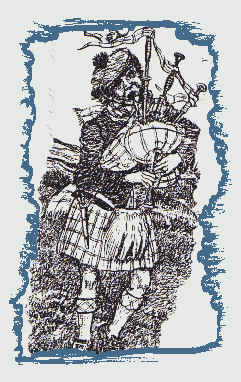
Have a well dressed, handsome bagpiper, in his dress kilt,
pipe you and the haggis into the dining room and serve hot with chappit (mashed) potatoes
and neeps (rutabagas) and serve Athol Brose as your dinner beverage.
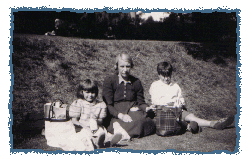 My mother, brother and me picnicking at Edinburgh zoo. We saw the penguins
that day. I can clearly remember riding on top of the Edinburgh city bus to get there and
even then I knew that having the money to get into the zoo was a bit of a struggle for my
mother, but she had enough to get us in. Every time I take my grandchildren to Phoenix zoo
I remember how thrilled I was (I must have been about five or so) to get to ride the
elephant that day. I try to have enough change so they can ride the camel there because
this zoo doesn’t have elephant rides to take me back to my childhood in Scotland.
Potted
Hough
I remember these little moulds of meat sitting in the window
of the butcher shops and also in Kidd’s the baker’s where I worked as a
teenager. We didn't buy it too often, didn't like it too much, since it tasted just like
meat jello. (I know you've decided you don't like it, but read on anyhow for the cultural
diversity experience). This is a savory dish - "potting" was an ancient Scottish
method of preserving food. I think I found this recipe in a book called "A Taste of
Scotland."
1 lb shin of beef - this is "hough"
- pronounced hoch, as in loch.
2 lb beef shin bone
1 tsp salt
6 allspice berries
6 peppercorns
1 small bay leaf
1 pinch paprika
Put the meat and bone into a pan and cover with cold water.
Bring to the boil, and simmer for about 3 hours.
Cut the meat into small pieces. Remove meat from the bone.
Return the bone to the pan, add salt, allspice berries, peppercorns, bay leaf and paprika
and boil the liquid rapidly until it has reduced by about half. (You can do this while
you're also boiling down the ketchup I've already entered into this recipe book!) Put the
meat into a large mould, pour in the stock and put in the refrigerator to set. Serve next
day out of the mould, with a salad if desired. Sounds just lovely.
A Taste of Scotland's Scotch Eggs
This is served hot for breakfast, dinner, tea, supper
(breakfast is breakfast, dinner is lunch, tea is the meal you have at the end of the
working day or shortly after getting home from school, supper is your before bedtime
tide-you-over till morning) or cold for picnics. Very versatile, wouldn't you say?
8 hard boiled and 2 uncooked eggs
1:1/2 lb pork sausage meat
(try to get as unspicy as possible to get as close as you can to Scottish sausage)
a pinch of mace; salt and pepper to taste
1 cup approx of crisp breadcrumbs
Hard boil 8 eggs, cool, and shell. Beat one of the remaining
eggs and add 1 tablespoon cold water. Season the sausage meat and add the mace, then dip
the hard boiled eggs into the beaten egg, and cover each one entirely with the sausage
meat, pressing it on with the hands.
Beat the remaining egg and gently roll your eggs in this,
then dip in the breadcrumbs, again pressing the breadcrumbs into the sausage meat. Fry
eggs singly in hot oil until the outside is golden brown. Drain well and serve hot or
cold.
Forfar Bridies -- These are for Johnny
These little pies (Cornish pasties may be more well known,
but the originals in my opinion are "Farfar" bridies) were mentioned by Sir J.M.
Barrie in "Sentimental Tommy." (For those of you who don't know any better, and
if you are truly my children, you had better know this - Barrie also wrote "Peter
Pan.")
Filling:
1 lb chuck steak
2/3 cup prepared shredded suet – this is a kid of lard
1 finely chopped onion
Salt and Pepper
Pastry:
4 cups plain flour
Pinch of salt
1/2 cup margarine and 1/2 cup shortening (used to be lard in this recipe)
Sift the flour and salt together, add the shortenings with a
pastry blender. Stir in enough cold water to make a stiff dough then turn it onto a
floured surface; knead gently. Divide dough into four. Trim the steak, removing excess
fat, then tenderize it. Cut the meat into thin strips (about fajita size) and mix with the
suet and onion and plenty of seasoning. Roll each piece of dough out to a 6 inch round
shape. Divide the filling among each and seal the edges well with water.
Make a hole in the center of each bridie (Wallace’s in
Dundee would have one hole on the "plain" bridies and two holes in the
"onion" bridies) and bake at 400 for about 20 minutes. Reduce the temperature to
350 and bake for a further 35-40 minutes or until golden brown. (And, just to confuse you,
we always bought our bridies and steak and kidney pies and potted hough at the baker).
Serve hot with peas and potatoes.
Sausage Rolls
Puff pastry, or prepacked croissant roll mix
1/2 lb sausage meat
1 beaten egg
Season to taste
Divide meat into 20 portions. Roll as links.
Roll pastry into 3" squares. Wrap around meat and place joined side under on cookie
sheet. Brush with beaten egg and make 3 small slated slashes on top. Bake in hot oven 425
degrees about 20 minutes. Serve hot or cold for a supper meal or take with you on a
picnic.
Dundee Pies, or "Pehs" if
you are a true Dundonian!
This was a staple of our diet. American
sailors hats reminded Scots of these little pies and maybe that's where the expression
"Pie hat" came from - only I don't remember John calling his enlisted man's hat
anything but his "white hat." I remember in school being taught how to make the
hot water pastry for these pies because you need a crust you can shape that will stand up
on its own without benefit of a pie pan.
Hot Water Pastry
llb plain flour
1/2 cup beef dripping or lard
1 cup water
1/2 teaspoon salt
Put the fat and water into a saucepan and
bring to the boil. Put the flour and salt into a basin and make a hole in the middle, pour
the boiling water and fat into this, and mix with a spatula until cool enough to handle,
then form into a ball. This must be done quickly before the fat hardens too much. Turn on
to a floured board, and knead well, then pat into a flat shape. Divide into half and put
one half to keep warm. Role the half out into a large oval and stand a small jar (about 3
inches diameter) in the middle.
Mould the pastry up the sides to a height of
about 3" and when it stands well remove the jar, and make another mould in the same
way. Roll out the lids, cutting them into rounds to fit the top.
Mix all the filling ingredients together and
fill the pastry moulds. Damp the edges and pinch the top on. Make a slit in the centre to
let the steam out and brush the top with milk or beaten egg to colour it. (Remember the
rule, one hole for plain, and two holes for onion pies.)
Bake on a baking sheet in a slow oven (250)
so that the inside has time to cook, about 45 minutes. While cooking roll out the
remainder of the pastry and proceed in the same way. Makes 4 pies.
Make your filling out of 1 lb lean meat cut
into very small pieces, but the ones we got from Grey's the bakers were always minced. Add
salt and pepper, 1 teaspoon of Worcestershire sauce or other of your choice, add onions,
flavorings of your choice, and 4 tablespoons meat stock.
Grey's would also sell meat and bean pies,
with the beans seeming a lot like Campbell's Beans and put onto the top of the meat
filling just under the lid. Wallace's would put mashed potatoes on top of theirs instead
of a lid and these were really good, too. I remember thinking how pretty the brown, fluted
potatoes looked on these pies. |



