View our terms and conditions for use of our web site and our privacy policy. Visit Electric Scotland's Aois Community, our social networking site. Find our contact information and learn more about us. The Home Page of Electric Scotland ES Common Header Bar
This is where you'll find a comprehensive resource on Scottish accommodations. Electric Scotland's Article Service where you can both read articles and post your own. Beth's Newfangled Family Tree is a monthly publication giving genealogy advice as well as what's hapening on the Scottish Scene around the world. This is where you'll find around 300 books on Scottish history that we've published on the site. Our pages where you'll find books and articles about Robert Burns and his work. Gives you some information on the business scene in Scotland. This is where you can view Scottish events around the world and add your own. Learn about the history of Clans and Families of Scotland and the Scots-Irish. The personal site of Alastair McIntyre where he's posted his own mini biography as well as his travel journals. 5 volumes worth of biographies relating to Significant Scots. A weekly newsletter about the political scene in Scotland from the Scots Independent Newspaper. Lots of Scottish recipes along with contributions from our visitors. Play our collection of online games. 6 volume Gazetter on the place names of Scotland. This is our page for trying to give you advice on Genealogy. A FAQ where you go to get answers to frequently asked questions. Information and pictures about Historic places in Scotland such as castles and other properties. Main index page for our very large history section. Children resources including over 800 children's stories and lots of online and offline games. A bit of a catch-all page where you find loads of pages about music, haggis, scots language, culture, religion, humor and lots more. Our nature page where you can explore information on Scottish Wildlife, Plants, Flowers and lots more. Our weekly newsletters archive. Thousands of pictures of Scotland for you to enjoy. Loads of poetry and stories for you to enjoy with many contributions from visitors to our site. Our very own Webcard program which you can use to send online postcard to friends and relatives. Huge resources about the Scots Diaspora around the world and here is where you can find this information. A continually building information resource on the Scots-Irish who emigrated to Ulster and then onto many parts of the world, especially the USA. Create your own family tree with our special software. You can also import and export gedcom files. Our web-based scottish search engine which is a free resource for Scottish companies as well as Scottish organisations around the world. Current Scottish News headlines and links to Scottish news resources. A range of services, both big and small, that we currently offer. Our Tartan pages, giving you access to information on Tartans as well as tartan search engines. Sponsored by House of Tartan. Our travel section where we have loads of suggested tours of Scotland as well as old historic travel books. A wee collection of videos some of which we've produced ourselves. Learn about the last 100 pages we've added to our site which is updated daily.

Click here to get a Printer Friendly Page
 

Send Flowers

Castles of Scotland
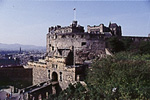
Edinburgh Castle


Edinburgh CastleIn Edinburgh. Tel: 0131 225 9846

This most famous of castles dominates Scotland's capital and gives stunning views of the city and countryside. St Margaret's Chapel; the enormous 500-year-old siege cannon Mons Meg; the Great Hall; the royal palace and the Scottish National War Memorial are here together with the highly acclaimed "Honours of the Kingdom" exhibition which traces the history of Scotland's Crown Jewels and culminates in a visit to the Crown Room housing the Scottish Regalia and the Stone of Destiny. A new shop offering an exclusive line of specially designed jewellery is located in the adjacent Royal Apartments. The Vaults were where foreign prisoners-of-war were held, particularly those captured in the wars with France in the 18th and 19th centuries. A free audio tour is available just inside the Castle. Courtesy vehicle for disabled visitors (sponsored by the Bank of Scotland). Restaurant offering self and table service.

Open all year seven days a week, April to September 9.30 am to 6.00 pm. October to March 9.30 am to 5.00 pm. Last ticket sold 45 minutes before closing.

The site of Edinburgh Castle on its glacier eroded volcanic rock mass has shown evidence of an early bronze age earth and timber settlement.

It became a stone fortress towards the end of the reign of Malcolm III (1058 - 1093), one of the earliest remaining stone structures, St Margaret’s Chapel was built by David I (1124-1153).

In 1296 Edward I of England invaded Scotland taking Edinburgh Castle by storm.

In 1314 Sir Thomas Randolph, Earl of Moray, led a party of thirty men who scaled the cliffs and climbed the castle walls capturing the surprised garrison.

The castle was again held by the English in 1335 but in 1341 Sir William Douglas and his men pretending to be merchants entered the castle by storm, decapitating most of the garrison and throwing their bodies over the castle walls.

In 1361 David II (1329-1371) raised a large L shaped keep called David's Tower’ this was destroyed in the 1573 siege where Mary Queen of Scots supporters tried and failed to hold the castle in her name.

In 1400 Henry V of England besieged the castle but withdrew when it was reported that the Welsh under Owen of Glendower were revolting and attacking Caerphilly Castle in South Wales.

Sir William Crichton was keeper of the castle in 1440 when the infamous Black dinner took place. Using his position he invited his arch-rivals the sixth Earl of Douglas and his younger brother to dine with the king in the castle. When the great feast was over Crichton presented the Earl a bulls head which was the sign of condemnation to death. The king protested but to no effect, the Douglases were taken and tried on trumped up charges of treason and beheaded.

After 1573 the castle was remodelled and the half moon battery built on the site of David's Tower’, this helped defend the castle against assault in 1640 by the Covenanters, Cromwell in 1650 and the siege by the forces of William and Mary in 1689.

In the 1720’s and 30’s the castle was once again strengthened, this was put to the test during the Jacobite rising in 1745. Bonnie Prince Charlie's half hearted efforts to take the castle were the last military action the castle saw.

See Burke's Peerage & Gentry for more information


Return to Castles of Scotland

