Go to the home page of Electric Scotland Read about our terms and conditions for using the site and out privacy policy Gte our contact information here Find accommodation in Scotland Get information on Scottish agriculture and wildlife Find hundreds of historical articles about Scotland Beth's monthly publication about the Scots diaspora and genealogy Hundreds of online books for you to read Learn something about business in Scotland We have some 800 children's stories for you to read This is where you'll learn all about Scottish clans and families and their history Learn about Scottish culture and also our old Scots language A collection of material from a native Indian writer on Indian lore, poems, recipes and lots more This is Alastair's personal site with his travel journals and loads of pictures taken on his travels in Scotland and abroad Hundreds of biographies of famous Scots A weekly publication from the Scots Independent Newspaper on matters to do with Scottish independence This is where you can message with others on any topic you wish and interact in a social network Great place to get those great Scottish recipes We do need some relaxation from time to time so enjoy some of our online games This is our six volume gazetteer of Scotland Get advice and resources to help with your genealogy research Learn all about Scotland's famous Haggis Learn about prevntative health care from old Scottish texts This is where we've profiled some Highland Games in Scotland and around the world Explore historic places and castles in Scotland Tons of information on the history of Scotland and the Scots Looing for a wee humour or humor story then enjoy our great collection here Poems and stories from the pen of John Henderson and also many of his own dorric poems Lots of interesting material for kids and children of all ages A bit of a catch all for things that don't have there own menu Some music and radio programs for you to listen to and lots of great sheet music Get up to date Scottish news and find all the local newspaper and television stations This is where you can read Electric Scotland's weekly newsletter and read back copies We have thousands of pictures of Scotland and this page will lead you to them We have lots of poetry and stories sent in by visitors to the site Send a postcard to friends, family or colleagues Yes the Bible but so much more Learn about Scotland's famous bard Robert Burns Learn about the Scots who moved to Ulster and onto the world Scotland's official langiuage for several centuries wasn't gaelic but Scots! Learn about the famous Scottish and Highland regiments Some useful services like a roman numeral calculator and personal worth Here you will find our own shopping malls Looking for those old Scots songs then this is where you'll find them History of sports in Scotland Learn about tartan and use the tartan search engines Travel and Tourism in Scotland Some interesting Scottish trivia to baffle your friends with Fun videos that we've taken over the years A Scottish wedding guide Find out the last 100 items we've added to the site Learn about what Scots did in the world Learn about Scots in the USA Learn about Scots in Canada Learn about Scots in Australia Learn about Scots in India Learn about Scots in Germany Learn about Scots in France Learn about Scots in New Zealand

Check all the Clans that have DNA Projects. If your Clan is not in the list there's a way for it to be listed.Edinburgh and Scotland Accommodation, Bed & Breakfast, Self Catering, Guest Houses, Inns, Holiday Tourist AccommodationAn amazing collection of unique holiday cottages, castles and apartments, all over Scotland in truly amazing locations.Edinburgh ApartmentsScottish Democratic Alliance (S.D.A.)

Click here to get a Printer Friendly Page

The Border Abbeys
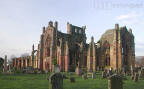
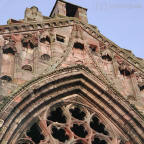
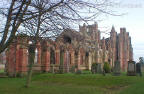
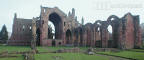
Melrose Abbey


Melrose Abbey

Melrose Abbey Melrose Abbey Melrose Abbey Melrose Abbey

Cistercian
Founded 1136 by David I

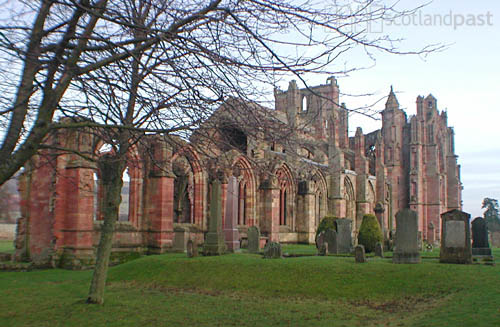
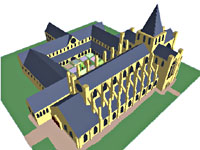
WHEN monks of the Cistercian order were invited to Scotland by King David they were offered a site at a place called Mailros. However, they decided it did not meet their needs, and instead opted for a site nearby known as Little Fordell, which they renamed Mailros. Unusually, the monastery complex is laid out to the north of the church instead of the south.

The house became very affluent through exercise of their strict Rule of St Benedict, which emphasised total poverty and extreme hard work - particularly agricultural development, for which the Order was renowned. In fact, Melrose became one of the Western world's biggest producers of wool.

The house was associated with several kings and nobles. King Alexander II was buried there. King Robert Bruce, who had close associations with Melrose, gave instructions for his heart to be taken on crusade and then brought to rest in the abbey, saying his heart had always been there. A lead casket discovered in 1921 is thought to contain the Hero-King's mummified heart. James IV used the abbey as a base for his Borders campaign in the 1490s.

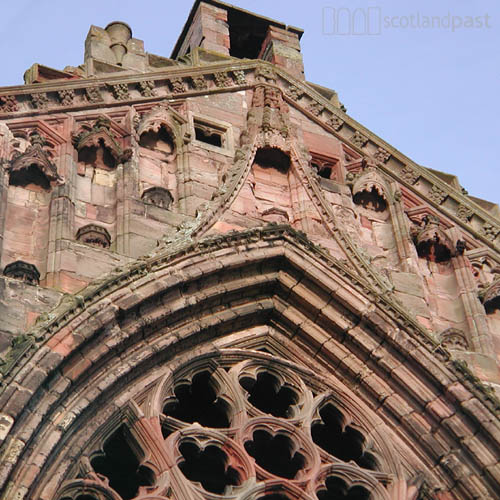
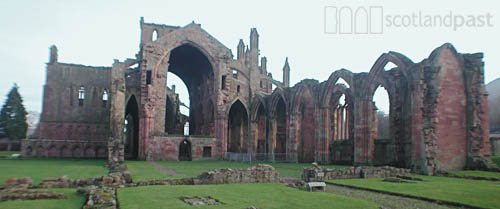
With its rich estates and influence Melrose was a specific target for English raids. Severe damage was done in 1296 and 1322, but the worst came in 1385 when Richard II reduced the abbey to ruins. The complex was almost started from scratch again, and this time the Cistercians built in a lavishly decorative fashion. Enough of the abbey remains to gain an impression of the rich detail to be found on every wall and gable.

In 1544 Melrose was once again burnt down by the English in the Rough Wooing campaign. Only a few dozen monks remained, and they were not able to rebuild after this attack. Later they complained to Commendator Stewart: "without the kirk being repaired this instant summer, God-service will cease this winter." But four years later the Reformation came, and the Cistercian form of God-service ceased at Melrose for ever.

The complex was secularised in 1609 and the following year the church was adapted for continued parish use, and the other properties of Melrose sold by the Crown. The remains of this adaptation are visible today. The difference between the light airy remains of the monk's choir and the dark overbearing Protestant development is stark.

That part of the abbey remained in use until 1810, when a new parish church was built and the ruins were abandoned.

This text is abbreviated from the articles that appear on ScotlandPast's CD-Rom digital guide "The Border Abbeys". The guide also features 360 degree panoramic images, photo galleries, video introductions, 3D interactive graphics and an at-a-glance history timeline. The CD, which runs on PC and Mac with most Internet browsers, is available for £8.99 from http://www.scotland-past.com ©2003 ScotlandPast. All rights reserved.


Return to Border Abbeys