|
Falkirk District is an area truly
steeped in tradition; an area where many of the most influential
characters in the history of Scotland left their mark. William
Wallace, Edward 1, John Knox, Mary Queen of Scots, Oliver
Cromwell, the Young Pretender, James Watt, and many others, had
course to take the road to Falkirk.
This district was many things to many people - the ancient seat of
Livingstons of Callendar, the location of the famous 'Speckled
Kirk', the "Tryst' for the cattle drovers who walked from as
far as Lewis or Ireland, or the place where dreams of glory were
resurrected or finally laid to rest on a bloody battlefield.
Today, the atmosphere of Falkirk District's colourful past can be
re-created by paying a visit to one of the areas historic
buildings or monuments. A small selection of these are described
here, but the list is by no means comprehensive.
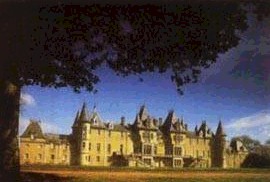 CALLENDAR
HOUSE CALLENDAR
HOUSE
Now open
as a museum, Callendar was home from the 14th to the 18th century
of the Livingston family, who were often centre-stage in Scottish
history. They lost the house and estate because of there
involvement with the Jacobites and in 1783, Callendar was bought
by William Forbes, a London - based copper merchant. His
descendants owned the house until the 1960's when it was bought by
the old Falkirk town council. Visitors can see the 'Story of
Callendar House' exhibition and visit the restored kitchen where
costumed interpreters describe early 19th century life.
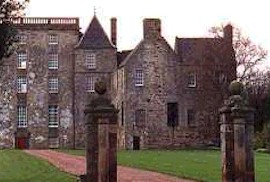 KINNEIL
HOUSE KINNEIL
HOUSE
Set in the magnificent Kinneil Estate, the
house can be viewed from the outside, but is closed indefinitely
to the public. The Hamilton family constructed the existing
building during the 16th and 17th centuries, but they probably had
a residence on the site as far back as the 14th century. The house
was later leased to various tenants, including John Roebuck, who
was a partner in the Carron Company, and the philosopher Dugald
Stewart.
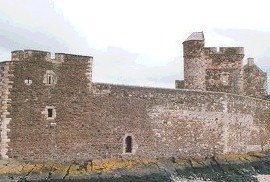 BLACKNESS
CASTLE BLACKNESS
CASTLE
Blackness was the port of
Linlithgow and a key player in mediaeval Scotland's trade with the
Baltic. The castle is shaped like a ship and juts out into the
Forth to hold commanding views along the coastline. Begun in the
15th century, it has undergone many alterations over the last 500
years. The castle was used as a set for the film 'Hamlet' starring
Mel Gibson and directed by Franco Zeffirelli.
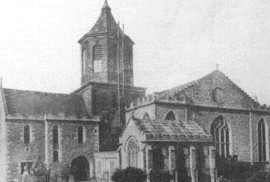 PARISH
CHURCH, FALKIRK PARISH
CHURCH, FALKIRK
Possibly the most historic
building in Falkirk, the church stands on the site of what is
probably the first Christian edifice in the town. Falkirk takes
its name from the first stone-built church, erected in the Middle
Ages when it was known as the 'Faw' or Speckled Kirk. Most of the
present building dates from the early nineteenth century. The
church was the burial place for many of the Livingstons of
Callender, and inside there are two pairs of stone effigies of
members of the family dating to the 15th and 16th centuries.
Buried in the churchyard is Sir John de Graeme one of William
Wallace's supporters killed at the 1298 battle of Falkirk.
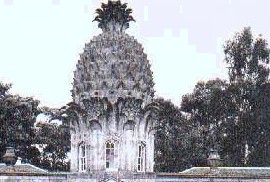 THE
DUNMORE PINEAPPLE THE
DUNMORE PINEAPPLE
One of the most peculiar
buildings in Scotland. It was built as a folly in 1761 by an
unknown Architect. It is part of the walled garden of Dunmore Park
and was originally used as a garden retreat. Pineapples were known
to have been grown in Scotland in the early 18th century and were
probably grown in hot - houses on the south side of the garden
wall at Dunmore. It is owned by the Landmark Trust and used as a
holiday residence.
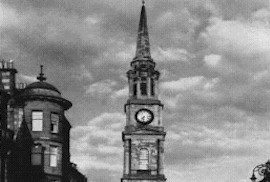 FALKIRK
STEEPLE FALKIRK
STEEPLE
The Town Steeple has been the
main meeting place and focal symbol for Falkirk's townsfolk since
the late 17th century when it acted as a gaol. The original
steeple was replaced by a new structure designed by David Hamilton
in 1814. In 1927, the upper part was damaged by lightning and
rebuilt.
 AIRTH
CASTLE AND CHURCH AIRTH
CASTLE AND CHURCH
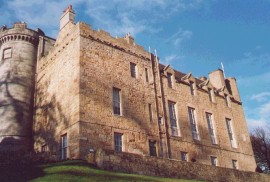
Airth was created a burgh in
1203, and was once the most important community in the District.
During the Middle Ages it was the port for Stirling, and the royal
boatyard, was located there. The castle, now a hotel, dates back
to 1488 when Robert Bruce of Airth started building work to
replace an earlier castle which had been destroyed by fire.
Additions were made in the 16th and early 19th century. The ruins
of Airth Old Parish Church stand nearby to the north - east. It
dates back at least to the 12th century and exhibits some
architectural styles of that period.
 AIRTH
CROSS AIRTH
CROSS
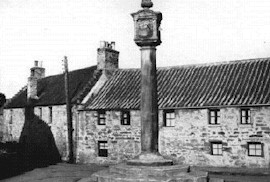
Around the beginning of the
18th century, a new town of Airth began to develop downhill from
the old medieval burgh, which was gradually abandoned. The present
village stands on the site of this new burgh and the oldest
structure is the Mercat Cross at the north end of the High Street.
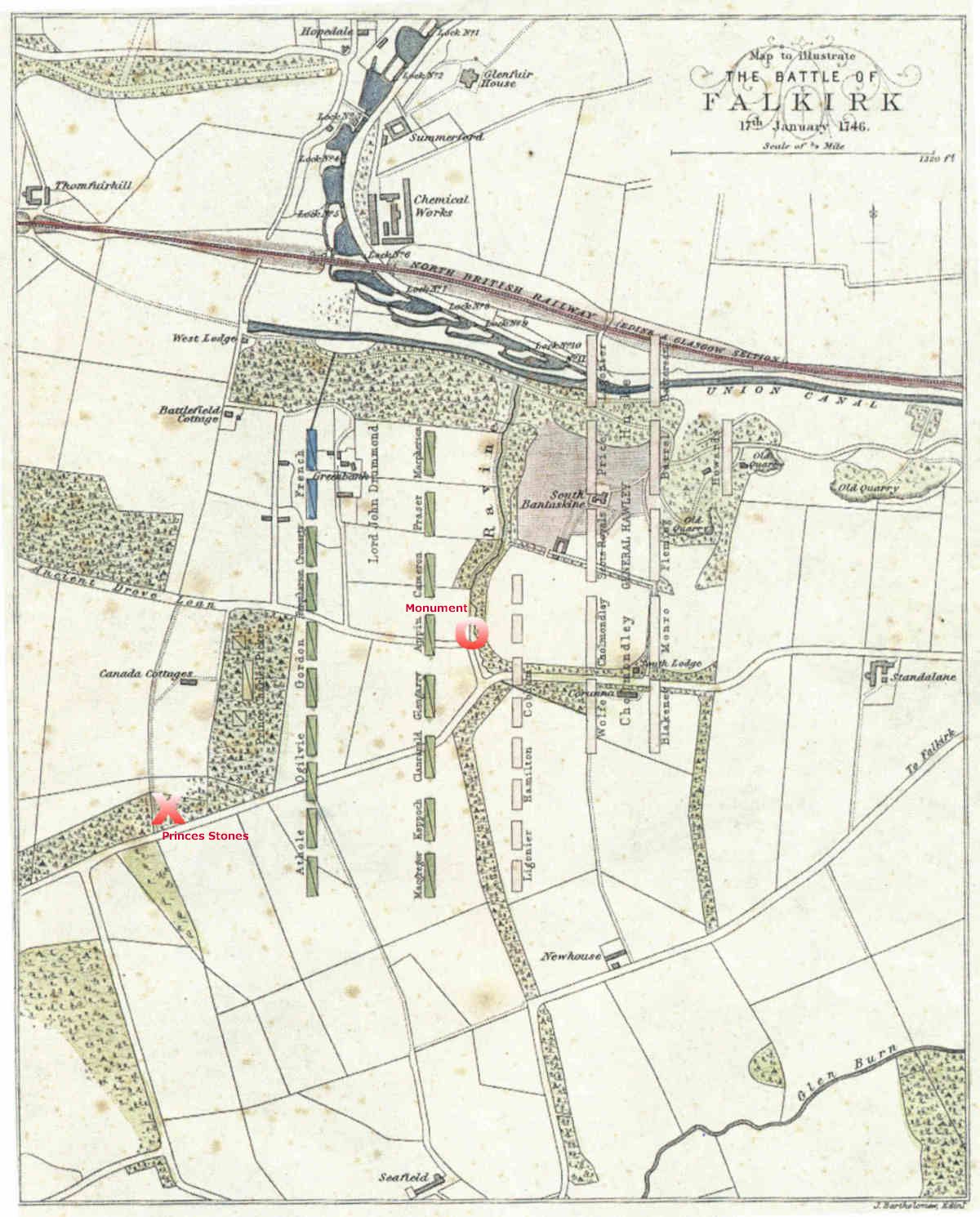
 BATTLE
OF FALKIRK MEMORIAL BATTLE
OF FALKIRK MEMORIAL
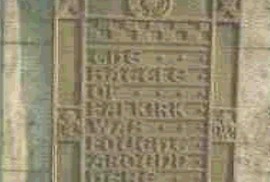
The Battle of Falkirk in
January 1746 was the last Jacobite victory before decisive defeat
later that year at Culloden. Bonnie Prince Charlie had been forced
to take this back into Scotland when the English Jacobites failed
to support his attempt to gain the throne. General Hawley of the
government forces attacked Charles at Falkirk but was beaten back.
However, the Duke of Cumberland continued the pursuit of the
Jacobite army until its ultimate defeat.
 LEGENDS
OF ARTHUR'S ROUNDTABLE LEGENDS
OF ARTHUR'S ROUNDTABLE
There are two sources of
evidence from the 7th century AD, which both mention Arthur and
connect him with a Kingdom known as Manann or Manau.The Kingdom of
Manann stretched from the River Forth, which was its northern
border, southwards to Slamanann Although an ancient British
Kingdom, around the year 570 AD it was ruled by Aidan Mac Gabran
(the father of Arthur).
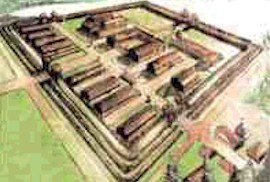
Within this Kingdom of Manann/Manau lay an imposing Roman fortress
known to them as 'Ad Vallum', but to which the names Camelot and
Camelon later became attached. It is still a protected site. The
fort has gone but the name has passed to a nearby village, still
known to this day as Camelon, on the outskirts of Falkirk.
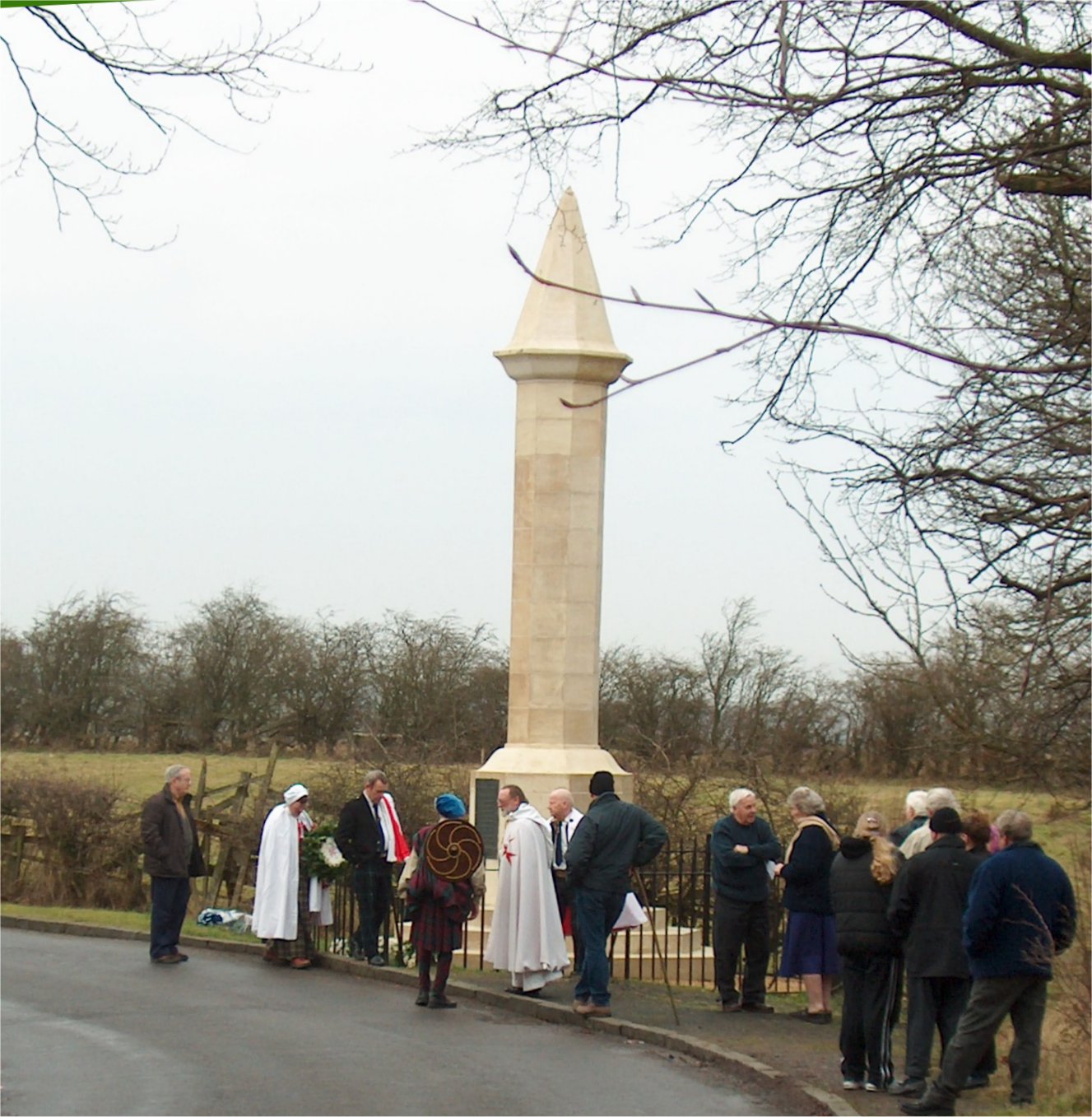
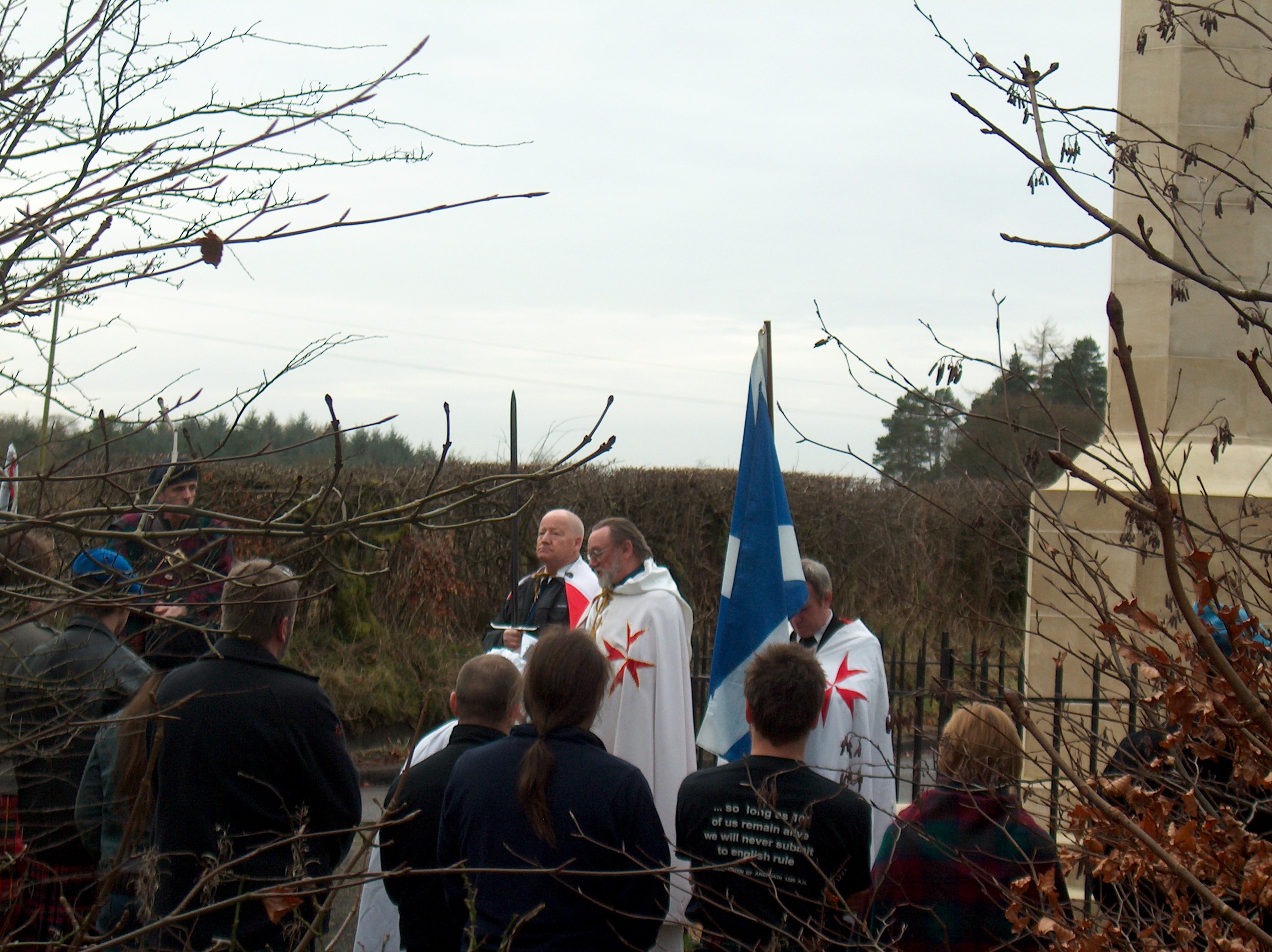
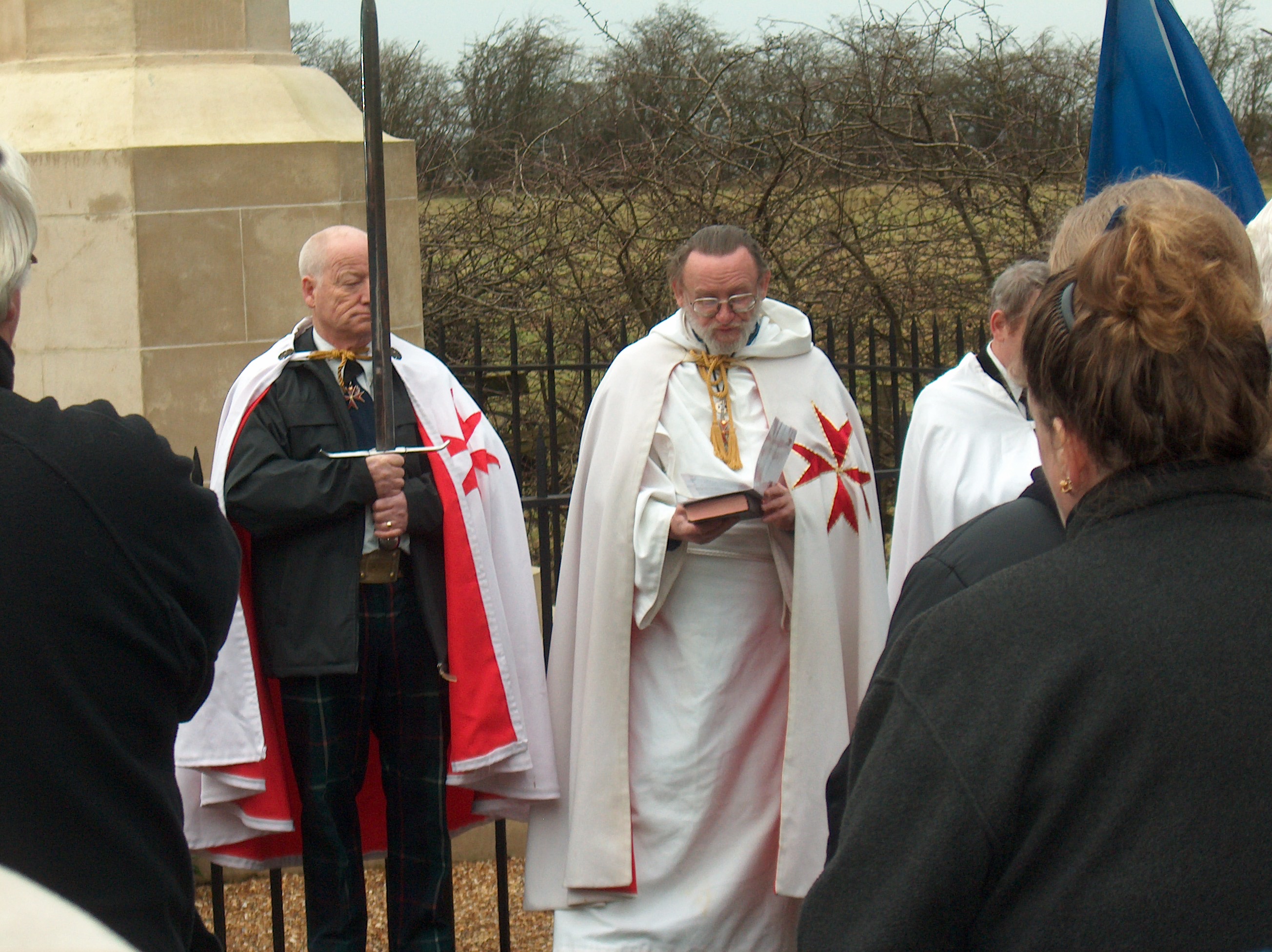
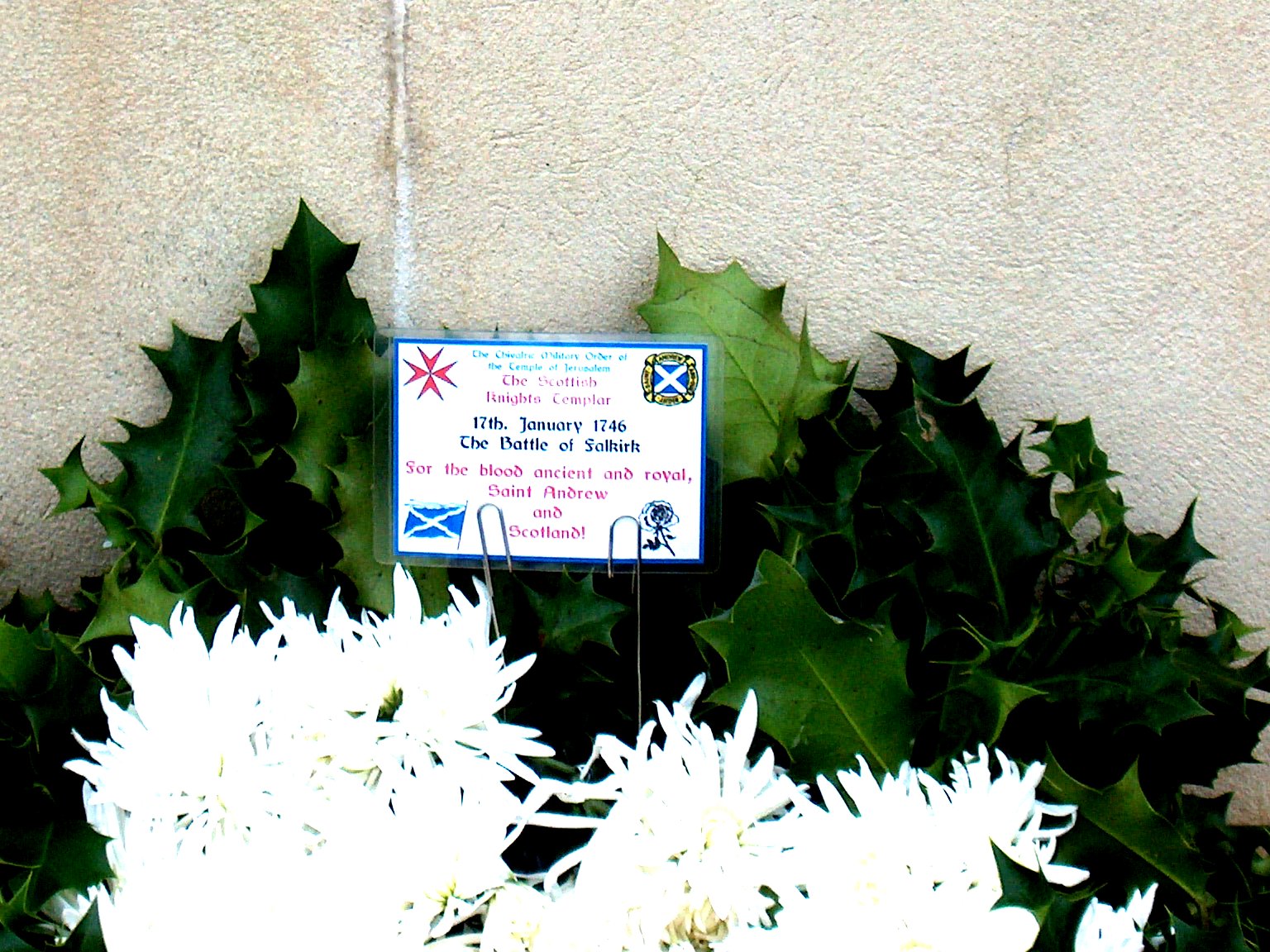
Battle of Falkirk
[Our thanks to Ranald
McIntyre of Falkirk for sending in these pictures]
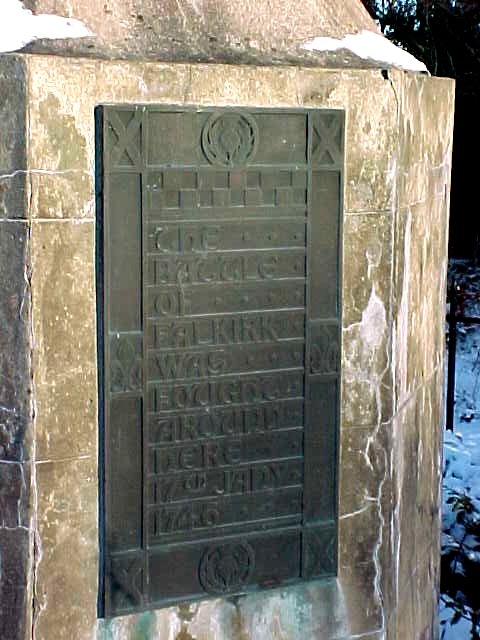
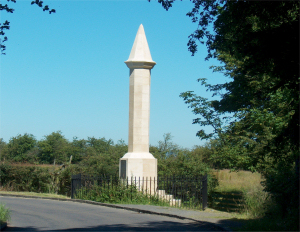 The
monument was erected in June 1927 after a public fun raising
campaign. The monument went into disrepair and was refurbished
in 2005. The
monument was erected in June 1927 after a public fun raising
campaign. The monument went into disrepair and was refurbished
in 2005.
The
BATTLE
OF FALKIRK
WAS
FOUGHT
AROUND
HERE
17th JAN
1746
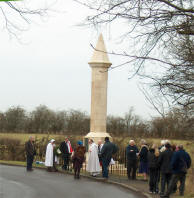
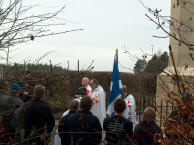
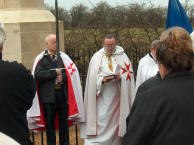
Pictures taken on Saturday 21st
January 2006 showing the Knight Templars at the service
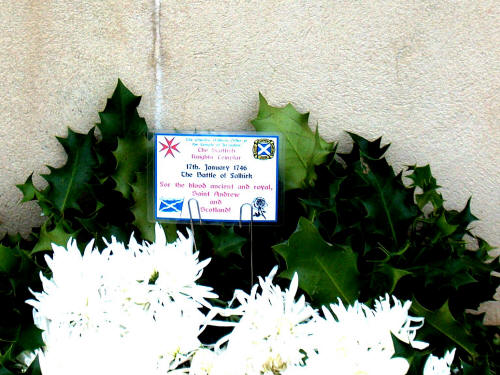
Wreath laid by the Knight Templars
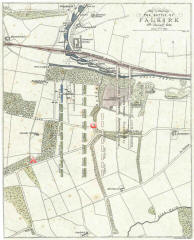
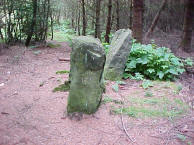
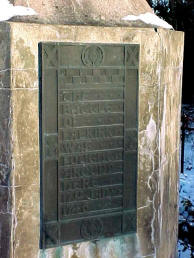
Map of the Clans / Prince's Stones /
Monument Inscription
|