|
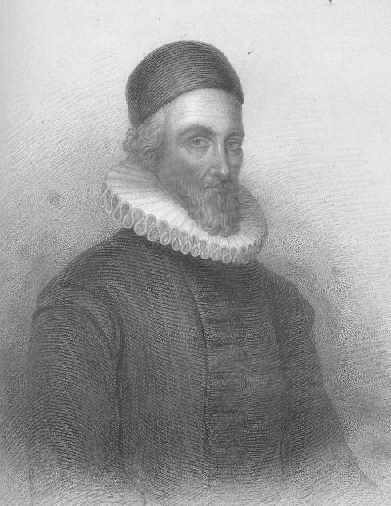 CANT,
ANDREW, a Presbyterian preacher of great vigour and eloquence of the
period of the Second Reformation. In 1638 he was minister of Pitaligo in
Aberdeenshire. Unlike the generality of the clergy in that district of
Scotland, he entered heartily into the national covenant for resisting the
episcopalian encroachments of Charles I., and took an active part in the
struggles of the time for civil and religious liberty. He was associated
with the celebrated Alexander Henderson, David Dickson, the Earls of
Montrose and Kinghorn, and Lord Cupar, in the commission appointed in July
1638, by the Tables, or deputies of the different classes of Covenanters,
noblemen, gentlemen, burgesses, and ministers, to proceed to the north and
endeavour to engage the inhabitants of the town and county of Aberdeen in
the work of reformation. The doctors of divinity in the town had steadily
resisted the progress of reforming principles, and were greatly incensed
when they heard of this commission. They fulminated against it from the
pulpit; and the town council, under their influence and example, enacted,
by a plurality of votes, that none of the citizens should subscribe the
covenant. The deputies arrived on the 20th of the month, and
were hospitably received by the magistrates; but they declined their
proffer of friendship till they should first show their favour to the
object of their visit. Montrose, "in a bold and smart speech,"
remonstrated with them on the danger of popish and prelatical innovations;
but the provost excused himself and his coadjutor by pleading that they
were protestants and not papists, and intimating their desire not to
thwart the inclination of the king. Immediately after their interview with
the magistrates, the deputies received from the doctors of the two
universities a paper containing fourteen ensnaring propositions respecting
the covenant, promising compliance should the commissioners return a
satisfactory answer. These propositions had been carefully conned over
previously, and even printed and transmitted to the court in England
before the arrival of the deputies. They were speedily answered by the
latter, who sent their replies to the doctors in the evening of the next
day. Meanwhile the nobles applied to the magistrates for the use of the
pulpits on the Sabbath following, for the ministerial commissioners, but
this being refused, the three ministers preached in the open air, to great
multitudes, giving pointed and popular answers to the questions of the
doctors, and urging the subscription of the covenant with such effect that
five hundred signatures were adhibited to it upon the spot, some of the
adherents being persons of quality. On Monday the deputies went out into
the country districts, and although the Marquis of Huntly and the Aberdeen
doctors had been at pains to pre-occupy the minds of the people, yet the
covenant was signed by about forty-four minister and many gentlemen.
Additional subscriptions awaited the deputies on their return to Aberdeen,
where they preached again as on the former Sabbath; but finding that they
could produce no effect upon the doctors of divinity, whose principles led
them to render implicit obedience to the court, they desisted from the
attempt and returned to Edinburgh. CANT,
ANDREW, a Presbyterian preacher of great vigour and eloquence of the
period of the Second Reformation. In 1638 he was minister of Pitaligo in
Aberdeenshire. Unlike the generality of the clergy in that district of
Scotland, he entered heartily into the national covenant for resisting the
episcopalian encroachments of Charles I., and took an active part in the
struggles of the time for civil and religious liberty. He was associated
with the celebrated Alexander Henderson, David Dickson, the Earls of
Montrose and Kinghorn, and Lord Cupar, in the commission appointed in July
1638, by the Tables, or deputies of the different classes of Covenanters,
noblemen, gentlemen, burgesses, and ministers, to proceed to the north and
endeavour to engage the inhabitants of the town and county of Aberdeen in
the work of reformation. The doctors of divinity in the town had steadily
resisted the progress of reforming principles, and were greatly incensed
when they heard of this commission. They fulminated against it from the
pulpit; and the town council, under their influence and example, enacted,
by a plurality of votes, that none of the citizens should subscribe the
covenant. The deputies arrived on the 20th of the month, and
were hospitably received by the magistrates; but they declined their
proffer of friendship till they should first show their favour to the
object of their visit. Montrose, "in a bold and smart speech,"
remonstrated with them on the danger of popish and prelatical innovations;
but the provost excused himself and his coadjutor by pleading that they
were protestants and not papists, and intimating their desire not to
thwart the inclination of the king. Immediately after their interview with
the magistrates, the deputies received from the doctors of the two
universities a paper containing fourteen ensnaring propositions respecting
the covenant, promising compliance should the commissioners return a
satisfactory answer. These propositions had been carefully conned over
previously, and even printed and transmitted to the court in England
before the arrival of the deputies. They were speedily answered by the
latter, who sent their replies to the doctors in the evening of the next
day. Meanwhile the nobles applied to the magistrates for the use of the
pulpits on the Sabbath following, for the ministerial commissioners, but
this being refused, the three ministers preached in the open air, to great
multitudes, giving pointed and popular answers to the questions of the
doctors, and urging the subscription of the covenant with such effect that
five hundred signatures were adhibited to it upon the spot, some of the
adherents being persons of quality. On Monday the deputies went out into
the country districts, and although the Marquis of Huntly and the Aberdeen
doctors had been at pains to pre-occupy the minds of the people, yet the
covenant was signed by about forty-four minister and many gentlemen.
Additional subscriptions awaited the deputies on their return to Aberdeen,
where they preached again as on the former Sabbath; but finding that they
could produce no effect upon the doctors of divinity, whose principles led
them to render implicit obedience to the court, they desisted from the
attempt and returned to Edinburgh.
In the subsequent November,
Mr Cant sat in the celebrated Glasgow Assembly (of 1638), and took part in
the abolition of episcopacy with the great and good men whom the crisis of
affairs had brought together on that memorable occasion. In the course of
the procedure, the Assembly was occupied with a presentation to Mr Cant to
the pastoral charge of Newbattle:—"My Lord Lowthian presented ane
supplication to the Assemblie, anent the transportation of Mr Androw Cant
from Pitsligo to Newbotle, in the Presbitrie of Dalkeith. Moderatour
(Henderson) said—It would seeme reasonable your Lordship should get a
favourable answer, considering your diligence and zeale in this cause
above many uthers, and I know this not to be a new motion, but to be
concludit by the patron, presbitrie, and paroche. The commissioner of
Edinr. alleadged that they had made an election of him 24 yeares since.
Then the mater was put to voiting—Whither Mr Andro Cant should be
transported from Pitsligo to Edinburgh? And the most pairt of the Assembly
voited to his transplantation to Newbotle; and so the Moderatour declaired
him to be minister at Newbotle."
From his proximity to
Edinburgh in his new charge, Mr Cant was enabled to devote much of his
attention to public affairs, with which his name is closely connected at
this period. In 1640, he, and Alexander Henderson, Robert Blair, John
Livingston, Robert Baillie, and George Gillespie, the most eminent
ministers of the day, were appointed chaplains to the army of the
Covenanters, which they accompanied in the campaign of that year. When the
Scots gained possession of Newcastle, August 30, Henderson and Cant were
the ministers nominated to preach in the town churches. In the same year
the General Assembly agreed to translate Mr Cant from Newbattle to
Aberdeen. In 1641 we again find him at Edinburgh, where public duty no
doubt often called him. On the 21st of August he preached before Charles
I, on the occasion of his majesty a second visit for the purpose of
conciliating his Scottish subjects. When the union of the church and
nation, cemented by the covenant, was dislocated by the unhappy deed known
as the Engagement, in 1648, Cant, as might have been expected from his
zeal and fidelity, stood consistently by the covenanting as now
distinguished from the political party. When General David
Leslie was at Aberdeen in November, 1650, on an expedition against some
northern insurgents, he was visited by Messrs Andrew Cant, elder and
younger, ministers of Aberdeen, who, amongst many other discourses, told
the lord general, "that wee could not in conscience asist the king to
recover his crowne of England, but he thoughte one kinqdome might serve
him werey weill, and one crowne was eneuche for any one man; one
kingdome being sufficient for one to reuell and governe." Balfour’s
Annals, iv. 161.
In the year 1660, a
complaint was presented to the magistrates, charging Mr Cant with having
published Rutherford’s celebrated book, entitled Lex, Rex, without
authority, and for denouncing anathemas and imprecations against
many of his congregation, in the course of performing his religious
duties. A variety of proceedings took place on this question before the
magistrates, but no judgment was given; Mr Cant, however, finding his
situation rather unpleasant, withdrew himself from his pastoral charge,
removed from the town with his wife and family, and died about
the year 1664.
A clergyman, named Mr
Andrew Cant, supposed to have been son to the above, was a minister of
Edinburgh during the reign of Charles II., and consequently must have been
an adherent of episcopacy. He was also principal of the University
between the years 1675 and 1685. The same person, or perhaps his son, was
deprived of his charge in Edinburgh, at the Revolution, and, on the 17th
of October, 1722, was consecrated as one of the bishops of the
disestablished episcopal church in Scotland. This individual died in 1728.
How far it may be true, as
mentioned in the Spectator, that the modern word Cant, which in the
beginning of the last century was applied to signify religious unction,
but is now extended to a much wider interpretation, was derived from the
worthy minister of Aberdeen, we cannot pretend to determine. The more
probable derivation is from the Latin cantus, singing or chanting.
We have some further
anecdotes of Mr Cant in Wodrow’s Analecta, or private memorandum book; a
valuable manuscript in the Advocates’ Library.
"Mr David Lyall, who
was formerly a presbyterian minister, was ordained by the presbytery of
Aberdeen, Mr Andrew Cant being at that time moderator. He afterwards
complied with episcopacy, and was the man who intimated the sentence of Mr
Andrew Cant’s deposition, who was present in the church hearing him, and
immediately after he had done it, it’s said Mr Cant should have spoken
publicly to him in the church in these words, ‘Davie, Davie, I kent aye
ye wad doe this since the day I laid my hands on your head.’ He (Mr
Lyall) was afterwards minister of Montrose, and had ane thundering way of
preaching, and died at Montrose about 10 or 12 years agoe. It’s said
that, some days before his death, as he was walking in the Links, about
the twilight, at a pretty distance from the town, he espyed, as it were, a
woman all in white standing not far from him, who immediately disappeared,
and he coming up presently to the place saw no person there, though the
Links be very plain. Only casting his eyes on the place where she stood,
he saw two words drawn and written, as it had been with a staff upon the
sand— ‘SENTENCED AND CONDEMNED;’—upon which he came home very
pensive and melancholy, and in a little sickens and dyes. What to make of
this, or what truth is in it, I cannot tell; only I had it from a minister
who lives near Montrose, Mr J. G.—i. 149.
"Mr Andrew Cant, in
Aberdeen, was a violent royalist, and even when the English were there, he
used to pray for our banished king, and that the Lord would deliver him
from the bondage of oppressors. One day in the time of English, (i. e. while
Scotland was subject to the English commonwealth,) when there were a great
many officers in the church, he was preaching very boldly upon that head,
and the officers and soldiers got all up, and many of them drew their
swords: all went into confusion. Mr Menzies, his colleague, was very
timerouse and crap in beneath the pulpit, as is said. The soldiers
advanced towards the pulpit. After he had stopped a little, he said, with
much boldness, here is the man spoke soe and soe, and opened his breast
ready to receive the thrusts, if any will venture to give them for the
truth. He had once been a captain, and was one of the most bold and
resolute men in his day.—iii, 153.
"Mr Andrew Cant was
minister of the new town of Aberdeen. He was a most zealous straight man
for the covenant and cause of God. I hear he had that expression at his
death, that his conscience bare him witness that he never gave a wrong
touch to the ark of God all his dayes. The malignants used to call him one
of the apostles of the covenant." iv, 265.
|



