|
| |
Women in
History of Scots Descent
Helen Gwynne-Vaughan |
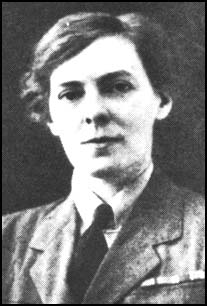 Helen Fraser was born into a Scottish aristocratic family in 1879.
Educated at Cheltenham Ladies College her parents were shocked when she asked to study
science at university. After obtaining a B.Sc. degree in Botany from King's College,
London she carried out research into mycology. Helen Fraser was born into a Scottish aristocratic family in 1879.
Educated at Cheltenham Ladies College her parents were shocked when she asked to study
science at university. After obtaining a B.Sc. degree in Botany from King's College,
London she carried out research into mycology.
In 1907 Fraser joined with Elizabeth Garrett Anderson to form the
University of London Women's Suffrage Society. She also became a lecturer at Birkbeck
College and eventually became Head of the Botany Department. In 1911 Helen married the
palaeobotanist, Professor Gwynne-Vaughan.
On the outbreak of the First World War, Gwynne-Vaughan joined the
Red Cross and became a VAD. This work was halted by the need to nurse her seriously ill
husband. On the death of David Thomas Gwynne-Vaughan in 1915, she returned to her voluntary war
work.
In January 1917, the government announced the establishment of a
new voluntary service, the Women's Auxiliary Army Corps (WAAC). The plan was for these
women to serve as clerks, telephonists, waitresses, cooks, and as instructors in the use
of gas masks. It was decided that women would not be allowed to hold commissions and so
that those in charge were given the ranks of controller and administrator. Helen
Gwynne-Vaughan was chosen for the important job as the WAAC's Chief Controller (Overseas).
After a critical report of the Women's Royal Air Force (WRAF) by
Lady Margaret Rhondda, its commander, Violet Douglas-Pennant was dismissed. In September,
1918, Gwynne-Vaughan, who had gained a reputation as an efficient administrator in the
WAAC, was asked by Sir William Weir, Secretary of State for Air, to take charge of the
WRAF.
Gwynne-Vaughan was a great success as commander of the Women's
Royal Air Force. Sir Sefton Brancker argued that "the WRAF was the best disciplined
and best turned-out women's organization in the country." Gwynne-Vaughan's work was
recognised in June, 1919, when she was awarded the Dame Commander of the Order of the
British Empire (DBE). However, after the war it was decided
to disband the WRAF and Gwynne-Vaughan left office in December, 1919.
Gwynne-Vaughan resumed her academic career and in 1922 published
the well-received Fungi: Ascomycetes, Ustilaginales, Uredinales. Elected President of the
British Mycological Society, she wrote a series of substantial papers in the 1920s and
1930s on the cytology of fungi.
Gwynne-Vaughan helped to form the WRAF Old Comrades Association
and became its first president in March 1920. With war with Germany looking inevitable in
the summer of 1939, Gwynne-Vaughan was asked to become head of the recently established
Women's Auxiliary Air Force (WAAF). As she was now sixty she declined the offer and
instead suggested Jane Trefusis-Forbes, the
Director of the Auxiliary Territorial Services (ATS). However, she did agree to become
Major-General of the ATS.
In 1941 Gwynne-Vaughan left the ATS and returned to Birkbeck
College where she remained until her retirement in 1944. Helen Gwynne-Vaughan was active
in the Soldiers', Sailors' and Airmen's Families Association until just before her death
in 1967. |
Return to Women in
History of Scots Descent Index |



