|
I am a Jew.
Hath not a Jew eyes? Hath not a
Jew hands, organs,
dimensions, senses, affections,
passions ? . . .
If you prick us, do we not bleed,
If you tickle us, do we not laugh?
Shakespeare, (Shylock),
Merchant
of Venice
Yes, I am a Jew;
and when the ancestors of the
right honourable member
were brutal savages on an unknown
island, -
mine were priests in
the temple of
Solomon.
Benjamin Disraeli,
(replying to MP Daniel O’Connell
in the House
of Commons, 1835)
My knowledge of Israel
came largely from Biblical history, and was short on modern events.
When the geography and history of a land is learned only in church and
Sunday school, it does tend to have an air of unreality about it. I
believe for most of us, it takes a personal visit to the region to make
the facts alive and relevant. Along with many distant observers,
however, I did think the creation of a Jewish state was an amazing
thing. How a people could retain their faith, language, customs and
ethnicity during nineteen centuries of dispersal in other lands, is a
historical wonder. But I do not interpret their current possession of
the land as signifying that they have a divine right to treat the
Palestine people in an unjust way. None of my Israeli friends think
that either. Israel has a right to exist and to defend itself, but the
Arab residents of Palestine also have a right to a home, to a future, to
security and to peace. That truth should not be obscured by the
terrorist murders by suicide bombers, or the shelling of Palestine homes
and villages by the Israeli army. Arabs and Israelis are brothers, and
ultimately there has to be reconciliation.
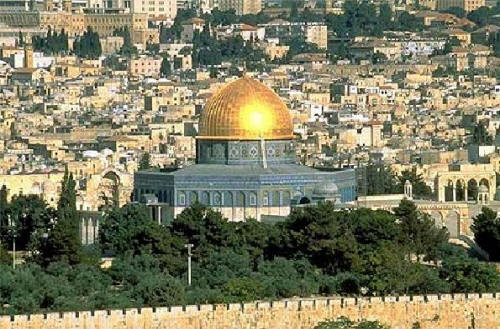
Jerusalem
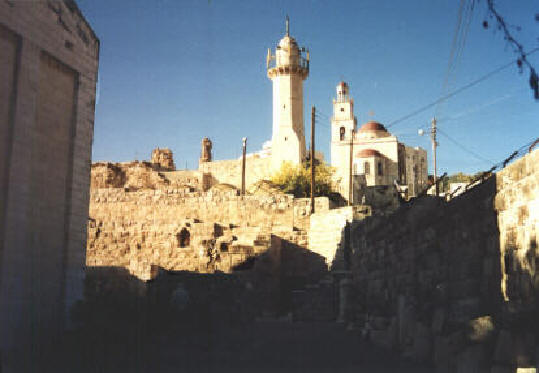
Above ; Arab town west of Jerusalem.
Known as Bethany in New Testament, but the Arabs now call it El-Lazarai,
the town of Lazarus. There are many Arabs in Israel, both Moslem and
Christian.
The portrayal of Jewish
people in English literature has been mixed, yet nearly all the books
with characters of that race, reflect the way they have been vilified
and persecuted, and been subject to injustice. Shakespeare’s Shylock
evokes both sympathy and dislike, yet students of the works of the bard
of Avon usually identify him as the real hero of The Merchant of
Venice. Sir Walter Scott’s Ivanhoe portrays the beautiful
but tragic Jessica, suffering in consequence of her race and her
religion. She has been described as the most noble character in that
romantic tale. Charles Dicken’s Fagin, in Oliver Twist, is a
despicable figure for the most part, though a pathetic creature at the
end. Some have argued that he is balanced by the brutal Englishman Bill
Sykes. But then, Sykes is one of many English characters, while Fagin
is the only Jewish person in the book. I read each of those works while
at school, but remained largely unaware of the anti-semitic undertones
they reflected. I could never understand the anti-semitism of Christian
persons since in my albeit simple understanding of theology, all of
mankind were guilty of the betrayal and death of Christ, and, after all,
Jesus was a Jew in every sense of the word.
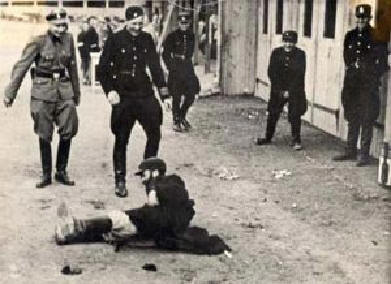
Nazi treatment of Jews in the late 1930’s
I think I must have
been about ten years old when I first came across the horrors of the
Holocaust perpetrated on the Jewish people by Hitler and his Nazis. My
parents had gone off for a whole day, which was unusual for them, and my
grandmother was looking after us and preparing the tea. The weather
being cold and wet, I sought relief from boredom in the books in the
‘front room’ bookcase. One volume I found, Lest We Forget, (by
Lord Russell of Liverpool),
was a large
pictorial record of the concentration camps with photographs of the
surviving inmates and the heaps of dead bodies as discovered by the
allied troops on their arrival in 1945 at Auschwitz, Belsen,
Buchenwald, Dachau and other dreadful extermination camps.. The
images have haunted me ever since. I gazed at every picture and became
physically sick, but said nothing to other family members. My
grandmother could not understand why that evening I declined a meal that
I would normally have enjoyed.
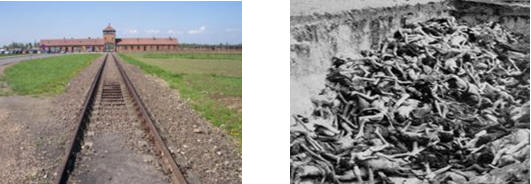
Auschwitz concentration
camp Grave of Belsen inmates
I recall another early
awakening to the realities of the Middle East when seeking some relief
from our navigation studies, Skipper Willie Cowie of the Strathpeffer,
and I, went to a local cinema one evening in Aberdeen, to see Otto
Preminger’s film Exodus, based on the book by Leon Uris. The
film, made in 1960, relates some of the events leading up to the
declaration of the State of Israel in 1947. It portrayed the fears,
goals, and vulnerability of the fledgling state with graphic depictions
of terrorist activities and the war of independence at the birth of the
new state, and in its aftermath.
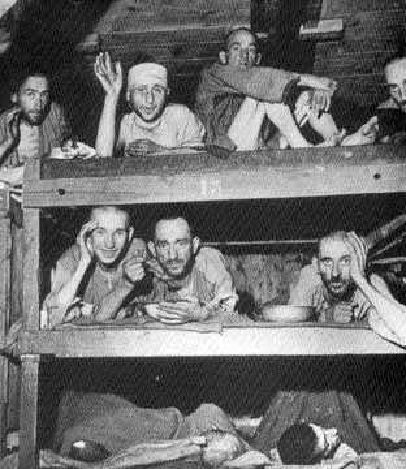
Buchenwald
I was later to meet
with Israelis who took part in these events. The first was Raphael
Ruppin, a member of an illustrious family whose father was Chairman of
the Jewish Agency and as such enabled group of pioneers to establish the
first kibbutz (D’gania Alef) by providing them with land allocation and
some budget.
He was later a Minister of Education. His brother-in-law was Yigael
Yadin Professor of Archeology at the Hebrew University, Jerusalem, who
had commanded the Israeli army during the war of independence, and who
was later Deputy Premier to Menachem Begin. Yadin is best known for his
marvelous books on archeological discoveries.
I was to spend some
hours with Yigael Yadin, and given that opportunity, quizzed him at
length about ancient Hebrew history, and his excavations at Masada and
Hazor. Masada we all know was the last fortress of first century Jews
who held out against the might of the Roman empire. The defenders
eventually committed suicide rather than surrender. The history has
been well recorded by Josephus and others, and has recently been
presented in a film for the
benefit of cinema goers.
Hazor was the chief northern city state in the time of Joshua. It was
conquered by the invading Hebrews, and was one of the few cities that
Joshua ordered to be burned according to the eleventh chapter of the
book of his name. During the Hazor excavations, Yadin’s workers
actually came across the 13th century BC level of ashes that
marked the city’s destruction by Joshua’s forces.
I met Ruppin when we
were both participating in the FAO / USSR seminar and study tour on
fisheries training and education. At that time he ran a fishery school
located in Michmoret on the Mediterranean coast. I was to visit him
there several times, and had the memorable experience of joining the
family at a Seder feast (Passover meal) that was led by Yadin himself.
Raphael’s aged mother was still around then. She had emigrated to
Palestine after the first world war, to meet her husband-to-be, and she
had a wealth of tales about the land and the people in those days.
Raphael (at 80 years of age) recently wrote an acclaimed novel on the
Josephus period that has remarkable relevance to the modern situation.
The
other character was even more interesting. Menachem Ben Yami was
brought up in Poland where he found himself in the Warsaw ghetto at the
start of the second world war. He escaped from the ghetto at the age of
16 and joined a group of Jewish partisans survivors of the Warsaw Ghetto
uprising and within the framework of The Polish Communist resistance
fought with them and Soviet POW escapees against the Nazi forces for a
year and a half. He then joined the Red Army, and fought with them on
the Eastern front for another year. He was made a scout-sapper, with the
duties of finding and clearing mines ahead of his regimental scouting
squad. After recovering from a shrapnel wound in Soviet hospitals in
Moscow, Menachem went back to Poland to join the Polish army from which
he was demobilized after a couple of month as being too young!
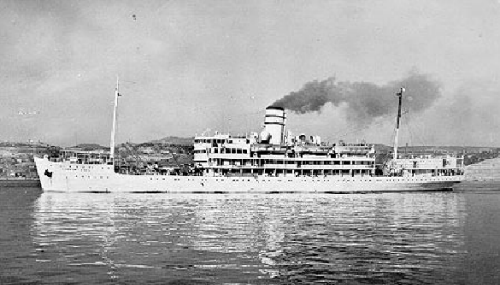
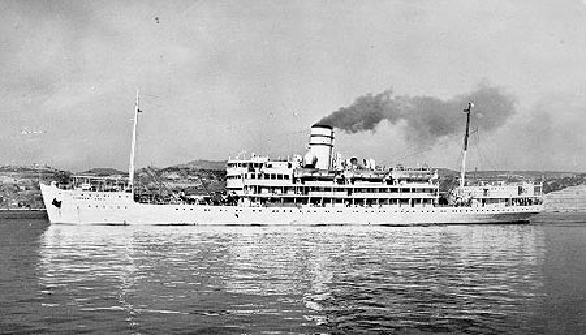
Jewish immigration ship, SS Kedmah
He then made his way to
Germany from where he helped to bring Jewish survivors from the East to
the UNRRA refugee camps in the American occupation zone. Later he was
sent by the Haganah underground to Marseilles where at a maritime school
he was trained to be a marine wireless operator. As such he boarded one
of the illegal emigrant ships and made it to Israel. Swimming ashore
one night he was arrested by British soldiers and put into an internment
camp. He escaped from the internment camp and joined a kibbutz where he
worked until the declaration of Israel’s statehood after which he fought
in the war of independence in the fledgling Israeli Navy.
Once all that was over,
Menachem returned to his kibbutz near Haifa and started to fish in the
Mediterranean. This was on a Scottish MFV that had been based in
Alexandria during the WW2 to serve as a firefighting vessel. Ben Yami
operated it for ten years, before moving for 3 years to the South Red
Sea port of Massawa, thus starting his international career. He married
a lovely young Jewish girl, Hannah, who had survived the Teresianstadt
concentration camp, but had lost her parents and sister in Nazi death
camps. Her two brothers survived by escaping from Germany during the
war.
Although largely
self-taught, Ben Yami could speak four languages, - Polish, Hebrew,
Russian and English. (He later acquired some Italian and French).
Studying fishery literature in the 1950’s he obtained copies of Soviet
fishery texts. This was at the time when Russia was building fleets of
factory trawlers, and sending them all over the world to fish (and
possibly do other things as well). Menachem translated several of the
Russian fishery books into English, and that was how I first came across
his name, when I read these translations in the library of the Fishery
College in Canada, in 1965. The following year I was invited by Hilmar
Kristjonsson, FAO’s chief fishery technologist, to undertake some work
in his office in Rome, Italy. One evening there I was taken to a
reception in the office of Roy Jackson, then Director of Fisheries FAO.
There was a very pleasant Israeli man there, on his way to a brief study
period in the USA. I can still recall his boyish look and eager
personality. That was my first meeting with Menachem Ben Yami.
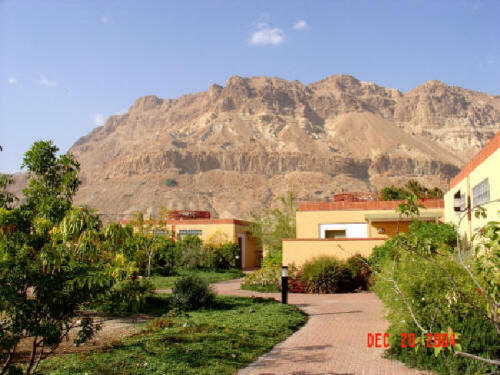
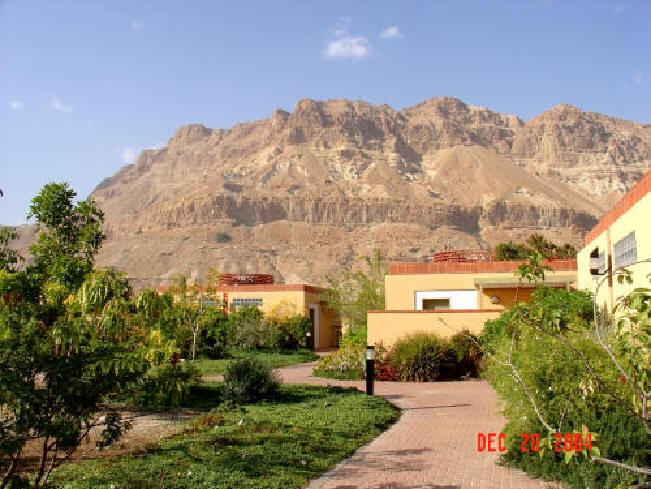
Above : Kibbutz of Ein Gedi. The
kibbutzim are collective farms which practice communal ownership and
management. Many of them today have turned from agriculture to
manufacturing and are quite prosperous.
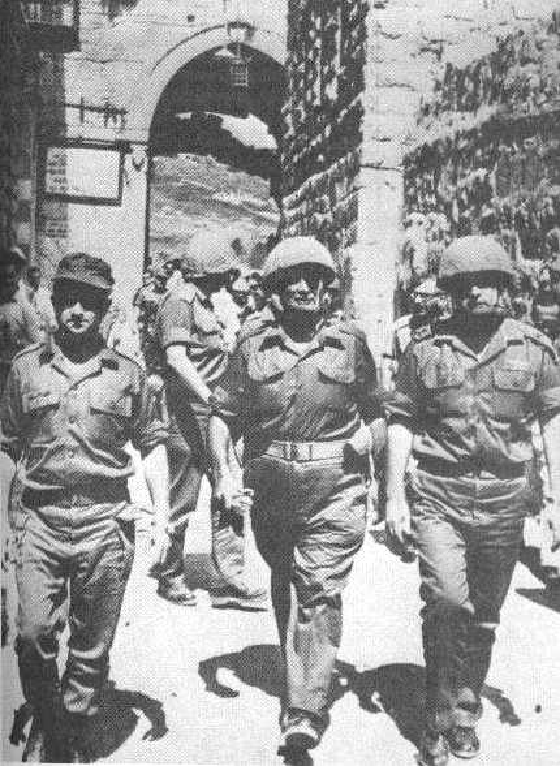
Entering Jerusalem during the 67 war.
He was to become a
prolific fishery author, even producing computer programmes of data and
formulas of use to fisheries technologist. It was a pleasure for me to
work with him and even co-author some fishery papers with him. Menachem
had the most creative and agile mind I ever came across. Each problem
or issue was tackled with great enthusiasm. Lateral thinking was a
speciality. He
never tired of finding new ways to approach the challenges of fishery
management, or of adapting technology to address new needs. At over 70
years of age, he is still in demand all over the world as a speaker and
writer.
Now, some might think
that my Jewish friends might be hard-line anti-Arab Israelis, but
nothing could be further from the truth. They are both on the “peace
wing” of Israeli politics. Both are in favour of a Palestine state, and
of the return of the west bank to the Arab people. Both despaired of
the aggressive military actions of Ariel Sharon, although they approved
of his plan to withdraw from Gaza. [Of
Sharon, who was struck down by illness in 2006, Menachem says that
following his political U-turn, and his subsequent struggle against his
own party’s and other extremists, the whole “peace wing” became his
supporters. Therefore, as long as he sincerely pursued his Gaza
evacuation project he could count on the ever-wary support of the left
and the center-left parties. History teaches that there are strong
rightist leaders who at a certain stage “see the light” and resolve
conflicts, which leftist leaders are unable to resolve because of strong
opposition from the right. It was President Richard Nixon, the communist
hater who established USA relations with China. It was the rightist
Begin, who made peace with Egypt by withdrawing from the whole of Sinai.
Golda Meir said at that time: “Such peace I could have made before, but
just imagine what he (Begin) would have done to me…”. De Gaulle pulled
France out of Algeria, and Churchill started the dismantling of the
British empire.] Raphael Ruppin used to tell me of a close Arab
friend of his who died some years ago. They grew up together and became
lifelong friends. “When we discuss the Arab-Israeli problems”,
said Raphael, “we have differences, yes, - but if it was left to the
two of us, we could resolve all of the issues and make arrangements for
long-term peace and security, in a couple of days”.
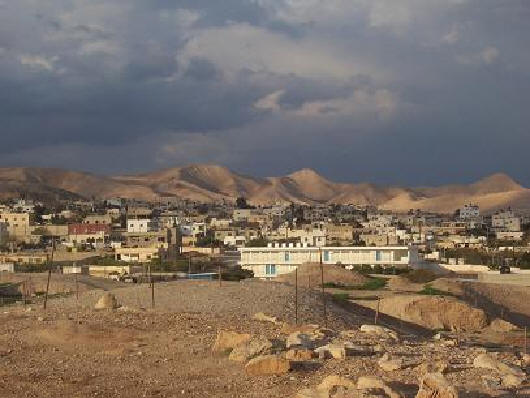
Above : Refugee camp outside of
Jericho
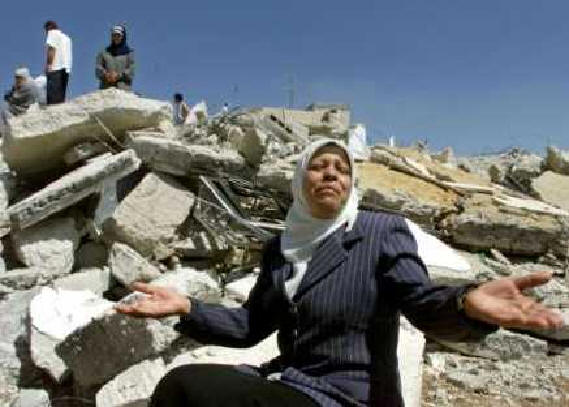
An Arab home demolished by the Israeli
military
The situation in Israel
today is bad, mainly for social reasons and the growing gap between
haves and have-nots. Some might say it could scarcely be worse, short
of full scale war breaking out again. However, it is somewhat improved
on the prevailing conditions at the turn of the century. But it all
needs to be seen in context, and the fledgling state of 60 years has had
to face a constant threat against its very existence. Few countries
have to live in a constant state of near war as Israel must.
But it is still
surprising to visit Israel and find Jews and Arabs working, studying,
serving, side by side, all over the small country. I have often taken
Arab taxis when driving around, and have enjoyed listening to the
drivers’ point of view which they will readily share. One has to
remember that there are Arab Jews, that is Jews who immigrated to Israel
from Arab countries. Then there are some Arabs who converted to Judaism
(usually following military service), but this makes them full-scale
Jews in the eyes of the State. There are also Christian Arabs,
Arab-speaking Druses with their special religion and culture, and Moslem
Cherkes (Cercesians) who are not Arabs, but descendants of Caucasians.
There is also a large community, - almost a tribe, of ‘Black Hebrews’
who live in a quasi-collective. Although practicing a form of Judaism,
they are not recognized as true Jews by the orthodox rabbis. Many of
them came to Israel from the USA. Recently the Israeli army accepted
into its ranks, its very first Israel-born Black Hebrew. Thus there is
a large and varied population of non-Jews and quasi-Jews living in the
state of Israel.
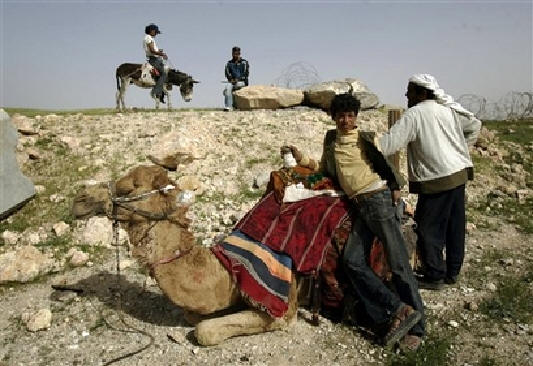
Bedouin Arabs, nomadic tribesmen of
Israel and Palestine
My wife’s family has
interesting Jewish connections. A German-Jewish family, the Schlomka’s,
came to Edinburgh, Scotland, in 1948 when there was much unrest in
Israel. Fritz Ernst Constantin had been in a concentration camp for a
period in Germany and had gone from there to Palestine in 1934, where he
met and married Hannah Rachel Haber who had been born in Jaffa in 1918.
From then he used an Anglicised first name of Michael. They had three
young children, Conny, Helen and Freddy. They set up a small
second-hand bookshop business in the city, and started to build a life
for themselves. However, Mr Schlomka died suddenly, and his wife who
suffered throughout her life from bouts of nervous illness, had to be
hospitalized. My wife’s parents knew the family and took an interest in
the children, acting as foster parents to them over a period of years.
The older boy Conny died in tragic circumstances, but Helen and Freddy
survived, and were like a brother and sister to my wife. Helen married
a young local businessman, and Freddy, after a few escapades, went to
the USA, and from there he later moved to Israel.
Today, Helen has a
lovely grown-up family. She has researched her family history with
great diligence, and contacted relatives in Germany, Israel, and the
USA. She is a great supporter of the State of Israel, and follows the
events there with much concern. Freddy has taken a different route. He
married a world-class harpist, and on moving to Israel, took a deep
interest in the plight of the Palestine people. For a period he
operated a charity, ICAHD, the Israeli Committee against House
Demolitions, which rebuilds Arab houses that have been damaged or
destroyed by the Israeli army. (I doubt if any Jew could have been more
pro-Palestine people than that !) Freddy now promotes the development
of small mixed communities to demonstrate how Arabs and Israelis can
live together in harmony.
My visits to Israel
took place between 1975 and 1988, and were both official and personal in
nature. I was able to see the land from Tel Aviv to Jericho, and from
Galilee to Elat on the gulf of Aqaba. It is a fascinating place,
especially for anyone with a background in Biblical events. Almost
every corner of the country has links with the distant past. At Beth
Shean, near to mount Gilboa where King Saul and Jonathan were killed, a
first century Roman-era town that was destroyed in an earthquake, is
being painstakingly pieced together, stone by stone, like a huge
three-dimensional jigsaw for which there is no guiding picture ! I was
struck by the number of Bible places that are now Arab towns, including
Nazareth, Bethlehem and Bethany. Bethany was the home of Mary and
Martha, and where according to John’s Gospel, their brother was raised
from the dead. The present Arab residents of that little town, preserve
a memory of the Gospel account in their name for the village – El
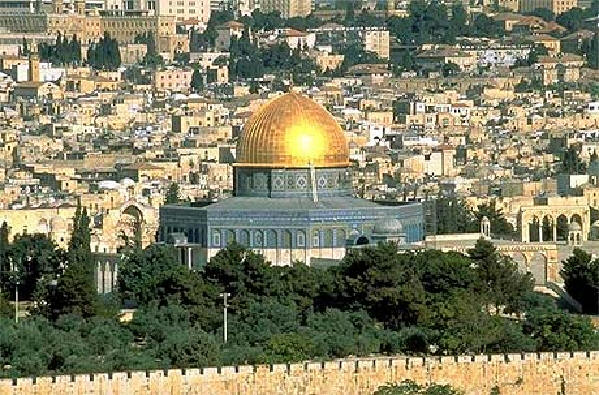
Lazarai – the town of Lazarus. Old Jerusalem is like something out
of a fairy tale book. Viewing it from the Mount of Olives, one is
transported back, not just centuries, but millenniums.
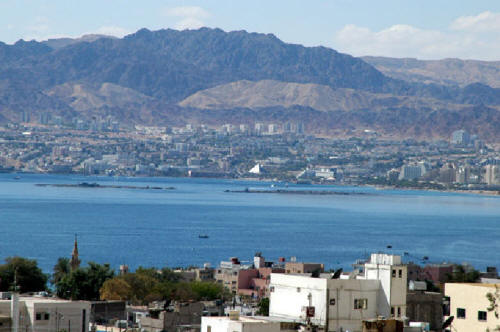
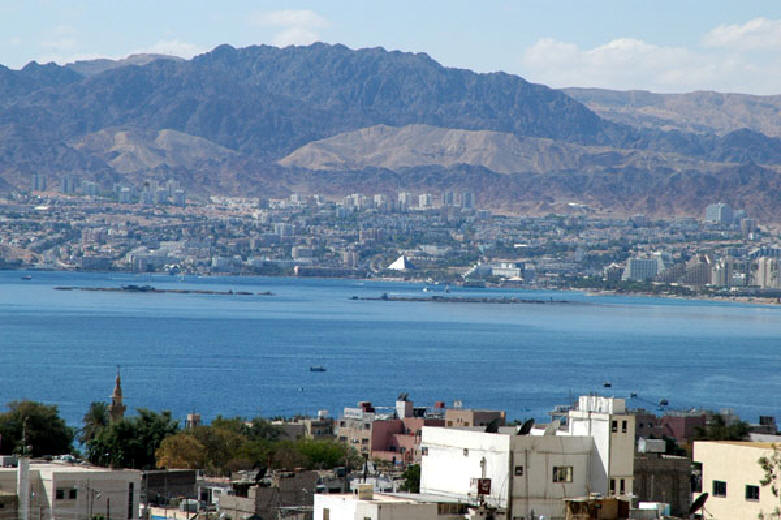
View of Elat over the Gulf of Aqaba
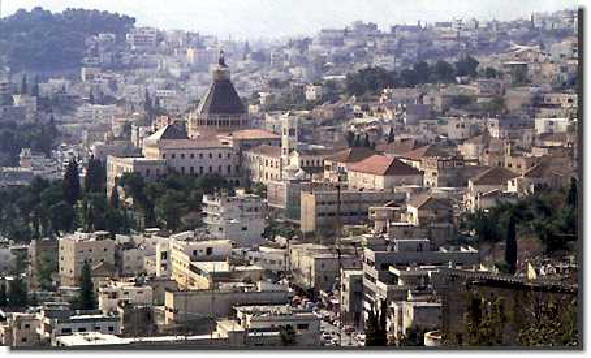
Above : Nazareth, - now an Arab city
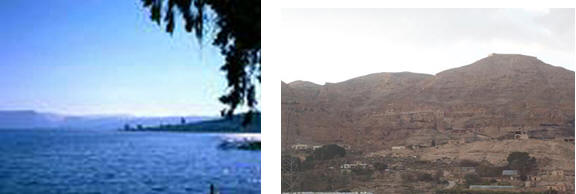
The Sea of
Galilee Desert hill believed to be the
Mount of Temptation
The coastal towns of
Joppa (Jaffa) and Caesarea, are also full of remnants of their former
importance. The Sea of Galilee is still a magical lake in many ways, and
its fishing villages still function though catering more for tourists
than locals. Masada towers over the Dead Sea, in its austere fortress
height, where the messianic Jews held out to the last against the Roman
army. Elat is located strategically at the southern point of the Negev
desert, with the mountains of Moab on one side and the Sinai desert on
the other. One can still imagine the flotilla arriving there 3,000
years ago, that brought the Queen of Sheba and her retinue on their
state visit to the Kingdom of Solomon.
My favourite site in
all Israel is the “garden tomb”. There are two locations in Jerusalem
that are regarded as the sites of the crucifixion and the tomb where
Jesus’ body was interred. One is inside the ’church of the holy
sepulchre’, and with all due respects to devout pilgrims who venerate
it, - the place does not ring true to me. It is inside the old city,
and the gospel records clearly indicate that both were outside. Also,
the places claimed for the cross and the grave are just altogether too
close together. And there is absolutely no indication of the Golgotha
skull-shaped rock, or the garden where, John’s Gospel tells us, the tomb
had been constructed.
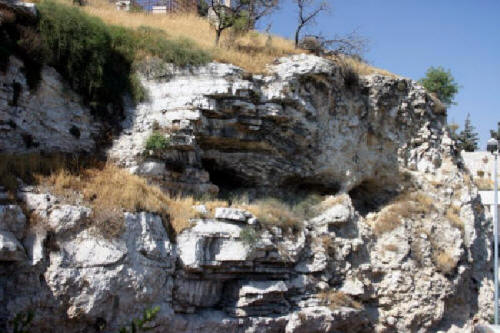
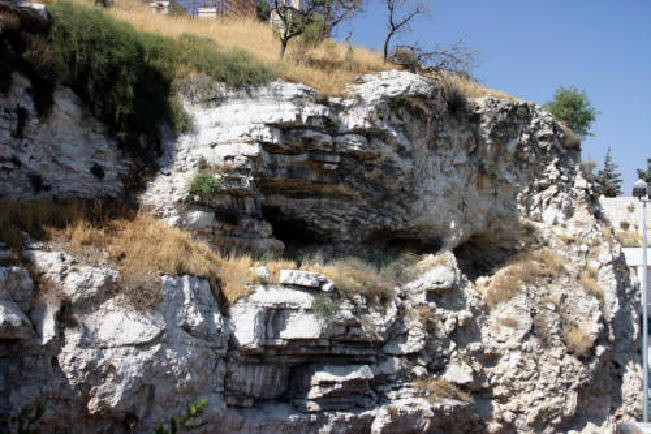
the Skull Rock, Jerusalem
Far more convincing is
“Gordon’s Calvary” identified just outside the old city wall by the
renowned general. The huge skull-shaped rock looks just as Golgotha is
described to us by three of the Gospel writers. Nearby a large garden
has been uncovered, with several rock-hewn tombs. One of these is
preserved as an example of what the original tomb would have looked
like. It is located by the Damascus gate, and close to a present day
public bus station. It has been believed since the time of King David
that the promontory is the Mount Moriah where Abraham was tested to
offer his son as a sacrifice, which is why the Moslem Dome of the Rock
and the earlier Temple of Solomon were constructed nearby.
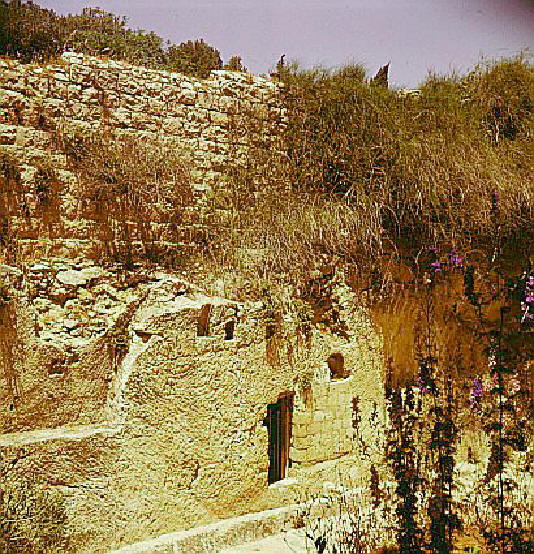
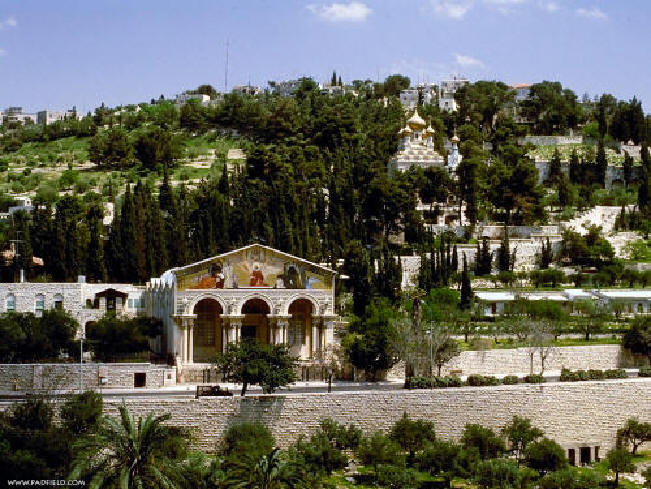
Garden Tomb, near to Skull Rock
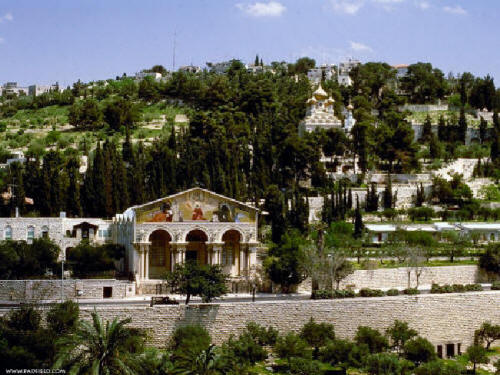
the Mount of Olives
It is truly amazing
that the world’s three monotheistic faiths converge on this one location
where four millenniums ago, a lonely Semitic patriarch performed a
strange act of faith that was to have profound and mysterious
significance for all humanity. “Abraham believed God, and it was
counted to him for righteousness”. And so he became the father of
the faithful. Abraham lived at the very dawn of civilization. He was
centuries earlier than the great Pharaoh Akhenaten, a predecessor of
Tutankhamen. Akhenaten was referred to as the heretic Pharaoh as he
tried to change Egyptian religion to the worship of the one god Aten.
He was portrayed differently from the stylised forms of the time and has
been called the “first individual in history”. But the individual
Abraham lived long before him. He is believed to have been buried in
Hebron, now an Arab town near to Gaza.
There are no
archeological evidences of Abraham’s existence, though there are plenty
attesting to events in his lifetime like the destruction of Sodom and
Gomorrah; but there are some artifacts dating from that period, that
seem to refer to the Mount Moriah event. “now I know that you fear
God, since you have not withheld your son, your only from me. Then
Abraham lifted his eyes and looked and there behind him was a ram caught
in a thicket by his horns. He took the ram and sacrificed it instead of
his son”. A number of valuable artifacts, made of gold, silver or
precious metal, have been found in the region, that appear to represent
a ram with its horns wrapped in the branches of a thorn bush.
Archeologists are unsure what these items are, except to suggest that
they had religious significance, and may have been representations of
Abraham’s Mount Moriah experience.
Both Jewish and Moslem tradition link the site of Abaraham’s
experience with the ‘Bethel’ where fugitive Jacob had a dream of a
stairway from earth to heaven. (Even the Scots got a claim on that
event, their original ‘Stone of Destiny’ being reputed to be the one
that Jacob slept on). Both sites are where old Jerusalem now stands.
King David’s citadel, Akra, and Mount Zion, are also part of the
landscape, with the Mount of Olives lying to the east. It was to that
location that King David brought the most revered item in the Jewish
religion, - the Ark of the Covenant, - after it was recovered from the
Philistines, and from the house of Obed-Edom where it had remained for a
period.
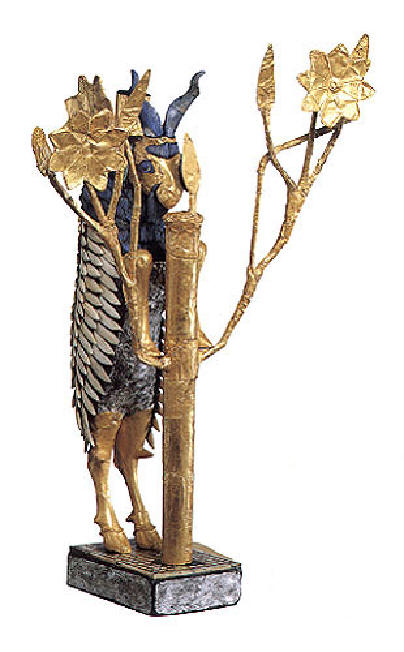
Gold ram statuette from Ur of the
Chaldees, dating back to the time of Abraham.
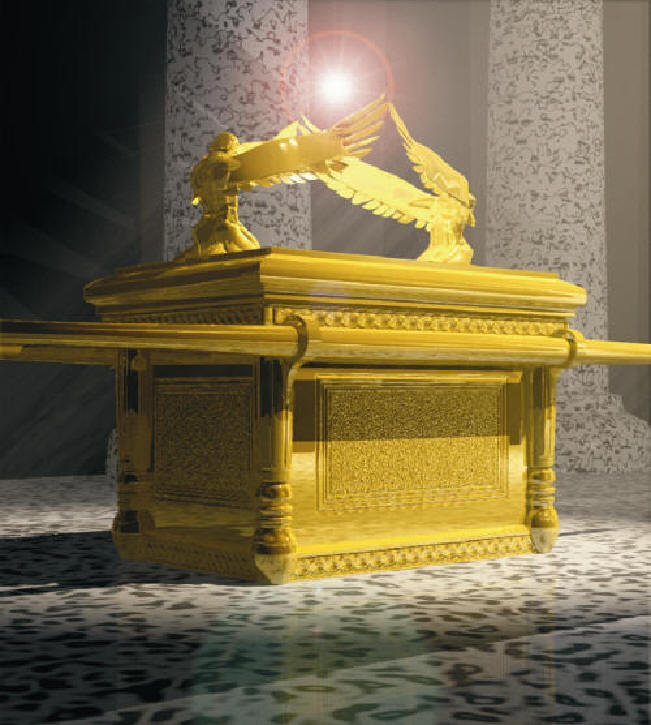
The Ark itself was the
most sacred piece of furniture in the tabernacle or worship tent used
during the Israelites desert wanderings. Moses gave its specifications
and the instructions for its care and transport, in the Book of Exodus.
The sacred chest, was constructed of hard desert wood, overlaid with
gold. According to the New Testament writer of the Epistle to the
Hebrews, inside were the two stone tablets inscribed with the ten
commandments, a golden pot containing manna, and a budding almond rod
that belonged to Moses brother, the first High Priest, Aaron. The most
striking thing to an observer would have been the two angels or cherubim
[Ancient
representations of ‘cherubim’, both Jewish and Sumarian, are
totally unlike the cherub pictures of children’s books. They were
understood to be among the fiercest and holiest of angelic beings.]
of beaten gold, at each end of the ark, their wings stretching forward
and touching each other, while their faces gazed into the ark, or onto
the lid or ‘mercy seat’ of pure gold, that was sprinkled with
sacrificial blood.
While King David made
all the preparations for the construction of a Temple to house the Ark,
he was disqualified from building it as his hands were stained with
blood from his many battles and war experiences. It was left to his son
Solomon, whose name meant ‘peace’, to build the temple that he
came to be associated with. Solomon’s temple, on a mound called Ophel,
stood for over 4 centuries, till it was destroyed by Nebuchadnezzar who
took the Jewish people into captivity in Babylon. Rebuilding work
started during the reign of the Persian King Cyrus, led by Zerubbabel
and other Jewish leaders of the exile period, like Ezra and Nehemiah.
The work was finished in the time of Herod the Great (the first Herod we
read of in the New Testament), and that is why the second temple
sometimes bears his name. It was destroyed by the Romans in AD 70. But
from the time of the destruction of Solomon’s temple, there is no
mention of the location of the Ark of the Covenant. This has led to
much speculation, some of it quite fanciful and bizarre.
Following the
destruction of the second temple, the site in old Jerusalem was
eventually built over during the first millenium AD. The Romans had a
fortress there, - Fort Antonio, and later the followers of the Prophet
Mohammed were to construct the Dome of the Rock, and the Al Aqsa mosque
which remain there to this day. The western wall, or the ’wailing wall’
where devout Jews pray, is believed to be all that remains of the second
temple. Jesus was often in that temple, where he taught and challenged,
and drove out the money changers. Nearby were the Roman and Jewish
scenes of his trial, and the place of his crucifiction, and burial. Few
locations on the face of the earth, have such historical and religious
significance, or such potential to stir powerful feelings of faith or
nationality.
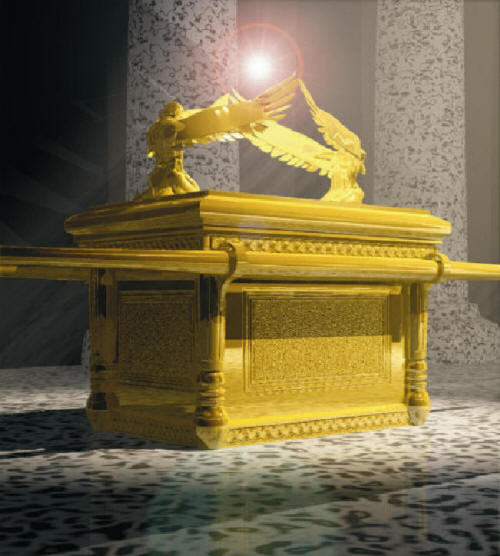
Model of the Ark of the Covenant
So, what became of the
Ark of the Covenant? As suggested in the Indiana Jones film, some
believe it was taken down through Egypt to Ethiopia, by devout Jews
pledged to protect it from Nebuchadnezzar. The basis of that idea is
the belief that the kings of Ethiopia were descended from Menelek, the
child it is thought that the Queen of Sheba bore to Solomon. Whether
that tradition has factual basis, we do not know, but certainly since
Solomon’s time there have been strong links with Ethiopia, and the
existence of the tribe of ‘black Jews’, the Falasha. Christian era
tradition also plays a part. There has been a Christian church in
Ethiopia since New Testament times when the Ethiopian Minister of
Finance visited Jerusalem and met with the evangelist Philip. And
strangely, many of the Ethiopian churches contain old relics or replicas
of the Ark.
However, mainstream
thought in Israel is that if the Ark is still around, it is buried under
the temple site, possibly near to the tunnels and caverns related to the
water system, that date back to the time of King Hezekiah. So we do not
know. But for those with an interest in Jerusalem’s history, or a
fascination with the historical origins of their faith, whether
Christian, Jewish or Moslem, the subject never fails to excite the
imagination.
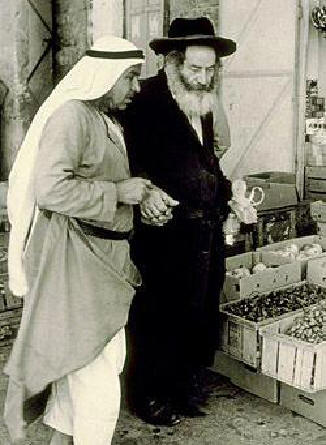
Arab and Jew
together in peace and friendship, - when might it become a reality? |