|
Let us, of both races
in the south, throw off the shackles of racial
and sectional prejudice, and rise above the clouds of ignorance,
narrowness and selfishness. ... The Negro can afford to be
wronged;
the white man cannot afford to wrong him. If a white man steals a
Negro’s ballot, it is the white man who is permanently injured.
Physical
death comes to the one Negro lynched in a county, but death
of the morals,
death of the soul, comes to the thousands responsible for
the lynching. ...
There is no escape through law of man or
God, from the inevitable:
The laws of changeless
Justice, bind oppressor with oppressed;
and close as sin and suffering
joined, we march to fate abreast.
Let us pray God for a blotting out of
sectional differences and racial
animosities; a determination to administer
absolute Justice; and a willing
obedience to the mandates of law. This,
coupled with our material prosperity
will bring our beloved South, a new heaven
and a new earth.
Booker T. Washington,
speeches, 1895 & 1896
We are confronted
primarily with a moral issue. It is as old as the Scriptures
and as clear as the American Constitution. The heart of the question is
whether
all Americans are to be afforded equal rights and equal opportunities.
... One
hundred years of delay have passed since President Lincoln freed the
slaves,
yet their heirs, their grandsons, are not fully free. They are not yet
freed from
the bonds of injustice. They are not yet free from social and economic
oppression.
And this Nation, for all its hopes and all its boasts, will not be fully
free until
all its citizens are free.
We preach freedom
around the world, and we mean it, and we cherish our freedom
here at home; but are we to say to the world, and much more importantly,
to each
other, that this is a land of the free except for the Negroes; that we
have no second-
class citizens except for the Negroes; that we have no class or caste
system, no
ghettoes, no master race, except with respect to Negroes ? The time
has come for
this nation to fulfill its promise. Those who do nothing are inviting
shame as well
as violence. Those who act boldly are recognising right as well as
reality. But
legislation cannot solve this problem alone. It must be solved in the
homes of every
American in every community across our country.
President John F.
Kennedy, Civil Rights Message, 11 June 1963
Since the end of World War II, war criminals and other human rights
abusers have
lived in a golden age of impunity, and the international community has
shown little courage or moral will to put a stop to crimes against
humanity.
Tony Freemantle,
Crying for Justice,
A Houston Chronicle Special Report
Justice is conscience, not a personal conscience but the conscience of
the whole
of humanity. Those who clearly recognise the
voice of their own conscience,
usually recognise also the voice of Justice.
Alexander
Solzhenitsyn, The Struggle Intensifies, October 1967
Justice is justly
represented blind, because she sees no difference in the parties
concerned. She has but one scale and weight, for rich and poor, great
and small.
Her sentence is not guided by the person, but the cause. Impartiality
is the
life of justice, as justice is that of government.
William Penn, 1644 –
1712, Quaker, founder of Pennsylvania
At best, man is the
noblest of the animals;
separated from Law and Justice, he is the worst.
Aristotle, 384 – 322
BC, Greek Philosopher
Justice delayed is
Justice denied.
William Gladstone,
1809 – 1898, British Prime Minister
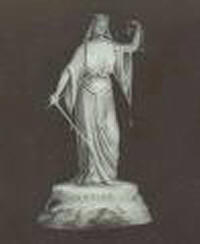
Statue of Justice
I have included a
number of quotations on justice above, because, I am convinced that, as
with the other great virtues and principles of civilisation, we are in
danger of losing sight of its meaning and value. As a child I often
gazed at the statues and portraits of Justice depicted in Arthur Mee’s
Children’s Encyclopaedia, with some awe and admiration. Justice was
usually represented as woman, a woman of great beauty, purity and
strength of character. The Quaker William Penn who suffered his own
share of injustice in both England and America, stated, Justice is
mostly pictured blind or blindfolded, to emphasize her complete
impartiality. But today our leaders cloud the concept of justice with
ideas of national security, political expediency, and an array of legal
loopholes – as if Justice was served by making the letter of the law
rather than its spirit, the supreme factor.

William Penn, Quaker, Pennsylvania
founder. “Justice is rightly represented blind. She has but one
scale … Her sentence is not guided by the person, but the cause.”
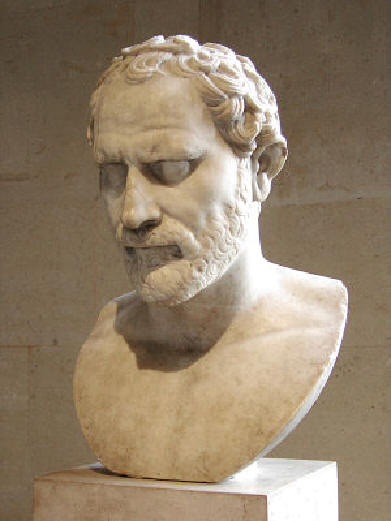
Demosthenes, “the love of truth and
justice within us, is the image of God”
The concept of justice
is often linked closely with that of truth. Demosthenes said that what
we have in us of the image of God, is the love of truth and justice.
Truth sets us free, said Jesus, and where truth is suppressed, freedom
dies. No wonder the Nazi Propaganda Minister, Joseph Goebbels said,
“It is vitally important for the State to use all of its powers to
repress dissent; for
Truth is the mortal enemy
of the Lie, and thus by extension, the Truth is the greatest enemy of
the State”. It would seem in this the beginning of the 21st
century, that several governments and their state-appointed authorities,
are following Goebbels’ dictum, and pressuring the media to conform,
especially in matters relating to war and justice. And as some of the
most outspoken opponents of what is really going on inside the corridors
of power, and in the conflict areas of Chechnya, Burma, the Sudan, Iraq
and Afghanistan, have discovered, George Orwell’s statement remains true
today : “During times of universal deceit, telling the truth becomes
a revolutionary act”.
Albert Einstein, the
great physicist and scientist, said, “I am firmly convinced that the
passionate will for justice and truth has done more to improve the human
condition than calculating political shrewdness which in the long run
only breeds general mistrust”.
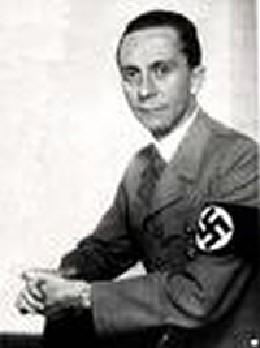
Joseph Goebbels, the father of modern
propaganda
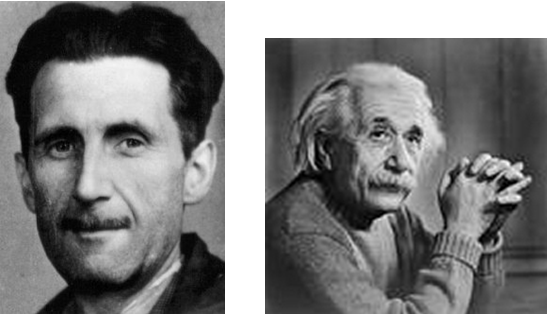
George Orwell, author of 1984, and
Animal Farm. Albert Einstein,
“During times of universal
deceit, telling the truth “… the passionate will for justice and truth …”
becomes a revolutionary act.”
Genocide and
Slaughter
However depressing and
sobering it might be, I think it would be salutary to remind ourselves
how many innocent persons have been murdered within the last hundred
years, in civil wars, and purges, by military death squads, under
despotic regimes, and from brutal inhumane ethnic cleansing.
The appalling figures
underscore the priceless importance of justice, when platitudes or
appeals to conscience evoke little response. The incomplete list
reveals over 42 million brutal deaths, not from international wars, but
from internal strife, tribal battles, repression, proxy-invasions, and
ethnic cleansing. And the list does not include the tens of thousands
murdered and tortured in El Salvador, Nicaragua, Chile, or other south
and central American states during periods of military rule or of
foreign financed military death squads.
(The figures in the table below are
estimates from knowledgeable sources.)
Estimates of deaths
caused by internal civil wars, genocide and ethnic cleansing
|
Country and
cause |
Dates |
Deaths |
|
|
|
|
|
Russia Bolshevik revolution |
1917 - 1921 |
5m to
9,000,000 |
|
China
communist / nationalist conflict |
1928 – 1949 |
1.3m to
6,100,000 |
|
Congo central / eastern tribal wars |
1991 – 2004
|
up to
4,600,000 |
|
Bangladesh
civil war (with W. Pakistan) |
1971 |
up to
3,000,000 |
|
Cambodia
Khmer Rouge / Pol Pot regime |
1975 - 1979 |
1.7m to
2,300,000 |
|
Afghanistan
Russian and American invasions |
1979 – 2006
|
1.6m to
2,200,000 |
|
Mexico revolution |
1910 - 1920 |
up to
2,000,000 |
|
Ethiopia civil war |
1974 - 1991 |
0.3m to
1.400,000 |
|
Indonesia
communist suppression |
1965 - 1966 |
up to
1,250,000 |
|
Sudan Darfur and civil war with south |
1983 – 2006 |
up to
1,150,000 |
|
Nigeria Biafra cessation / civil war |
1967 – 1970 |
around
1,000.000 |
|
Mozambique
post independence civil war |
1976 – 1993 |
0.9m to
1,000,000 |
|
Algeria independence war with France |
1954 - 1962 |
up to
1,000,000 |
|
Spain Spanish civil war |
1936 - 1939 |
0.35m to
1,000,000 |
|
Rwanda
Tutsi – Hutu genocide |
1994 |
estimated
930,000 |
|
Uganda Idi Amin rule and civil war |
1971 – 1986
|
around
800,000 |
|
Chechnya
Russian suppression of secession |
1994 – 2006 |
Over 600,000 |
|
Somalia
civil war and ethnic strife |
1988 – 2006 |
estimated
550,000 |
|
Angola civil war and S. African militias |
1975 – 2002
|
around
500,000 |
|
Burundi civil war and genocide |
1972 |
Over 300,000 |
|
Bosnia civil war and ethnic cleansing |
1992 - 1995 |
Over 280,000 |
|
East Timor
Indonesia army militias attacks |
1975 - 1995 |
estimated
250,000 |
|
Liberia civil war and warlords |
1989 – 2001
|
Over 220,000 |
|
Sierra Leone
civil and tribal war |
1991 – 2000 |
Over 200,000 |
|
Guatemala
right wing militias / death squads |
1960 - 1996 |
Over 200,000 |
|
Lebanon
civil wars & Arab-Israeli conflicts |
1975 - 2006 |
around
200,000 |
|
Yemen civil wars |
1962 - 1984 |
around
190,000 |
|
Sri
Lanka Sinhalese – Tamil civil war |
1983 - 2006 |
up
to 100,000 |
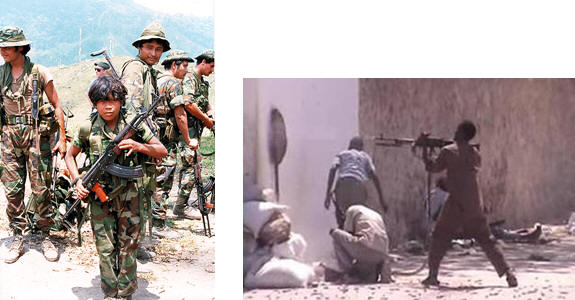
Contra soldiers in
Nicaragua Conflict in
Somalia
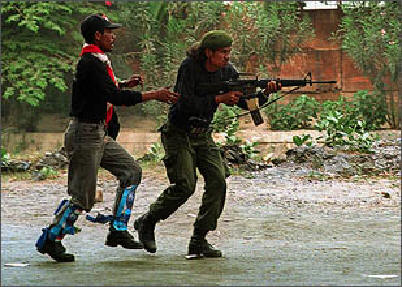
Soldiers fighting in East Timor
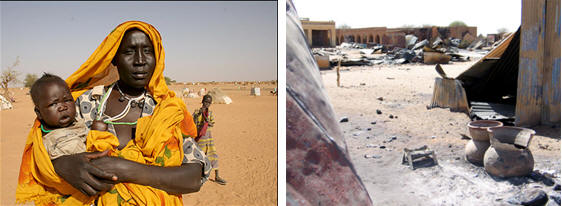
One of countless victims in
Darfur Sad evidence of
Darfur atrocities
The brutality and utter inhumanity of most of these killings
beggars beliefs. I have been sickened to read and to hear firsthand,
accounts of the depraved behaviour. How could men made in the image of
God descend to such depravity? Khmer Rouge soldiers regularly tortured
children, women, old men, priests, and civilians who were innocent of
any crime and no threat to their murderous regime. The torture and
murder was conducted with delight and laughter. Family members were
forced to kill each other or face similar torture and death (which they
usually did anyway). Whether Pol Pot’s troops, or brutal militia thugs
in Darfur, Sudan, West Africa, Central Africa, Latin America, Indonesia,
Nazi Germany, the Ku Klux Klan, Apartheid South Africa, or in the jails
and torture chambers of the KGB, communist China, North Korea, or even
Abu Ghraib or Guantanamo Bay, we can only ask what made otherwise normal
young men become such demonized monsters to treat fellow human beings as
they have.
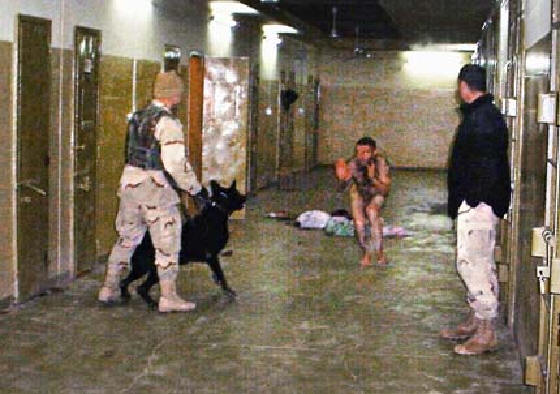
Dog torture of prisoners in Abu
Ghraib
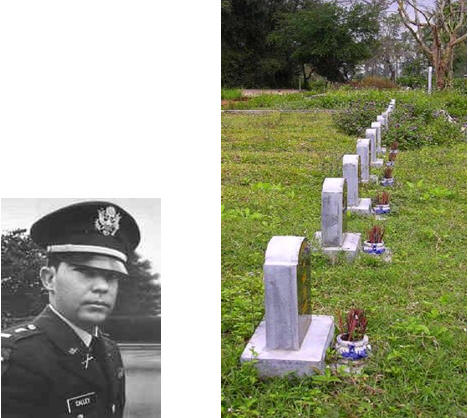
Lt William Caley of
Mai Lai, Graves of village people
pardoned by President Nixon.
massacred in Mai Lai, Vietnam
Their political and
military masters thought they were untouchable. “We can kill anybody
for anything”, said a Punjabi Captain leading the slaughter of
Bangladeshis in 1971, “We are accountable to no-one”. A young
‘chlop’ or Khmer Rouge guard told his victims, “We gain nothing if we
keep you. You are worth nothing to us”. Such people have lost their
humanity, killed their own souls. An ordinary man in Cambodia, Soeum
Himm, a former schoolteacher, when about to be murdered by the Khmer
Rouge, told his family: “If there is no love, justice can’t exist.
Don’t try to argue for justice with people who don’t understand the
principle of love. They will never listen to you.”
How many of those
responsible for these millions of deaths, were brought to justice? Not
the rulers of Lenin’s and Stalin’s USSR, or the officials of Mao’s
regime in China, not the Congolese or Ethiopian warlords, and few of the
leaders of the Khmer Rouge in Cambodia, or of the Indonesian military in
East Timor. Some of the world’s worst criminals were allowed to grow
old and die of natural causes, - such as Joseph Stalin, Pol Pot, and Idi
Amin. This is one of many reasons I believe that there has to be a
final day of judgment before a supreme, impartial but all-knowing
Judge. Attempts to try the war criminals and despots of Rwanda,
Burundi, Bosnia and Chile, have had very limited success.
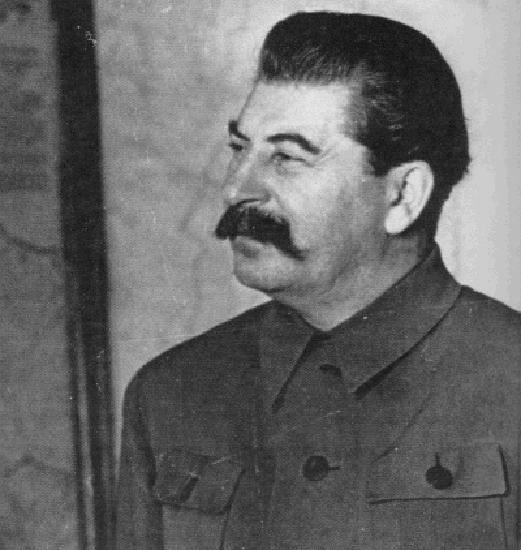
Joseph Stalin
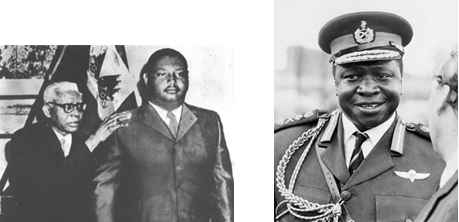
Pap doc and Baby Doc,
of Haiti Idi Amin of Uganda
Human justice systems
appear to be incapable of handling cases of such enormous wickedness and
cruelty. In Northern Ireland, the British government appears to be
willing to let confessed murderers go free in order to achieve
agreements on a political settlement. Former President Jimmy Carter
said that perpetrators of war crimes and human rights abuses should be
punished; but often the ones who are accused, are so powerful, they
won’t accept the tribunal or the new regime, unless they receive
amnesty. But even bastions of democracy protect war criminals in their
own ranks. Lt. William Caley the leader of the My Lai massacre in
Vietnam was cosseted by the U.S. Army and pardoned once the media outcry
had died down. A former instigator and organizer of contra militias and
death squads in Central America, Elliott Abrams, was an assistant
secretary for Human Rights (!), and President of an Ethics and Public
Policy Center. Abrams was convicted of lying to congress during the
contra arms scandal. He occupyied high offices in the Bush
administration.
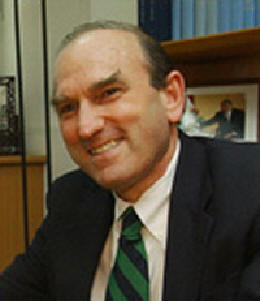
Elliott Abrams. Organiser of contra
militias and death squads in Central America, who lied to Congress
during the arms for Contra Investigations, yet was made an Assistant
Secretary for Human Rights and President of an Ethics and Public Policy
Center, by the Bush Administration.
A country that has led
the world in exposing the truth and having perpetrators confess publicly
to their crimes is South Africa where the
indominatable Archbishop Desmond Tutu led the Peace and Reconciliation
mission. It was established in 1994, and public hearings began in
1996. Those who had committed atrocities had to apply to the Amnesty
Committee of the truth commission to escape prosecution. If confessed to
their crime, and could prove it was perpetrated to further the aims of a
political organisation, and if it was not considered by the committee to
be egregrious, amnesty was likely to be granted [Their use of the word
‘egregrious’ surprised me. The majority of the apartheid crimes were
reprehensible. How the commission could find some extraordinarily so,
is difficult to imagine.]. Some
in South Africa felt that amnesty was a travesty, particularly families
of murdered civil rights leaders and anti-apartheid protestors. Steve
Biko’s widow was one of these. After what passed for an investigation
into his death, the judge had concluded that no-one was responsible,
though he had died from massive head injuries and was perfectly healthy
when the police took him into custody. Nomtsikelelo Biko said, “We
all want reconciliation, but it must come with something. It must come
with justice, and if not, then there must be some form of
compensation”.
The Commission
hearings, the telling of the truth, began slowly with victims coming
forward, and their tormentors skulking behind walls of silence and lies,
wrote Tony Freemantle. The focus was first on the victims. A sobered
nation was riveted by harrowing tales of torture and murder at the hands
of a racist minority government that had become increasingly brutal
while its grip on power weakened. It was a remarkable catharsis for a
people who had cried in silence all those years, nursing the bitter
cocktail of pain and injustice. By the fall of 96, the trickle of truth
became a flood, exposing the highest, darkest corners of the apartheid
system to light of public scrutiny. Desmond Tutu broke down in tears at
one point. The dreadful accounts of callous inhumanity and brutality
were at times more than he could bear. But then he realized that he
could not chair the hearings competently if he allowed his own feelings
to be expressed in that way. So he composed himself, and thereafter
wept only in private.
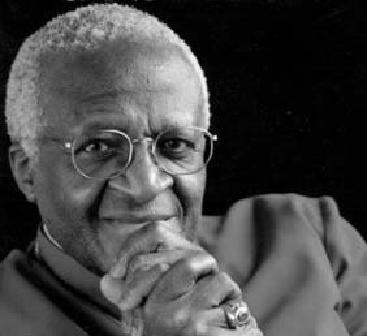
Archbishop Desmond Tutu who bravely
chaired the Peace and Reconciliation Commission after the fall of the
Apartheid regime
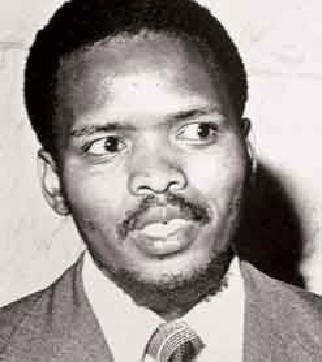
Steve Biko, murdered by South African
security police. His life was the subject of the film, Cry Freedom.
Tutu and his
vice-chairman Alex Boraine, managed the commission with able, steady
hands, eliciting praise and high marks from observers. Tutu had made it
clear that he would conduct an impartial enquiry into atrocities on both
sides of the struggle, - those committed by both the apartheid
government and by the ANC. Despite pressure from ANC members of the new
government, the Archbishop stuck to that position. Ultimately, many
South Africans came to recognize, the real culprits of the criminality,
cruelty and violence, were the architects, supporters and followers of
the whole apartheid system, - the institutionalized policy of racial
separation which the United Nations branded as a crime against humanity.
[Tony
Freemantle, Light shines at last into apartheid’s darkest corners,
Houston Chronicle, 1966] The
same, I suppose, could be said of those who established and supported
the Nazi regime in Germany, the totalitarian communist systems of Russia
and China; and those who designed or were complicit in the police states
and right wing military regimes of Latin America, Myanmar, and the
Philippines during the worst excesses of the Presidency of Ferdinand
Marcos. In Africa, tribal enmities were a driving force behind
atrocities in Rwanda, Burundi, Nigeria, Liberia and the Congo. Other
despotic rules were more the product of demonic individuals who managed
to seize power, - men like Papa Doc in Haiti, Idi Amin in Uganda and Pol
Pot in Cambodia, not one of which ever faced a trial for their many
hideous crimes against humanity.
But now we will turn
from a consideration of genocide and brutal injustices, to the need for
justice on matters of civil crime, financial embezzlement, and corporate
mendacity.
|
An entire system
built on greed
I recall a
comment by Prime Minister Edward Heath in the 1970’s when
referring to the
behaviour
and performance of some banking establishment located in the
Caribbean. He stated that it was “the unacceptable face of
capitalism”. I am sure that most observers agreed with him,
but the statement was challenged by his Conservative colleague
Enoch Powell, who claimed it was a remarkable statement by one
not given to remarkable statements. Powell’s contention
appeared to be that the bank in question was simply doing what
banks do to make money. The bank may have been particularly
ruthless or its profits rather excessive, but what it did was
not strictly illegal.
Over thirty
years later the attitudes of many right wing capitalists and
economists to extortionate and opportunist financial greed and
embezzlement, had not changed. William Anderson of the Ludwig
von Miseg Institute, claimed that Kenneth Lay, former Chairman
and CEO of Enron, which he puffed to a false value, and led into
a multi-billion dollar collapse, while enriching himself and his
buddies, - had done nothing wrong. The Houston jury however,
thought differently, finding him guilty of 6 counts of fraud and
conspiracy. A British bank official who was recently charged
with embezzlement of millions claimed that though technically
guilty, he “never intended to profit personally from the
actions”. Has any senior finance executive ever been so
altruistic?
The anecdotes
illustrate a serious and fundamental problem with our capitalist
system. The whole system is built on greed and the promotion of
greed. We should not therefore be surprised when the Chief
Executives of large corporations award themselves obscene
salaries, benefits, pensions and golden handshakes. Their whole
profession is geared to maximizing large profits and generous
returns for shareholders. So they simply apply the same
philosophy to their own remuneration.
Of course, only
a minority of big businessmen and corporate executives yield to
the enormous financial temptations they face. I admire every
one who has maintained his integrity. But my contention is that
the system and its prevailing climate encourage avarice,
exploitation, and opportunist robbery. Power corrupts, - and
that adage is as true for big business as it is for big
government. Banks today display little concern for customers
and instead, grab every opportunity to charge clients for
services that their predecessors considered part of the job.
From time to
time we hear serious responsible persons who themselves are
pillars of the financial system, call for restraint and
appreciation of their wider public duty, on the part of those
who operate and control our investment houses and corporations.
Mostly those pleas go unheeded. So we have witnessed a
succession of financial scandals involving embezzlement,
asset-stripping, and insider trading deals that have robbed
investors and pensioners of millions upon millions. Enron, and
the Savings and Loan frauds, may have been the worst, but there
were many others, like WorldCom, Parmalat, BCCI, Banco Ambrosio,
Rite Aid, Vivendi Universal, Tyco Intl. Ltd., CMS Energy,
Cendant, Adelphi Communications, Merck & Co., General Electric
Corp., Waste Management, Viacom, Arthur Andersen, Duke Energy,
and possible cases pending against the great Halliburton, and
the Disney Corporation. Punitive actions are minimal as the
whole US establishment, political, economic and judicial, are
tied into corporate America.
What has
astonished me is the total lack of remorse on the part of the
guilty, and their pleas for clemency on the spurious grounds
that they really never intended to do anything wrong, they were
good family men, or that their crimes were victimless. The few
jail terms handed out were pitiful. Typical was an S & L chief
receiving a 3 and ½ year sentence for theft of $ 8.7 million.
What bank robber could hope for such leniency? George Bush
senior’s son Neil, another S & L manager, did not even have to
go to jail. He managed to negotiate an out of court settlement
of a mere $ 50,000 for a scandal that cost American taxpayers $
500 billion by some accounts.
I recall the
sentencing of some Directors of the Guinness / Distillers’
Company in UK for their fraudulent and illicit actions in 1990.
One of the chief culprits was Ernest Saunders (originally
Schleyer) who was found guilty of fraud conspiracy, false
accounting and theft, in relation to a dishonest share support
operation. He had also passed $ 100 million to an American,
Ivan Boesky, to invest, shortly before Boesky himself was
prosecuted and imprisoned. Saunders received a five year
sentence which was reduced to two and a half years on appeal.
But his family promptly mounted a chorus of protests at the
imprisonment of an ‘old man who was suffering from Alzheimer’s
disease’. Astonishingly, the authorities responded by releasing
him from jail after serving only 10 months in an open prison.
Saunders immediately made a remarkable recovery, and when
questioned about it afterwards, shrugged it off as a ‘wrong
diagnosis’, and the result of a cocktail of sleeping pills and
tranquilisers. I wondered then, what other criminal would have
received such lenient treatment? And why, after his remarkable
recovery, was he not required to serve the remaining part of the
sentence?
Robert Maxwell,
(original name Jan Ludvik Hoch), that mysterious man from
Czechoslovakia, who came to Britain in 1940, served a period in
the Army, and went on to become a publishing mogul and a Labour
Member of Parliament, robbed 30,000 of his employees in the
Mirror Group of hundreds of millions of pounds of their pension
money. He died mysteriously in November 1991, apparently
falling into the sea at night from his luxury yacht. The
government had to pay out £ 100 million to refund the pensions,
and a further £ 276 million was obtained from City institutions
and the remnants of Maxwell’s media group. As mentioned
elsewhere, my sister-in-law used to assist him in his annual
audits of a company he owned for a while in Edinburgh.
I recall the old
Aberdeen Savings Bank that was set up by thrifty Scots as a kind
of mutual bank that was owned by its depositors. My mother was
among thousands of low-income Scots who had savings accounts in
that bank. The name was later changed to the “Trustee Savings
Bank” – surely as events transpired, a total contradiction in
terms. Mrs Thatcher’s greedy city financiers got their covetous
eyes on the TSB and wanted it “privatized”. The Scottish High
Court ruled such a move illegal as that bank was “owned by its
depositors”. Not to be out-done, the sharks and vultures of the
city of London had the case taken before the High court in
London. They were supported in this by the TSB “trustees” who
stuffed meetings full of their own staff and did all in their
power to prevent genuine depositors from participating. Those
known to have strong views on the subject, or to be articulate
spokespersons were marked for particular discrimination. So the
English High Court ruled in
favour
of the privatization deal. The TSB deceitfully promised
depositors that the bank would remain a Scottish bank with its
headquarters in Edinburgh. It took them only 2 years to renege
on that promise.
However brazen
and unscrupulous the greed of those in control of banks and
financial institutions was in the decades 1985 to 2005, - it has
since been dwarfed by the avarice and opportunism of the current
heads of our banks, the supposed stewards of our nations’
financial assets. We have all of Europe and much of North
America sliding into debt that will take at least a generation
to pay off by higher taxes and reduced welfare or health care.
The hard-earned savings and funds accumulatd by diligent workers
have been gambled and squandered in the global stock exchange
casinos, - just to reap larger and more obscene bonuses for the
money manipulators. Astonishingly, all our governments can
think of as a remedy is to get taxpayers to bail out the rotten
investment banks, and to maintain their chiefs in undeserved
affluence. |
I record the assortment
of major financial crimes above to illustrate what I see as a basic
weakness of the whole capitalist system. It is founded on human greed
and avarice. The modern day Midas’s, Shylock’s and Scrooge’s, though
they wear immaculate business suits and conform to cultural norms,
possess rotten, covetous hearts that often lead them into opportunist
crimes of fraud, embezzlement and exploitation. Fortunately not all
businessmen are like that. Some very successful leaders in finance and
industry have been able to resist temptation and to place limits on
their appetites for greater profits. But sadly, some operators have
fouled their corporate nests and robbed thousands of investors,
customers and/or employees in the process. My thesis is that we inflame
the greed of corporate executives by demanding them to produce higher
and higher profits, and by praising and honouring the ones who excel.
Corporate and financial success is not measured by the production of
affordable goods, by the creation of sustainable jobs paying reasonable
wages, or by passing benefits on to customers in the form of lower
charges or lesser interest. No, it is mostly seen in the narrow
context of huge profits.
I see a parallel (if I
may express an older generation’s view), in advertising, in film and
video and music, and in the media’s shameless use of sensational sex and
sex images, that just have to have an impact on our teens and pre-teens,
when there is little balancing effort to promote values of decency and
modesty, restraint or discipline. So be it in a free society I guess.
But why then should we be surprised when teenage pregnancies reach an
all time high, and when venereal disease and aids are rampant, when
couples put their own pleasure and indulgence before the welfare of
their children or the hurt caused to injured parties. In both the
business and the entertainment world, passions are fed that will
inevitably result in excessively selfish behaviour. My own view which
many will no doubt consider to be narrow or old-fashioned, is that we
need to get back to reminding ourselves of the bedrock importance to
individuals and society of virtues like honesty, integrity,
truthfulness, loyalty, self-control, and purity, - to say nothing of
courtesy, consideration, kindness and goodness. We should also give our
children the opportunity to learn these beautiful qualities at school
and in the home, through appropriate literature, poetry, and – dare I
say it, from the Bible.
As wealth has been
amassed the financial assets of banks have increased, opportunities
afforded to global businesses and corporations have likewise expanded.
This has opened the door to theft, manipulation and asset-stripping, on
scales that would have been impossible a few decades ago. Corporate
thieves and cheating bankers have grasped the opportunities presented
with alacrity. These robbers use no guns or balaclavas, neither do they
come from the ranks of the disadvantaged or from conventional criminal
elements in society. They wear business suits and ride in
chauffeur-driven limousines. They lecture to students of business and
economics in the prestigious universities. They advise our government
leaders on economic and financial policy. They present themselves as
society’s benefactors and wealth-creators, rather than the money
manipulators they are. And until their crimes are apparent, they are
lauded and revered in the pages of the Wall street Journal and the
Financial Times. Many were regular guests at the White House or in 10
Downing Street. Some British Cabinet Ministers, European Presidents or
Prime Ministers, and U.S. Senators and Congressmen, have been their
bedfellows, or willing participants in their fraudulent schemes.
|
Embezzlers, Fraudsters, Swindlers, and those guilty of
mismanagement on a colossal scale
The
end of the 20th century brought globalisation of
financial markets which grew in the volume and complexity of
their business. It also saw increased amalgamation of banks and
financial institutions into huge organisations for the
management and utilisation of money provided by savers,
businesses, and government. These immense institutions for
handling and manipulating funds provided unprecedented
opportunity to unscrupulous, greed-driven, and arrogant managers
or senior officials. Colossal sums were diverted, stolen, and
embezzled, through innumerable sophisticated and fraudulent
schemes. Other vast amounts of people’s money were lost by sheer
incompetence or arrogant obstinance displayed by financial
traders and government ministers. Below are some of the rogues
in the gallery of major thieves and bunglers. Readers may well
note how few of them received any meaningful punishment, and how
many were left free to enjoy their ill-gotten gains, or to be
applauded despite their disastrous performances.
Roberto Calvi of Banco Ambrosio was found hanging under London
Bridge, his clothing stuffed with bricks, in June 1982. Some
$1.2 billion was missing from the bank’s subsidiaries,
(including the Vatican Bank whose head, Archbishop Paul C.
Marcinkus was also a Director of Ambrosio). Amazingly, a British
jury delivered a verdict of suicide. Judge Almerighi of Italy
later concluded that two Mafia men contracted for the murder, a
Calvi employee set him up, and a Grand Master of the P2 Masonic
Lodge in Rome, paid the fee. All their names are available on
the internet. Bishop Marcinkus was protected by his church and
died in 2006 without ever facing a criminal court. At least two
books suggest that he and his criminal network may have been
responsible for the early death of the saintly Pope John Paul 1
in September 1978 after a reign of only 33 days.
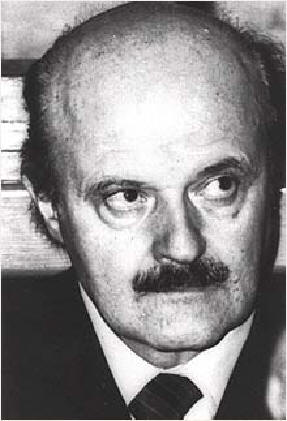
Roberto
Calvi, Italian banker, killed (apparently) by the Mafia
Agha Hasan Abedi, a Pakistan national, founded the Bank of
Commerce International, or BCCI in the 1970’s, and with his
partner, Swaleh Naqvi, constructed an international web of
branches designed among other things to evade regulation and
government control. It specialised in a bewildering variety of
criminal behaviour, from fraud and money laundering, to tax
evasion and arms traficking. Prominent officials in 73
countries were bribed to obtain their cooperation and
protection. BCCI did business with customers as varied as the
late CIA Director, Bill Casey, and Manuel Noriega of Panama. It
collapsed in 1991 with debts of over $15 billion. Those blamed
for not stopping BCCI earlier, included the Bank of England,
Price Waterhouse, and Abu Dhabi.
Neil Bush, brother of President George W Bush, was one of the
senior partners and managers of Savings and Loan banks in the
USA. This huge organisation was cleverly constructed and
cynically operated to benefit from loose regulatory controls and
generous Federal Insurance cover, to lend to clients and cronies
through labyrinthal and untracable pathways, moneys which in
most cases could not be recovered. One official, James Fail,
invested only $1,000 of his own money to purchase 15 failing S &
L banks, and was reimbursed with $1.85 million in Federal
subsidies. This was perhaps one of the largest ‘milkings’ of a
Federal cow in America’s history, - except that it was the
ordinary saver and the taxpayers who footed the bill. Believed
to be involved in the whole scam business were a Houston group
of influential persons that included George Bush senior, his
other son, Governor Jeb Bush, former Secretary of State James
Baker, and some Senators. George Bush senior delayed
investigations into S & L till after the 1988 election, thus
raising its collapse cost to the US taxpayer from $20 billion to
$150 billion. One S & L chief got just 3 ½ years for theft of
$8.7 million. Most other culprits escaped with barely a slap on
the wrist.
David Walsh was the founder and CEO of Bre-X a Canadian mining
company that claimed to have discovered enormous gold deposits
around Busang river in Kalimantan, Indonesia. The fraudulent
reports were concocted by John Felderhof and Michael de Guzman,
the company’s chief mining engineers. Attracted by global
publicity and the promise of huge profits, 40,000 mainly
Canadian investors put over $3 billion of their savings into the
company. But the gold report was a hoax, and they lost
everything. BRE-X filed for bankruptcy in 1997. David Walsh,
who lived in the Bahamas, died suddenly at 52 years of age, and
Michael de Guzman, a Philippine citizen, reportedly jumped out
of a helicopter over the Borneo jungle. John Felderhof who
lived in the Cayman Isles, was left to face the courts and the
thousands of deceived investors.
Callisto Tanzi, founder of the Italian long life milk company,
Parmalat, together with his financial directors, Fausto Tonna
and Luciano Del Soldato, were tried for massive fraud involving
a Bank of America subsidiary in the Cayman Islands. The company
collapsed in 2004 with debts variously estimated at between 4
and 13 billion Euros. Auditors and senior bank officers in a
number of countries were also implicated. The government of
Silvio Berlusconi may also have been involved in covering up or
protecting the company in some ways.

Parmalat, the Italian
milk company that collapsed with corruption debts of 4 to 13
billion Euros.
Kenneth Lay, chairman of Enron, headed an enormous corporation
that indulged in fraud and deception to an unprecedented degree.
He was charged with 11 criminal counts including conspiracy,
securities fraud and bank fraud. Enron’s accounting firm,
Arthur Andersen was also indicted. It was said that it turned
to crime to keep a crooked client happy. Many of Enron’s senior
personnel were close friends of the Bush administration, and big
donors to its political campaigns. Also under investigation was
the politically influential Herbert S ‘Pug’ Winokur, chairman of
the Enron finance committee. Testifying before Congress he
denied fraud. The company’s criminal activities cost investors
$30 billion in stock losses. Kenneth Lay has since died, and
his Vice Chairman Clifford Baxter was shot in January 2002.
Some say both deaths were a relief to senior administration
figures connected to Enron. Lay’s lawyers are trying to have
his conviction wiped off the record. That move is strange, and
it raises a suspicion among conspiracy theorists that perhaps he
did not die, but simply disappeared and might reappear after
some time when the public has lost most of the memories of the
fraudulent crimes. At any rate the courts have declared that
his family is now free to keep his ill-gotten gains. Other more
troubling suspicions are being raised about Enron’s links to
White House foreign and energy policy and the huge but strange
energy deal with Dubhol, Bombay. More will no doubt emerge.
Now Enron’s former CEO Jeffrey Skilling has been given a 24 year
sentence – the first really heavy penalty on the corporate
criminals.
Below are some more characters in the rogue’s gallery of fraud
and manipulation:
Michael Milken, the ‘junk bond’ king, lost $650 million of
investors’ money in 1989.
Nick Leeson lost over $1 billion by incompetent trading, and
destroyed Barings Bank in 1995. In 1999 this hero was paid
$100,000 to speak at a business conference in Holland.
Toshihule Iguchi of the Daiwa Bank, lost $1.1 billion over 12
years while dealing in treasury bonds. He claimed in 1995 that
superiors encouraged him to hide the losses.
Peter Young, a fund manager with Morgan Grenfell, lost over $600
million by 1996, through holding companies and dubious loans and
investments.
Yasuo Hamanaka, copper trader, lost the Sumitomo corporation
$2.6 billion over 10 years to 1996. He was jailed for 8 years.
(That works out at $300 million per year !)
Bernie Ebbers was CEO of WorldCom, that inflated profits and
engaged in false accounting till its collapse in 2002 with $3.85
billions of debt. He was jailed for 25 years, like Skilling of
Enron, one of the few to get a long sentence. He could not have
had any political friends!
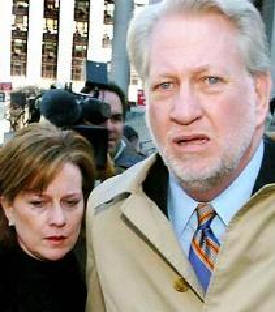
Bernie Ebbers,
CEO of WorldCom. False accounting in that corporation led to
debts of $ 3.85 billion. One of the few financial culprits to
receive a heavy sentence, he must have had few friends in senior
positions in government or the judiciary. |
The way modern judicial
systems treat big crooks and small offenders, is eloquently described by
Robert McChesney in his book, Rich Media, Poor Democracy : “Blue
collar crime generates harsh sentences while white collar crime (almost
always for vastly greater amounts of money), gets kid gloves treatment
by comparison. In 2000 for example, a Texan man received sixteen years
in prison for stealing a Snickers candy bar, while at the same time,
four executives at Hoffman-LaRoche Ltd. were found guilty of conspiring
to suppress and eliminate competition in the vitamin industry, in what
the Justice Department called perhaps the largest criminal antitrust
conspiracy in history. The cost to consumers and public health was
nearly immeasurable. The four executives were fined from $75,000 to
$350,000 and received prison terms ranging from three to four months.”
How can ordinary people have confidence in a national justice system
when the ‘çream’ of society behaves like those mentioned above? - And
when justice is obviously not impartial, and those occupying high office
who may not have been involved in illegalities, refuse to prosecute, or
to release information from investigations conducted with taxpayers
money, - what are the general public to think?
Our Judicial and Penal
Systems
My impressions of the
fairness and decency of our police took an early knock when one New
Year’s eve, I and a friend came across a drunk man lying in a
semi-conscious condition, in a street near the harbour. It was a dry
but bitterly cold night, and we assumed that the man would freeze to
death or die of exposure if he remained there. We were just teenage
boys and were not sure what the correct course of action should be, but
as the Police Station was just 200 yards up the road, we thought it
would be as good a place as any to take him for shelter. Our reception
was less than friendly. The sole officer on duty must have been hoping
for a quiet night, and resented having the responsibility for a drunk
thrust upon him. Apparently he knew the man, who was not local. We had
to stay while the policeman went through the routine of searching the
man’s pockets and recording the few possessions and little bit of money
he had. This was carried out with little respect for the person, and
with considerable rough handling by the officer. He then removed the
fellow’s shoes, belt and tie, and threw him into a cell, returning only
to toss a blanket in after him. No doubt the treatment was much better
than such a man would have received in most other countries, but to me
it was strangely heavy-handed given that he had committed no crime other
than to put himself in a position of danger in his drunken stupor. I
guess I was just very young and naïve, but I determined then that if I
ever found a person in similar vulnerable circumstances, police stations
would be well down my list of possible places of refuge.
Years later I was to
visit prisons in Britain, Africa, and the Far East, and to see first
hand how these recipients of justice are treated. We lived not far from
Saughton prison in Scotland, and I used to visit Peterhead prison with
church ministry teams. I saw prisons in African states, and in Yemen,
Thailand, Indonesia, the Philippines and Italy. When I visited Yemen,
prisoners were often allowed out with leg irons and shackles on, to
forage for food as best they could. In one provincial capital in
Thailand, I witnessed prisoners emerging from court, chained hand and
foot, and put onto prison transport vans to the sound of weeping from
mothers, sisters and relatives.
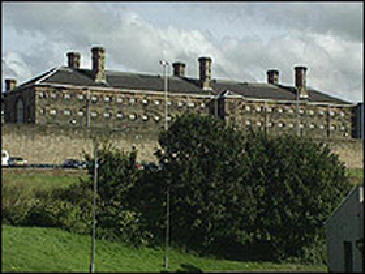
Barlinnie prison, Scotland
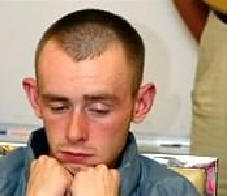
Young man from Britain, imprisoned in
Bangkok’s notorious prison for drug offenders.
Now, I have no doubt
that imprisonment is necessary for men of violence. One lovely girl I
knew at school was later murdered in Canada by a prisoner on parole who
she took pity on and allowed to work in her garden. But that man was
also mentally ill. It is also clear that there has to be a strict
regime to control large numbers of potentially dangerous criminals, and
that such men have forfeted the right to many comforts. That I accept.
However, it seems to me, after much thought and some study of the
subject, that prison itself accomplishes little and costs a lot. In the
case of young offenders, it can inform and equip them for even more and
worse criminal activity.
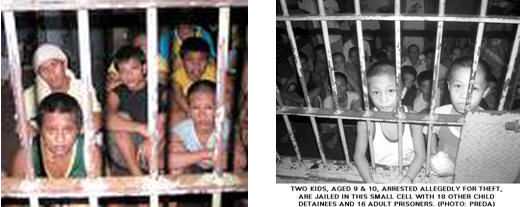
Children incarcerated in a
Manila prison
My own conclusion is that imprisonment should be used only
for those that constitute a danger to the public, - namely the violent
and abusive. And even with them there has to be a better approach to
mental and emotional health than our system can offer at present. Those
who offend due to drug addiction, or who are simply addicts, should not
be housed with other criminals, - especially the young. Our prisons are
currently over-crowded, and the system can barely cope. Reducing
numbers would save the country considerable unnecessary cost. We need
another Elizabeth Fry, - the Quaker lady who pioneered prison reforms.
Elizabeth Fry, the great Quaker lady who
pioneered prison reform and relief for the poor and homeless.
That severe sentences with no balancing rehabilitative
efforts only drive young people into becoming hardened criminals through
the brutality and the despair it produces, is surely evident by the
American experience. The BBC documentary “Prisoners of Katrina”,
lifted the lid on all that was wrong and corrupt in the judicial system
of the USA – particularly in Louisiana. What viewers saw was
reminiscent of the kind of justice that existed in the least democratic
and less civilized states in the world. In the words of the BBC
narrators, the system of justice was “bankrupt”. Many of those
who suffered appalling conditions in the New Orleans prisons, and who
had their records destroyed for ever, were simply awaiting trial, and
often for as little as a traffic violation or non-payment of a fine.
Most were black and poor, though some white prisoners also suffered. But
they were incarcerated in crowded cells alongside murders and rapists.
The episode was reminiscent of the kind of justice prevailing in the
mock trials of white murderers of black people in the southern states
until the time of Martin Luther King and the Civil Rights Legislation.
Now, no doubt some will
argue that a ‘soft’ approach will be ineffective, and that one must
wield a big stick. My answer would be – take a look at the USA and its
penal system before you tell me that a brutal response works. Then
others will ask for an example of a country where the soft approach
yielded good results. I will answer – Australia. From 1788 to 1867,
Britain shipped over 160,000 convicted criminals to Australia. Not all
were guilty of murder or violence, - many had committed petty offences.
But off to the colony they were sent, in appalling conditions, and under
brutal supervisors. The territory then had a series of military
governors who took a “hang them and flog them” approach to the criminal
immigrants who were assigned to whatever work their keepers desired.
They were also contracted out like slaves to the free settlers who could
administer corporal punishment as they thought fit.
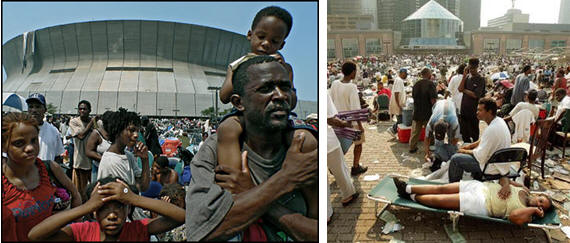
The sports dome in New Orleans that
became a prison for victims of the Katrina
storm Right : Katrina victims in
Louisiana, USA
One of the Governors
with a reputation for harsh discipline was Captain William Bligh of the
“Bounty” fame. There have been attempts in recent days to
rehabilitate Bligh and to present him as a stern but decent officer who
had to mete out the prescribed punishments of his day. If the Bounty
mutiny was the only such one in his career, that might be plausible.
But it was not. Some of his New South Wales colonists rebelled against
him much like the crew of the Bounty had done earlier, and he was
sent packing back to England. He was replaced as Governor by a Scottish
soldier Lachlan Macquarie who has been described as “hardheaded,
clear-eyed, with a military sense of order, a martinet’s sense of
discipline, and a Scotsman’s sense of fairness and justice”. [Scots
and the British Empire,
by
Arthur Herman, in The Scottish Enlightenment, Fourth Estate 2001.]
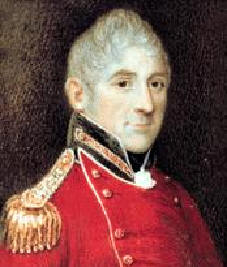
Lachlan MacQuarrie, the Scots colonial
officer who pioneered humane treatment of prisoners in Australia.
Maquarie soon cleaned
up the dreadful mess left for him by Bligh in what he termed the ‘pig
stye’ of Sidney where ruinous decay was evident on every hand. He
banned the trade in rum, closed taverns during the times of church
services, made church attendance compulsory for criminals, and
established Sunday schools for children. More importantly he treated
the criminals as men and women rather than beasts of burden, and got
them to clear up the city’s rubbish and spruce its appearance. He then
got them to build roads, schools, houses and hospitals. In return he
guaranteed them their freedom if they performed well. One group of 60
prisoners was assigned to build a road across the Blue Mountains. If
they completed the 126 mile task in 6 months, they were promised their
liberty. [The
actual time taken, distance covered, and number of prisoners involved,
varies from account to account. But whatever the precise details it was
a remarkable feat. Tour guides to the Blue Mountains today, delight in
relating a variety of ‘incentives’ they say were influential in getting
the prisoners to work so hard.]
Amazingly the former criminals did just that. Maquarie argued that this
was usually the outcome when incentives were used rather than coercion.
Maquarie was followed
by another Scot, Thomas Brisbane. Though his brief from London was to
reimpose harsh discipline, instead he expanded Maquarie’s reforms.
Following Brisbane a series of new Governors tried to bring back
flogging and brutal discipline with depressing results, but in 1840,
when Alexander Maconachie, a former naval officer and geography
professor took command of Norfolk island and its prison colony, penal
reform went even further. He introduced many humane and far-sighted
improvements to handle the colony’s most recalcitrant prisoners, set up
a prison library, and even started an orchestra. In Britain, such
reform had to wait a few more decades, but in Australia they were an
early success. The UK government ceased to use convict ships after
1867.
Whatever form of
penalty society decides for those that offend against its laws, three
principles ought to be applied in my view, namely : retribution;
reparation; and reformation. Retribution or punishment ought to fit the
crime. To my mind the penalties we currently apply, jail and fines, do
not do so very well at all. Prison leaves no scope for compensation of
victims, and fines only hurt the poorest, who can often escape by
pleading their inability. Both Australia and Canada have experimented
successfully with reparation-related service for juvenile offenders that
both provide a degree of compensation for victims, and oblige the
offenders to face the consequences of their actions and make some
amends. In the Philippines there is a penal colony near Puerto
Princessa, Palawan, where prisoners are permitted to raise crops and
earn money, under supervision, and to enjoy a degree of semi-freedom in
return for good behaviour and cooperation.
Prisoners or offenders
permitted a degree of liberty should both be permitted to work to raise
funds to reimburse their victims. This kind of measure would have
several effects. First, the victim would receive some compensation;
second, the offender would feel a degree of redemption in performing
that duty, and third, the employment undertaken would be therapeutic on
the prisoner and beneficial to society. Some countries permit the
establishment of factories close to prisons where the non-violent
inmates can be usefully employed during the day.
Prison Reform
An additional and more
recent example, which had some interesting success and some problems
with vacillating political support, can be seen in Scotland, and in its
largest city Glasgow, which for much of the 20th century had
a reputation for violent crime, hooliganism and sectarian attacks.
The main prison serving
Glasgow and housing its most notorious convicts was Barlinnie, a grim
Victorian complex built on farmland near the city’s east end in 1894, to
hold 1,000 prisoners. It got little improvement over the years,
prisoners having to use chamber pots that they were permitted to slop
out once a day. The prison was also the location of the final series of
hangings carried out in Scotland in the 20 years after WW2.
From 1973 to 1995,
Barlinnie was the unlikely location of a visionary experiment in penal
theory and practice. It took the form of a Special Unit where a small
group of selected long term prisoners were held together in a secure
area that had a more relaxed regime. They were allowed to wear their
own clothes, listen to music of their choice, and read their own books.
They were also encouraged to engage in hobby activities like sculpture,
painting and writing. The initiative was the brain child of (along with
others), a leading forensic psychologist, Ian Stephen of Aberdeen who
had been working with young offenders in Glasgow.
Two hard criminals who
eventually had their lives and attitudes straightened out during periods
in the Special Unit, were Jimmy Boyle and Hugh Collins, both of whom
went on to write books and produce marketable works of art. Both Boyle
and Collins spent years in solitary confinement and in punishment cages,
and have not been slow to criticize the prison system overall. Even the
Special Unit was castigated for some of its activities. Collins said, “The
Special Unit saved me but it also tortured me. I was made into a pet
lion for the social workers, psychologists and lawyers who came there.
Some of it was disgusting. These people were like groupies. They
patronized you, got a thrill from being near you.” But he went on to
condemn his violent past in no uncertain terms. “All violence is
evil. Whether it is Myra Hindley killing children, me killing Willie
Mooney, those kids killing Jamie Bulger, a British soldier shooting girl
joy-riders in Ireland, or the airforce bombing of innocent Iraqis.”
Barlinnie was blest for
periods by chaplains of vision, compassion and strength of character.
Two notable ones had both served in churches in Easterhouse, one of the
city’s most depressed areas. Bill Christman from Missouri was so
affected by poverty he witnessed in West Virginia, he entered the
ministry, studied in Scotland served a while in the difficult area of
Niddrie in Edinburgh. After further studies in Harvard he returned to
Scotland and following Easterhouse became a Chaplain at Barlinnie. One
of his successors was Ron Ferguson who also served in Easterhouse, and
later at the Iona Community, and now in Orkney.
The Barlinnie Special
Unit suffered latterly from somewhat loose management, and from negative
publicity that portrayed the programme as one that coddled criminals who
deserved to be punished. While there was some truth to stories of
insufficient controls and naïve programmes, much of the criticism came
from elements in the press and public which were always ready to seize
on such impressions for their own ends. Politicians, also, eager for
short term kudos, were only to willing to curtail or end the
experiment. It might be noted that shortly before and after its demise
there were embarrassing protests by prisoners in Barlinnie, over the
conditions they had to endure. The press and television were eventually
allowed to report on these, and it was a revelation to most how we were
treating the offenders we incarcerate, at the end of the 20th
century.
Our systems of
incarceration and treatment of drug addicts is badly in need of a major
overhaul. Too often the whole system is run on the ideas of a liberal
elite whose success record is pitiful. We need to analyse thoroughly
the addict recovery rates of those in programs run by charities and
church groups as well as the direct government programmes. Resources
and opportunities ought to go to those with the best track record in
rehabilitating former drug users. Programmes that have less than 5 per
cent success ought to be disbanded. As far as possible, the use of
other substances to stabilize addicts or to wean them off hard drugs,
ought to be minimized. That does not mean that I under-estimate the
enormous task involved. Along with many others I and my wife have
struggled over periods to assist and support and encourage, individual
alcoholics and drug users, mainly in Scotland, but also abroad.
Apart from their
failure to rehabilitate or change the attitudes of prisoners, our penal
systems and institutions are enormously expensive. We are getting close
to the point where we may spend more on jailing offenders than we do on
educating the next generation. Sir Ken Robinson has written and
lectured widely on these issues in Brtain, in the USA, and throughout
the world.

Sir Ken Robinson, radical thinker and
pioneer in education and developing the full potential of young people
and students. He has also advocated more humane and effective
programmes to deal with offenders in our societies.
Two final comments on
the judicial system, and I will spare the reader further opinion on the
subject. The first concerns sentencing, and the other involves our
success or failure in determining guilt or innocence. Most readers will
agree that something is wrong when crooks who embezzle millions are
treated lightly while those guilty of crimes that cause a few hundred
pounds or thousand pounds of damage, are given severe sentences in
comparison. Our courts are also surprisingly lenient on rapists and
child abusers. We need a national symposium to look afresh and in depth
at the whole issue.
The past few decades
have witnessed a disturbingly high number of miscarriages of justice.
Convictions have been overturned after those found guilty had served
many years in jail. Police and prosecutors have been found to have
manufactured evidence and/or destroyed or covered up some that did not
support the case. There would appear to be far too much pressure for a
conviction applied by the government on the police authorities, on cases
of political interest. How can that be rectified? The police service,
like the NHS, the military, and the courts, must be de-politicised.
Punishments for perjury, influencing witnesses, and contaminating
evidence, ought to be severe.
Justice is indivisible. When we deny justice to any member of society,
whatever their station, we deny it to all. When our Ministers of
Justice, government officers, judges, police, procurators, and related
authorities, lie or cover up, or distort the truth, whether out of
political pressure or self-protection, - all society suffers, and our
justice system is brought into disrepute. But the same applies when we
deny justice to refugees and immigrants. The USA and Britain are
expanding their new practice of holding persons in custody without
charge or trial. They started to do so with foreigners, and are now
beginning to treat some of our own citizens with a similar disregard for
their civil rights. The two are linked. If we fail to give justice to
the “stranger within our gates”, we will soon find it convenient to do
the same to those of our own people who we would like to be silenced. |



