|
What a beautiful
world we are privileged to live in. What lovely diverse peoples we
share this planet with. It would be truly wonderful if we could
live together in harmony, and cooperate in building peaceful and
sustainable societies and systems. Surely no amount of national or
ethnic pride, or greed for an ever-larger share of trade and
resources, could justify our abuse of each other, or our
determination to enforce our way of life on other peoples.


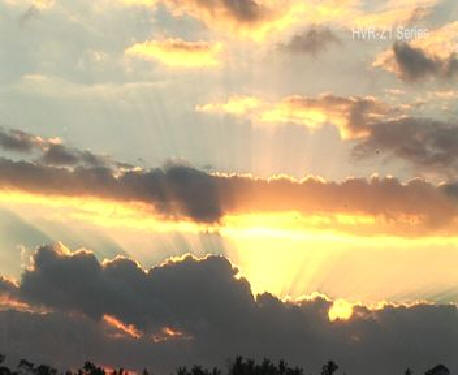
Two
impressive scenes from our beautiful world
It is also a deeply
troubled world, and there are no end of issues with the potential to
alienate nations and governments, or to feed the military monsters’
appetites for war and destruction. If in six millenniums of human
history we have not yet learned how to resolve disputes without
recourse to murder on a massive scale, there is little hope for us.
Our mechanisms and avenues of diplomacy (like the UN) may well be
very imperfect and often yield limited results, - but still they are
preferable to unleashing Armageddon on the world.
The past 71 years
of my life have seen the rise and fall of many ideologies and
philosophies. Some took a while to be discredited, and some
withered quickly, only to reappear in a different guise. I daresay
it was ever thus. Solomon declared that “there is nothing new
under the sun”. A wise old Irish Jesuit priest who laboured
all his life in Africa, used to tell me that the real issues and
questions of life were not modern at all, and modern learning had
little to add on these subjects. The ancient virtues were still
valid, and the deadly sins recognized by sages and saints of old,
were still around us today.
Communism appeared
to be on the rise for the first half of my life. Many of the
socialists in my family and community viewed it with respect, and
valued it as a counterweight to the excesses of capitalism. But
while it appeared to be based on altruistic humanistic values, it
was inherently cruel, ruthless, unprincipled and despotic, -
certainly from all we have learned about its implementation in the
Soviet Union, China, North Korea, Cambodia and Albania. The
writings of numerous dissidents like Alexander Solzhenitsyn and the
prophetic parable by George Orwell, Animal Farm, confirmed
what totalitarian Marxism was really like.
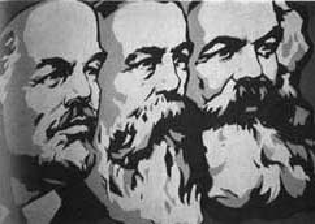
Communism promised much but mainly
delivered injustice and oppression
Now, even former
committed socialists admit, - “all the world’s socialist systems
have failed”. There is not a single successful example of a
thriving socialist economy. I guess the nearest there is must be
poor little maligned, beleaguered, and persecuted Cuba. The
formidable economies of the USSR and Eastern Europe have all
succumbed to modern pressures and turned to free enterprise. Even
the immense land of China, though still nominally communist, has
become a thriving free market economy. Unlike Russia, it has
somehow been able to do this gradually, without dismantling State
apparatus or causing the upheavals and extremes that have afflicted
the former Soviet Union.
Right wing
capitalism, and its children, - multi-national
corporations, globalism, and the supremacy of market forces and
profits above all other human and ecological values, is presently
triumphant and on the ascent. But it also contains within itself
the seeds of its own destruction, as lucidly forecast by Schumacher
over thirty years ago. How many unnecessary wars and how much
bloodshed and oppression has occurred the past 50 years to extend
the tentacles of global business? And how much environmental
damage is perpetrated, and human misery increased by big business’s
attempts to maximize profits without regard to the sustainability of
life on planet earth?
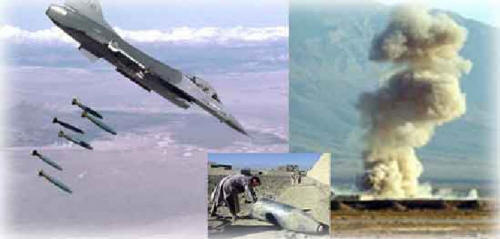
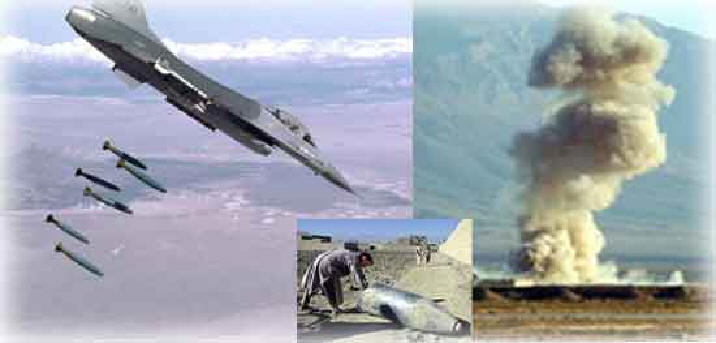
Bombers delivering death and
destruction from the air
The Christian
church, - or much of it, has been influenced, and at times, deceived
or seduced by these movements over the years. At the beginning of
the 20th century, some saw socialism and communism as
harbingers of the kingdom of God on earth. Some today see
capitalist forces as essentially God-ordained and Biblical. They
should take a hard look at the corruption and exploitation of
humankind by the multi-nationals, and compare that with the vision
of “Babylon the great” in the book of Revelation, and her control of
wealth and trade. They also need to measure their attitudes to
money and business against the words and example of Christ. The
“Liberation Theology” of Latin America, was a reaction to economic
slavery of the people being robbed of access to their God-given
resources. The church should suffer with suffering people, and
seek to defend them, - but not to resort to an armed response.
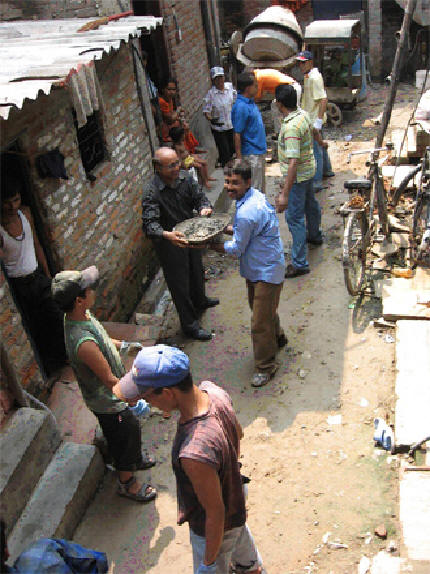
Habitat for Humanity and Christian
groups working in a Delhi slum
I see several major
failings in the church, the world over, as we enter the 21st
century. We were warned very clearly about each by Christ Himself.
The first is worldliness and the pursuit of wealth and comfort as
our primary goal. The second is sheer hardness of heart, loveless-ness,
and lack of compassion. A third is seduction by the siren voices
and false prophets of the political and sensual worlds. And a
fourth is shallow emotionalism that does not take Christ’s words
seriously, and is devoid of genuine reverence for God. Sadly, the
church deserves the criticism it receives from outside, for its
failures in these areas.

Wealthy churches and their
fund-raising by television appear to be very far in spirit
and in practice from the life and message of Jesus
Thankfully, however, there are millions of humble believers
throughout the world (China alone is believed to have over 50
million in its small independent house-churches). Other tens of
millions exist in Russia, south Asia, Africa, and south America.
These ordinary Christians, uncontaminated by wealth or politics, are
to my mind, the true followers of the Man of Nazareth and Galilee.
Unheralded and often unnoticed, they are indeed the salt of the
earth, exercising a silent but vital influence on society,
preserving it from corruption, and adding a unique flavour to life.
Critics of religion may mock their simple faith, but it empowers
them to live in hope over impossible odds of injustice, poverty,
hardship, disease and the many uncertainties they face. And in case
any reader thinks I disparage people of other faiths, - far from
it. I have found similar strengths and virtues exhibited by
followers of Islam, Buddhism, and animist beliefs. God is no
respecter of persons, and His ear is open to all, despite our
cultural backgrounds, misconceptions, or limited understanding. As
one young Moslem woman said to me in south-west Thailand after
enquiring about my own faith, “Is it not wonderful that we both
have faith in God, and is that not a precious thing to carry with
you through life”.
Twentieth century
materialism was in truth a tool of both communist and capitalist
forces. Each offered bread and circuses, and imagined security in
different forms. Governments use prospects of access to material
things to win and maintain their people’s loyalty. Mrs Thatcher did
it brilliantly, as did Ronald Regan. Her success said as much about
the character of the English as it did about her political acumen.
The elevation of human greed to the status of a virtue to justify
right wing policies, is combined in modern administrations with
sophisticated methods of political control. Keep the people
occupied with the fruits of monetary advances, and get them to
believe they would be at risk if the government was to change. Make
fictitious enemies of those whose needs challenge our indulgence.
Call them lazy, welfare scroungers, and illegal immigrants or asylum
seekers. You are not your brother’s keeper. The poor are to blame
for their own predicament. Control the media and the message.
Utilise a government-speak language to confuse and obfuscate.
Mrs Thatcher was
lauded for her attempts to move people from property renting to
property owning. It appeared to be working remarkably well as long
as high inflation escalated house prices. But many people found
later they were just mortgage owners, not house owners, as did
thousands in the USA who were persuaded to take out sub-prime
mortgages they could never repay. But the inflation in house prices
was really th natural rise in land values as a consequence of the
growth of the whole eceonomy. I firmly believe in the tenet of
Henry George the rises in the value of land should belong to the
whole nation and not to a few speculators or land-owners.
What Thatcher
pioneered, in her brazen attempt to encourage naked greed in
business, and to belittle a social conscience, Blair applied
unashamedly and with greater contempt for the electorate. Idealism
was discarded for the pursuit of power regardless. As a young New
Labour executive disclosed to a Scottish reporter, with remarkable
arrogance, “You know nothing about politics. You actually think
it is about policies and programmes and values. It is nothing of
the sort. It is about control of the tabloid press,- period.”
Bernard Ingham
[Origins of
the Obsession,
in The Wages of
Spin, by Bernard Ingham, John Murray, London, 2003]
quotes Tony Blair declaring “You have got to understand that the
only thing that matters in this campaign is the media. The media,
the media and the media”. And that statement of New Labour
strategy was made before Blair became leader, in fact, just three
days after the death of Labour leader John Smith.
The utter
wickedness and folly of war
Our military
spokespersons are expert at using politically-correct language that
obscures the horrific nature of their operations. While they rain
bombs and shells on civilians, killing and maiming children, women,
old people without distinction, in an attempt to destroy an
insurgency, the generals talk blandly of getting the job done,
dealing with the problem, and finishing the assignment. Never will
you hear a word from them about the human carnage of the mayhem they
cause. And often when they have no idea how many people were blown
to pieces, or who these persons were, they will callously claim to
have dealt with suspected insurgents, or destroyed ‘the enemy’.
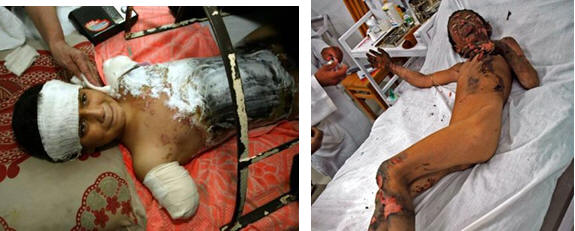
Cluster
bomb victim, Iraq. Nato bombing victim in Afghanistan.
(The writer is very aware of the
carnage also caused by the other side in those conflicts, but we
need to see that we also are guilty of murder and maiming of the
innocent)
Green Movements
The “New Age”
movement has flourished in this spiritual vacuum. It encompasses a
range of superstitions and genuine ideals. The negative side is
replete with taro cards, ouija boards, séances, horoscopes, and
psychedelic drugs. The idealistic side of New Age is concerned with
the environment, human wholeness, peace and simplicity. I have a
soft spot for that side of the movement. I often think they are
closer to Truth and than are the atheistic materialists. There is a
mixed community of ‘new-agers’ at Findhorn near my home. They
include, nature lovers, pacifists, natural health practitioners,
agnostics, Christians with a concern for society and the
environment, and some adherents of pagan beliefs. They are all
sincere searchers, and I hope I don’t insult them when I say that
the latter sub-group sometimes seem to me like a number of wise men
from the east who started out following the Nativity star, but who
over-shot Bethlehem and went on to Stonehenge!
The “Green”
movement in its various forms has grown to challenge the ruthless
over-exploitation of natural resources, and the insane destruction
and degradation of our environment that provides us with air, water,
food, renewable energy and raw materials. The rise of green
political parties is a modest but welcome counterbalance to
unbridled capitalism. But some of them are less than purely green,
and have other agendas that are disturbing, extreme, or weird to say
the least. Some have been hijacked by groups that want to dictate
what is taught or not taught in our schools, and what politically
correct behaviour should be. Others appear to be more intent on
promoting aggressive hedonism and deviance, than protecting the
environment. Some green movements like WWF, have gotten together
with large food corporations that have monopolistic goals, however
much they may claim to be in favour of organic foods.
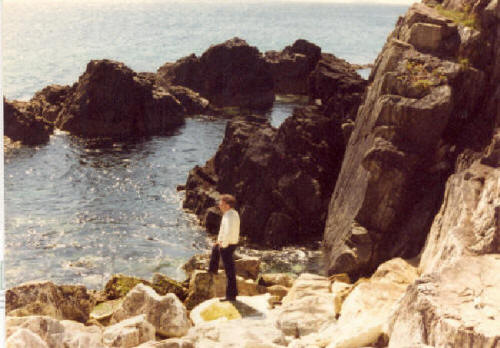
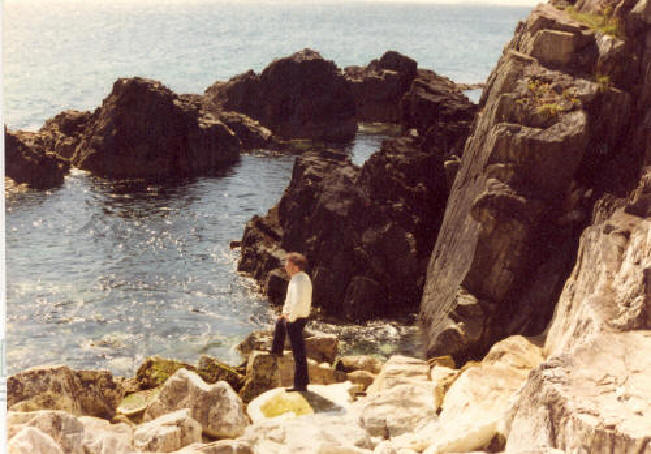
At Iona 1981 when participating in a
conference on third world development
and the role of multi-nationals
There is also an
imbalance in the issues they target. This may stem from calculations
that certain ones can be used to milk the public for financial and
emotional support, while others may not. Battery farming of
egg-laying hens are an example. We hear little protest from the
green movement to halt that cruel industry. Instead they focus on
protecting a seal population that grown beyond the carrying capacity
of coastal waters to maintain, with the result that they now attack
fish farms, and venture far to sea to seek alternative fish stocks.
British organizations like RSPB and quangos like Scottish Natural
Heritage, have acquired dictatorial powers over rural communities
which they exert with a callous disdain for the people who have
lived there for generations. In this they bring the whole green
movement into disrepute.
We have read plenty
silly statements by the extreme green wing, that appear to imply the
earth would be fine if only there were no human beings around to
harvest its produce ! I have listened (in overseas aid meetings in
Whitehall), to WWF officials warn ignorantly against over-fishing in
artisanal low-effort fisheries, and assert that the fishers would
destroy the coastal mangrove forests by building too many boats!
(For those unfamiliar with mangrove trees, it is quite impossible to
build a boat from such thin twisted branches). A farmer in the
Hebrides asked for permission to erect a wind generator on his land
which was not served by the local electricity grid. RSPB objected
and the farmer was obliged to finance an independent study on the
presence of golden eagles in that area. The study concluded that
such birds had never been seen or recorded there. This thought the
farmer, was the end of the matter. But no! RSPB then insisted he
finance a further independent study to assess the chances that an
eagle might stray into the area in the future.
Manipulation by the
bigger ‘green’ organizations has sullied the whole environmental
movement and cast aspersions on some of its aims and assertions.
One cannot help feeling that this has been brought about partly to
weaken support for serious action. Inconsistencies in the policies
and programmes of some groups smack of hypocrisy or of a callous
preference for interventions that will raise money or increase
political support, rather than make a genuine change for good. I
mentioned the greens’ determination to oppose a cull on mushrooming
populations of seals, while at the same time ignoring the plight of
battery farm hens or the miserable short existence of veal calves.
The British Parliament spent hundreds of hours debating fox hunting,
and the police are wasting precious resources on seeking to enforce
the hunting ban.
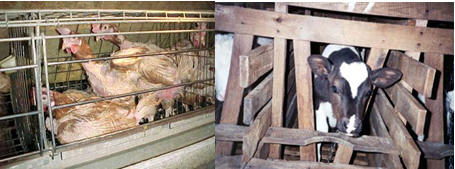
This is
how we treat the birds who supply us with eggs,
and the cows from which we get tender veal meat.
This excessive
response stands in sharp contrast to the minimal time given to
debating the war in Iraq that led to the deaths of up to 700,000
innocent Iraqis as collateral damage, or as an indirect result of
the conflict. I am against the hunting of foxes, or any other wild
game for that matter. But one wonders whether those who cry loudest
have ever been to a slaughterhouse, or seen just how animals are
killed and butchered to put food on our plates. And how many of
them worry about the inhuman treatment of refugees, or the slaughter
of tens of thousands of innocent victims of our wars?
Global
environmental challenges, however, are finally being taken seriously
and we may yet avert the worst of the impending damage. The
reluctance of governments to act in these areas relates to the size
of the investments required, the fundamental changes need in some
policies, and the nature of elected governments that rarely think
beyond their five year horizons. It has been said that governments
will do the sane rational thing only after they have exhausted all
other alternatives. This appears to be coming true in respect of
the ozone layer erosion, nuclear power, genetic modifications of
crops, control of pollution of soil and water, and support for
reforestation and organic foods. Dinosaurs can turn, and even the
most closed mind can eventually see sense. I believe the task ahead
of humanity for the next century, if the world continues, should
include :
-
A huge shift in
resources from armaments to poverty alleviation and husbanding
of all of earth’s natural resources
-
Conservation
and protection of global supplies of fresh water
-
Conservation,
protection and regeneration of forests and woodlands
-
Development of
renewable fuels and sustainable energy systems to replace the
fossil fuels, petroleum and coal.
-
Reversal of
current pollution of air, soils, rivers and seas, by chemicals,
CO2 emissions, urban and industrial waste
-
Development of
national and global systems of full employment
-
Control of
mental and social pollutants from internet and media
-
Encouragement
of people empowerment at grass roots levels, including more and
more transparency in government, instead of increased secrecy
and misinformation on matters that concern all citizens.
|
Family Life
Before
discussing these measures to address global issues, we might
do well to consider the breakdown in family life and its
effect on the fragmentation of society and on human
behaviour in general. The family is the basic unit of
society and it is within the family we learn loyalty and
discipline, cooperation and sharing. There also we
experience love and encouragement, and imbibe wisdom and
values. We have shoulders to cry on and older heads to
consult for guidance. And we older ones have wonderful
children and grandchildren to inject some fun into our dull
lives!
We look at
past attempts to destroy the family unit – mainly in extreme
Marxist regimes, and we see the horrible results in cases
like the Khmer Rouge rule in Cambodia’s five years of wicked
despotism. It is wonderful to see that the family survived
that in Cambodia, - but one is sickened by indications of
deep malaise in family relationship in the cultured west.
In Britain we are regularly shocked by appalling incidents
of abuse of children – by members of their own families.
America suffers from incomprehensibly high rates of absentee
fathers, - men who sire children then abandon them and their
mothers. This serious phenomenon among Negro communities
has been denounced by a range of black leaders, Christian,
black Moslem, and secular.
Generally
speaking family cohesion remains strong in Asia and the Far
East, and perhaps to a lesser extent in Africa where
survival instincts are more to the fore. In Britain, it
often appears that political correctness promotes ideas and
concepts that are designed to weaken respect for parents and
parental controls. In matters such as sex education in
schools, surely the mothers ought to have a veto on some of
the things lobby groups want us to teach to innocent kids
who are easy prey to deviant propaganda. And before someone
blames parents for high rates of teenage pregnancy, - we
should take a look at societies where the family is strong,
- such as in Asia and Arabia, (and where there is little
public sex education), - and explain why teenage pregnancy
is so uncommon there.
I can only
express gratitude for my own upbringing in a family and a
community that were old-fashioned enough to preserve
traditional wisdom, and practical enough in their
recognition of the need for discipline as well as nurture.
Then I was blessed with a wonderful wife and six marvelous
children, and their spouses, and now with ten grandchildren
and possibly more to come. All have been an inestimable
blessing and inspiration. Of course, I hasten to add, each
of us is far from perfect, and we have had to face the many
issues and disappointments that confront any family in these
modern times. But that is life. And it is how we work
through the problems and difficulties rather than the issues
themselves that determine whether we stay together and
become stronger as a family, or fragment and drift apart.
Surely one
of the most valuable investments we can make in life is our
investment of time and affection, listening and doing things
together, with our children. Far more than what we actually
teach them, our children learn by our behaviour, our respect
for each other, and how we treat our partners and our
neighbours.
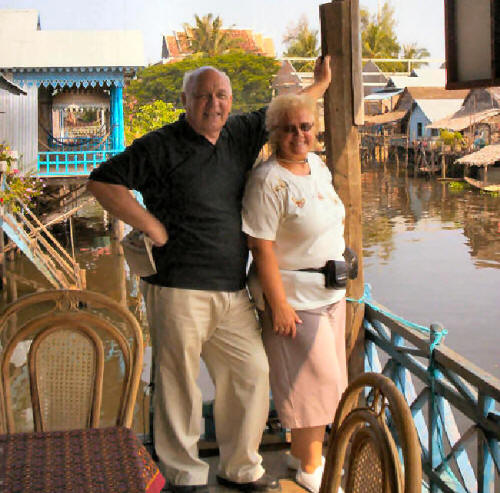
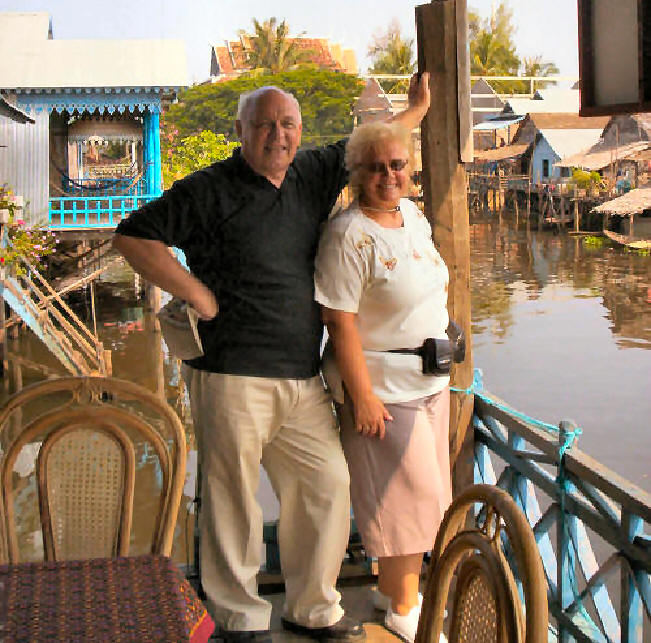
Myself with Margo
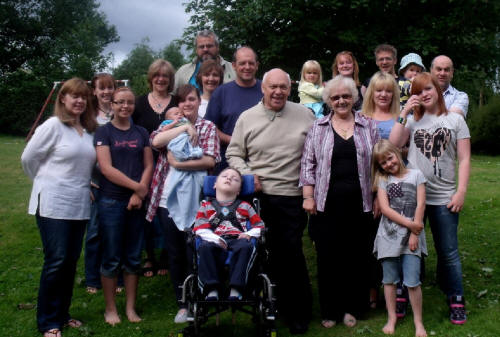
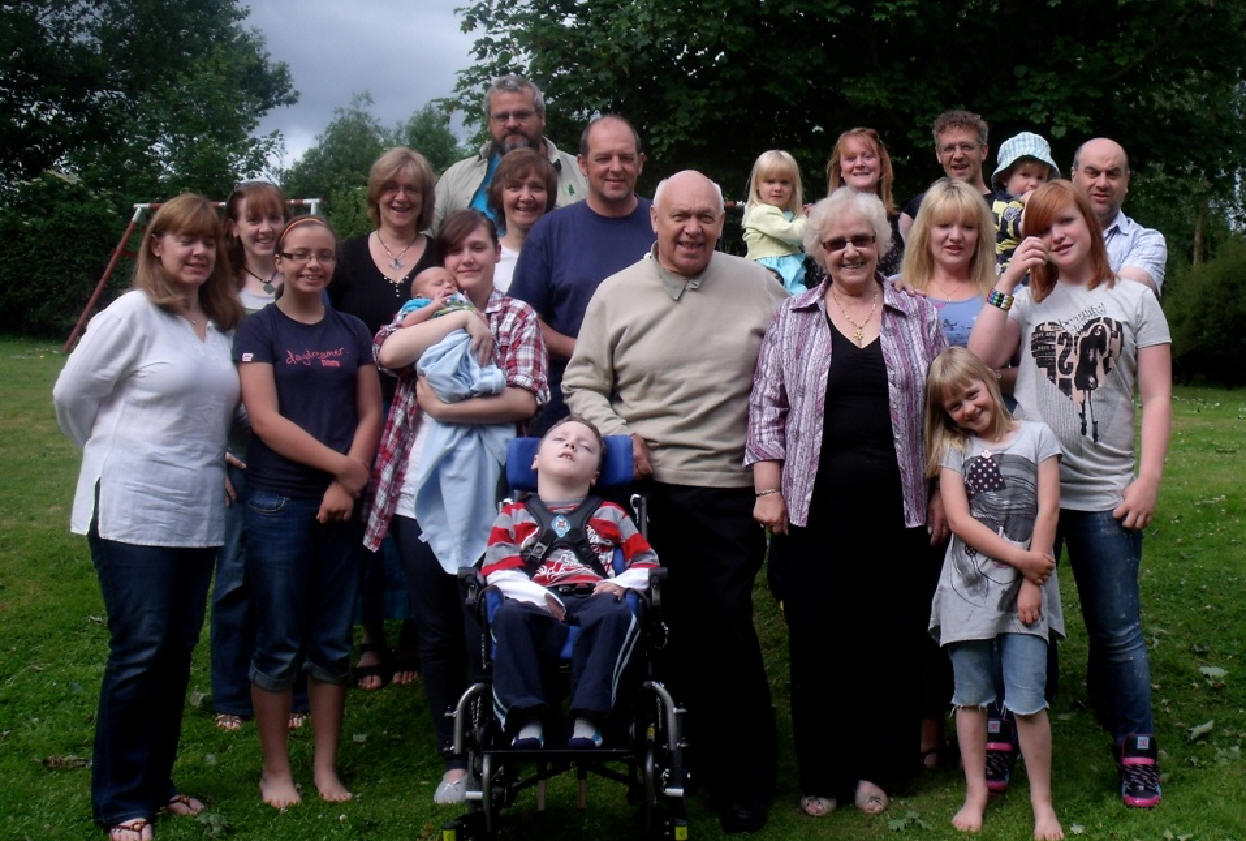
The family together on a summer break
near Inverness |
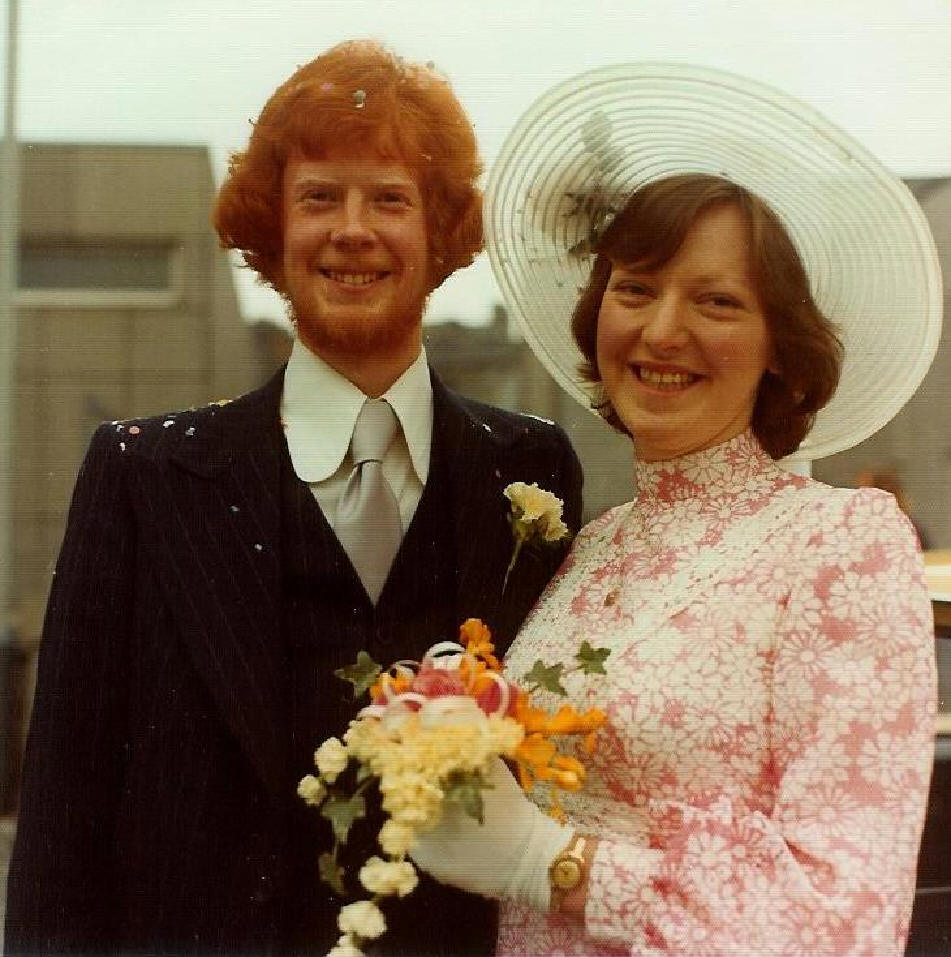
As I write this at
the age of 70, I recall my two brothers, James and Billy who died at
51 and 61 respectively. They died of natural causes, but the most
tragic and painful loss in the family was that of my sister Helen
who was killed in a car crash at the age of 29. She left two young
children, Kerry and Lewis. Her husband Andrew, an oil rig worker,
died in 2009 at the age of 56. They are pictured below on their
wedding day.

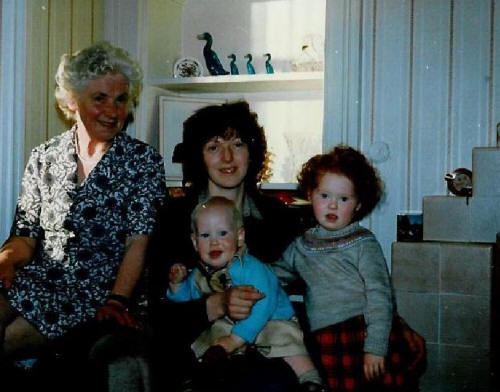
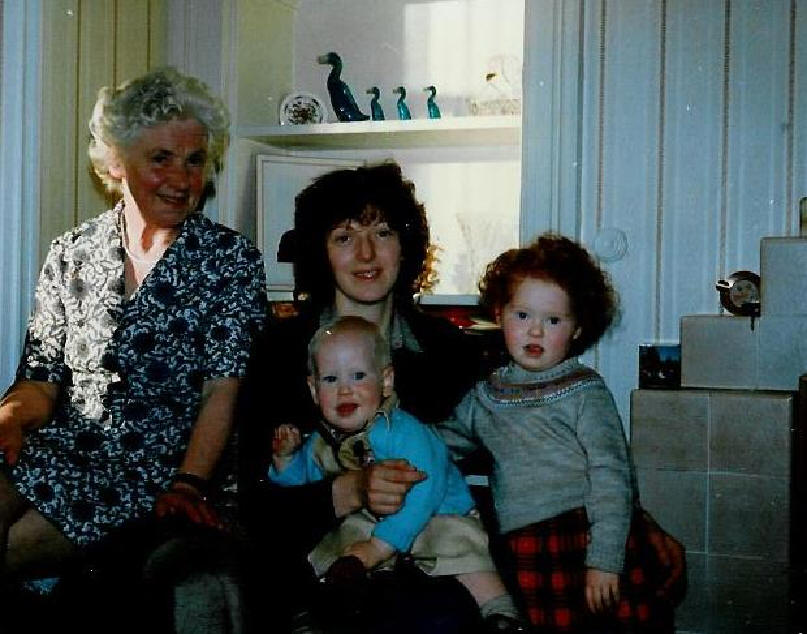
Pictured above with her mother
and two children is Helen as we remember her just over a year before
she tragically lost her life.
. . . . . . . .
. . . . . . . . . . . . . . . . .

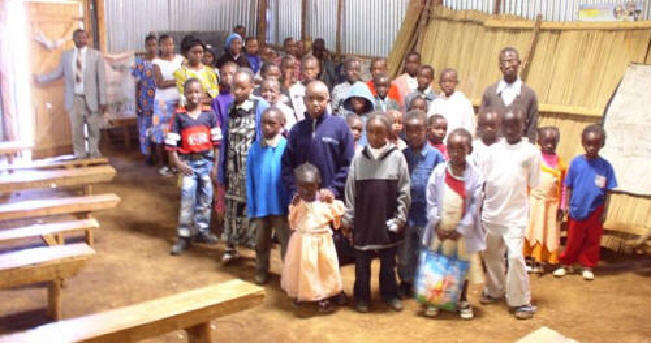
Orphans at a charity school in
Cambodia
I firmly believe each human life has great significance,
and great value in God’s eyes. I do not share the pessimism or
cynicism of Shakespeare’s Macbeth, (on being informed of his wife’s
death), expressed so poignantly in some of the playwright’s most
memorable lines :
To-morrow, and to-morrow, and
to-morrow,
Creeps in this petty pace from day to
day,
To the last syllable of recorded time;
And all our yesterdays have lighted
fools
The way to dusty death.
Out, out, brief candle!
Life's but a walking shadow, a poor
player,
That struts and frets his hour upon
the stage,
And then is heard no more. It is a
tale
Told by an idiot, full of sound and
fury,
Signifying nothing
Life is so much
more than a walking shadow, or a tale told by an idiot. But to find
meaning and significance here we need eyes of faith, hearts of
compassion, and humble teachable spirits.
The overwhelming
need must be to tackle human misery and poverty in all its forms.
As I write this, and as you read it, millions of people are somehow
surviving in the horrid shanty towns and slums of Lagos, Nairobi,
Calcutta, Mumbai, Rio De Janiero, Lima, Jakarta, Manila, and
numerous other mega-cities. The shocking aspect to those dens of
misery, injustice and human degradation, - is that they exist side
by side with affluence, luxury, and lavish indulgence. Those
responsible for governance and the public purse in such places,
mostly compound the problems and prevent alleviation, by their
corrupt practices. Darfur is a blot on the conscience of the world,
as are the millions of undernourished people, the millions of
displaced persons, and the victims of preventable disease.
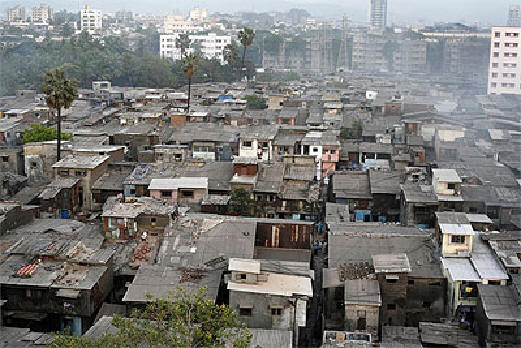
Human beings live their lives in this
Mumbia slum

Habitat homes for victims of the
Katrina storm in New Orleans.
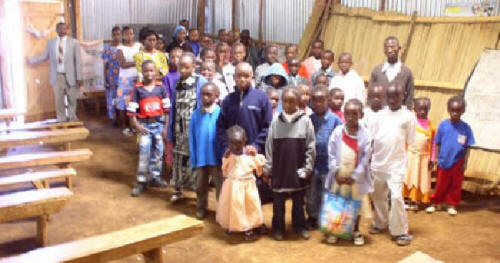
Orphan children
suffering from the double affliction of Aids
Having worked all
my life on aid programmes of different sorts; with all their
limitations and imperfections, it has been galling to witness the
obscene amounts spent on wars and weapons and military forces,
compared to the modest sums that are allocated for aid. Money alone
would not end the causes of poverty which as Jesus said, will always
be with us. But money could help substantially if applied with
wisdom and in close cooperation with the ultimate beneficiaries.
Total global spending on military forces and armaments is now close
to one thousand billion dollars a year. That is about a hundred
times the total spent on all forms of non-military aid to poor
countries. Put another way, to alleviate hunger and poverty we
spend just one per cent of the amount we spend on weapons and
armies.
Is this just the
opinion of a few naïve do-gooders? Listen to what President
Eisenhower said in 1953, three months after his inauguration. The
former supreme commander of the allied forces in Europe stated :
“Every gun that is made, every warship launched, every rocket fired,
signifies in the final sense, a theft from those who hunger and are
not fed, those who are cold and not clothed. … The cost of one
modern heavy bomber is this : a modern brick school in more than 30
cities. It is two electric power plants, each serving a town of
60,000 population. It is two fine, fully equipped hospitals. … We
pay for a single fighter plane with a half million bushels of
wheat. We pay for a single destroyer with new homes that could have
housed 8,000 people.”
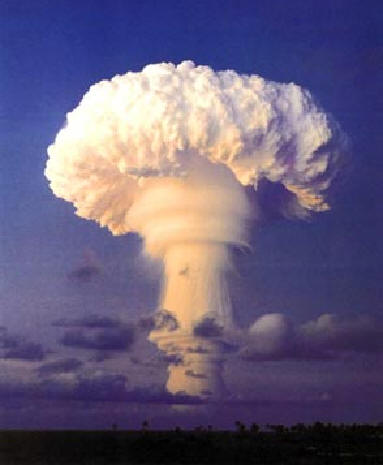
Nuclear weapon explosion in the
atmosphere
Dr Alexander Irvine, [Dr
Irvine was the author of the book referred to in the chapter on
Ireland, My Lady of the Chimney Corner.] the respected Irish educator, Bowery evangelist, and union organiser
in America, was a YMCA Padre and Chief Morale Officer of the Allied
Armies in the first world war. He wrote of his wartime experience
on the Somme : “I used to look over towards Amiens every morning
to see if the cathedral was still standing. One day I went over to
the city. It was deserted, save for a few straggling citizens and
some military policemen. Just beyond cavalry horses were clattering
over the cobble stones as they passed on their way to the front.
Emotions of awe, desolation, and reverence passed through my mind in
quick succession. Incongruous world ! sons of God, blowing each
other to shreds. Two thousand years of teaching thrown to the
winds, a denial of God and rejection of love”.
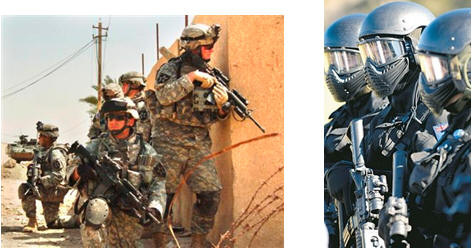
Modern soldiers equipped for action
Is it possible to
alter in a fundamental and radical way, the political morality and
economic priorities of our powerful western governments? Are such
changes possible, or more possible under governments of particular
politics or philosophies? They are certainly much less likely under
totalitarian regimes. But whether a government is socialist or
conservative, - I doubt makes much difference. The root problem is
the evil that infects human hearts regardless of politics. I firmly
believe with Solzhenitsyn and Tolstoy, that good or evil are not
confined within particular nations or ethnic group, governments or
organizations, - each is contaminated to some degree, and each has
the potential for change. Can it happen? We see possibilities when
we look at the past and present condition of states like South
Africa, Cambodia, Chile and Germany, to name but a few. They may be
far from perfect, but they have sought cleansing and renounced past
evil.
Haiti is a modern
example of a failed state which has just about every problem that
one can imagine, - poverty, corruption, injustice, unemployment, and
human misery to an appalling degree. It is the kind of country one
despairs of. What is there that could possibly be done to change
things? Yet even there there are numerous Christian groups,
charities, NGOs and UN projects attempting against impossible odds
to turn the tide of degradation and misery, to heal, to feed, to
educate, and to provide jobs. Dr Tony Campolo and his Beyond
Borders organization has set up schools for ‘slave’ children
who otherwise would never get an education. (My home town helped to
establish one). Even in that pitiful land, there is some hope.
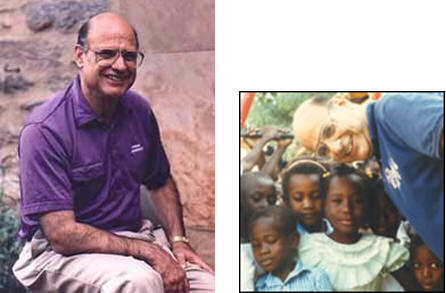
Dr Tony Campolo whose organization
Beyond Borders is giving education to the most disadvantaged
children in Haiti. Dr Campolo with some of his ‘slave’ school
children.
We all need
redemption. And we all need an ultimate moral and spiritual
standard that transcends human fallibility. That redemption, and
that standard, I believe we have been given in Jesus Christ.
Archbishop Desmond Tutu describes those eternal values, and the
reality of redemption in a fallen world thus in his inimitable way:
[I have re-arranged the material slightly as it is taken from a
campus speech delivered largely without notes.]
“this is God’s
world, and God is (ultimately) in charge. In the darkest moments of
our struggle we sought to uphold the morale of our people. We
sought to keep the light of hope burning by telling … the
perpetrators of injustice, however powerful they may be, ‘(you) have
already lost’. The upholders of apartheid never in their wildest
dreams imagined they would ever lose power. None of these dictators
ever think this. They think that God is a kind of accident that
happens to somebody else, never to themselves, and they strutted the
world stage like cocks of the walk supported by a conniving cannibal
west. Those who upheld apartheid never thought that this is a moral
universe, and because it is a moral universe, right and wrong
matter. … injustice can never have the last word. … (Yet) when we
looked at the state of the world we sometimes wondered whether God
had any plan at all.
And then apartheid
collapsed, and freedom arose as a phoenix from the ashes. An elderly
man emerged with dignity from 27 years of prison and hard labour
with no bitterness, resentment or anger towards his jailors. In
fact he invited one to be a VIP guest at his Presidential
inauguration. And in our time haven’t we seen the Berlin wall
collapse? And haven’t we seen a small little woman dispense
compassion and caring and love for derelicts in Calcutta?
(But) even the
worst dictator will never say, ‘I violate human rights’. None of
them ever say that. Not those in Burma or anywhere else. Why? (No
one) stands up and declares ‘I am a child molester’, or, ‘I am an
abuser of women’. Why? Why are you appalled when awful things
happen? Why are you appalled when you see children starving, or
refugees running from oppression? It is because (in our hearts we
know) that evil is not the norm. Injustice is not the norm.
Poverty is not the norm. War is not the norm. These are
aberrations. God chose us in Christ to be God’s children, before
the foundation of the world. God gives up on no one. (He has) made
this world for goodness, love, laughter, joy, compassion, peace,
caring, gentleness. We must help realize the dream.”
Redemption, by its
definition, has to be effective in changing the worst and most
unlikely of individuals as well as the worst of societies or
regimes. A remarkable example of personal redemption and
transformation of a hate figure, is seen in the life of George
Wallace, the former pro-segregation, anti-civil rights Governor of
Alabama. Elected in 1962 on a slogan of “Segregation now!
Segregation tomorrow! Segregation forever!”, Wallace went on to
block the enrollment of African American students at the University
of Alabama. He had vowed to “refuse to abide by any federal
court order even to the point of standing in the schoolhouse door”.
Martin Luther King said in 1963 that Wallace was “perhaps the
most dangerous racist in America today”. Wallace closed
Birmingham schools that year rather than allow them to be
integrated. He told the New York Times : “What this country
needs is a few first class funerals, and some political funerals
too”.
In 1972 while
campaigning for the Democratic nomination for President, Wallace was
shot by a deranged white man, Arthur Bremer. The attack left
Wallace crippled for the rest of his life, but he continued to serve
as Governor from a wheelchair till 1978. During a long term in
hospital this former white supremacist and hatemonger became a
devout Christian and renounced his earlier racist attitudes. He
apologized to the victims of his previous actions and policies. In
1982 he told a black audience, “We thought it was in the best
interest of all concerned. We were mistaken”.
He ran again for
the governorship of Alabama, this time on a platform of racial and
religious tolerance. The black electorate was convinced the change
was genuine, and many of them voted for him, electing him to an
unprecedented fourth term. Ill-health forced Wallace into
retirement in 1987 but he continued to support integration and
attended a re-enactment of the Selma-Montgomery march in 1995. In
his final years, he was nursed and attended day and night by a negro
man who he called the best friend he had on earth. Black civil
rights leaders including the Rev Jesse Jackson, mourned for their
former enemy George Wallace at his death in September 1998.
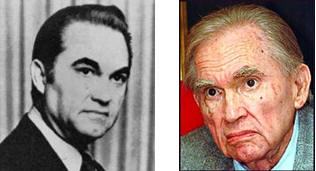
Governor George Wallace as a young
fierce opponent of civil rights and George Wallace before he died,
totally changed in attitude to other races.
Solzhenitsyn
records his own personal awakening to spiritual truth during the
Gulag experience : “It was granted to me to carry away from my
prison years on my bent back, which nearly broke beneath its load,
this essential experience : how a human being becomes evil and how
good. In the intoxication of youthful successes I had felt myself
to be infallible, and I was therefore cruel. In the surfeit of
power I was a murderer and an oppressor. In my most evil moments I
was convinced that I was doing good, and I was well supplied with
systematic arguments. It was only when I lay there on rotting
prison straw that I sensed within myself the first stirrings of
good. I came to realize that the line separating good and evil does
not run between states, or classes or political parties, - but right
through every human heart, and through all human hearts. Even
within hearts overwhelmed by evil, one small bridgehead of good is
retained; and even in the best of hearts, there remains a small
corner of evil.”
In 2002 Professor
and Pastor, Eugene Peterson completed and published a remarkable
paraphrase of the Bible in contemporary language [The
Message, the Bible in Contemporary Language,
Eugene Petersen, Nav Press, 1993]. The Message is a most readable and challenging work
incorporating vivid modern idiom and accurate scholarship. In his
Introduction to the Message, Peterson comments on the
contrast between the cruelty and confusion of our world, and the
message of redemption in the Bible:
“ … the biblical
world is decidedly not an ideal world, the kind we see advertised in
travel posters. Suffering and injustice and ugliness are not purged
from the world in which God works and loves and saves. Nothing is
glossed over. God works patiently and deeply, but often in hidden
ways, in the mess of our humanity and history. Ours is not a dream
world in which everything works out according to our adolescent
expectations. There is mystery everywhere. There is pain and
poverty and abuse. For most of us it takes years and years to
exchange our dream world for the real world of grace and mercy,
sacrifice and love, freedom and joy, - the God-saved world.”

Bulgarian youths at a centre for victims of child trafficking
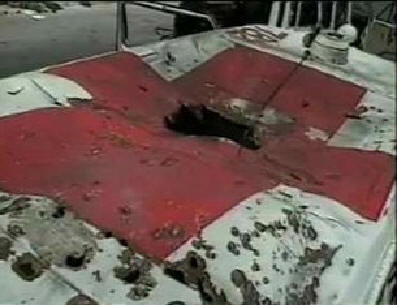
Ambulance in Lebanon targeted by
shrapnel and gunfire
Consider another
prominent American, and one whose actions I have sometimes
criticised, along with the behaviour of members of his family, -
George W H Bush, the current President’s father. In an interview
with Larry King, at the age of 82, he expressed his deep misgivings
and personal revulsion at war and military action, in the face of
the horrendous casualties caused. He declined to comment on his own
record since he could do little to alter the past, but as he looked
forward to death, he summed up his own hopes and expectations in the
phrase – ”Our God is a forgiving God”.
As we seek to make
sense of the moral and spiritual dilemmas facing us in the 21st
century, and to find a way forward that will give a degree of
security and permanence to human life on this planet, the words of
Oliver Wendell Holmes [That is, Oliver Wendell Holmes, senior, (1819
– 1891), as opposed to his equally renowned son of the same name who
became a Chief Justice of the United States Supreme Court. OWH
junior lived from 1841 to 1935.] remain very pertinent. More than
any other poet, perhaps, he described with prophetic insight, the
way all of us and our societies applaud the courage of past
reformers and leaders, but remain blind to the moral issues of our
day and fail to stand up for them in the crises of our time. This
reflects Jesus’ condemnation of the religious leaders of his time
who built memorial tombs of the prophets but who persecuted the
genuine prophets of their own time. Holmes claimed that we praise,
“a legendary virtue carved upon our fathers’ graves”. But
we go on to “make their truth our falsehood” because “we
see dimly in the present what is small and what is great”.
Wendell Holmes wrote in the context of the struggle to abolish
slavery in America, but claimed that our refusal to address all
injustice eventually returns to haunt us, and may exact a terrible
price from future generations. “They enslave their children’s
children who make compromise with sin”. (Actually, I hesitated
to include quotations from the poem because it has occasionally been
used to justify the very attitudes it condemns).
Today, in the name
of all our hard-fought-for freedoms and liberties, our governments
are dismantling those freedoms and imposing despotic controls that
permit jail without charge or trial, torture (or the use of
information gained by torture), and deportation; and they sometimes
implement a ‘shoot-to-kill’ policy on our streets. While claiming
to stand for transparency and freedom of information, our
governments have become more secretive than ever. In the name of
national security, administrations seek to protect politicians from
exposure of their lies. The deaths of countless innocents at the
receiving end of our own weapons of death and destruction, are
treated as an irrelevance, - mere collateral damage.

Limbless victims of land mines
For a final piece
of inspiration, I would like to quote from the Nobel Peace Prize
address of Martin Luther King in 1964:
|
On
accepting the Nobel Peace Prize, 1964
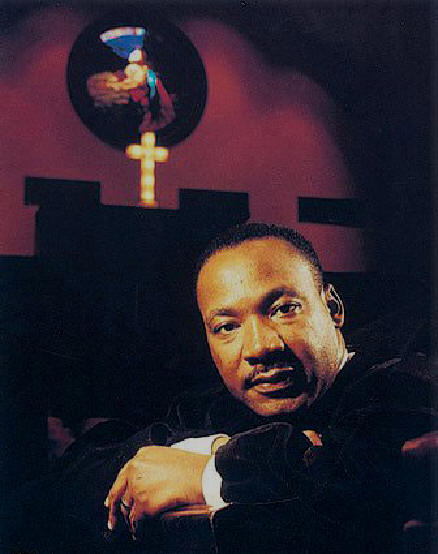
Martin
Luther King
I accept
this award today with an abiding faith in America and an
audacious faith in the future of mankind. I refuse to accept
despair as the final response to the ambiguities of
history. I refuse to accept the idea that the "is-ness" of
man's present nature makes him morally incapable of reaching
up for the eternal "ought-ness" that forever confronts him.
I refuse
to accept the idea that man is mere flotsam and jetsam in
the river of life, unable to influence the unfolding events
which surround him.
I refuse
to accept the view that mankind is so tragically bound to
the starless midnight of racism and war that the bright
daybreak of peace and brotherhood can never become a
reality. I refuse to accept the cynical notion that nation
after nation must spiral down a militaristic stairway into
the hell of nuclear annihilation. I believe that unarmed
truth and unconditional love will have the final word in
reality. This is why right, temporarily defeated, is
stronger than evil triumphant.
I
believe that even amid today's mortar bursts and whining
bullets, there is still hope for a brighter tomorrow. I
believe that wounded justice, lying prostrate on the
blood-flowing streets of our nations, can be lifted from
this dust of shame to reign supreme among the children of
men. I have the audacity to believe that peoples everywhere
can have three meals a day for their bodies, education and
culture for their minds, and dignity, equality, and freedom
for their spirits. I believe that what self-centered men
have torn down, men other-centered can build up. I still
believe that one day mankind will bow before the altars of
God and be crowned triumphant over war and bloodshed and
nonviolent redemptive goodwill proclaimed the rule of the
land. And the lion and the lamb shall lie down together, and
every man shall sit under his own vine and fig tree, and
none shall be afraid.
I still believe that we shall overcome.
Martin Luther King |
Well, these are
some of my reflections on life and on a beautiful but troubled
world. They are a few of the images captured during my lifetime.
Images captured in time, become reflections from eternity, if we
have a spiritual sensitivity to the messages from beyond outer
space. And in the end, our lives are but a prelude to eternity.
Malcolm Muggeridge used to reminisce that his life as a writer and
newspaperman could be summed up by the image of a blank sheet of
paper in a typewriter. For me, since the day I first packed a
canvas bag and headed down to the harbour to join my father’s
fishing boat, life has been a series of packed and unpacked
suitcases. On fishing boats and research vessels, in tents and
shacks, in umpteen hotels, guest houses, apartments and pensiones,
in cities and towns and rural areas in over 70 countries, I have
gone through the ritual of packing and unpacking time and time
again. Each time it happens, I remind myself that one day I shall
pack up and leave for the last time on this earth, and I shall make
a one-way trip to another world, - to a far more beautiful and more
permanent land.
The prospect for me
grows more and more appealing as that day approaches. I have no
wish to “rage, rage, against the dying of the light”. I want
to leave this world with gratitude in my heart for the privilege of
sharing in its wonder and its joys as well as its tragedies and
heartaches. After all, as Max Ehrmann expressed it so beautifully
in Desiderata, “with all its sham, drudgery and broken dreams, it
is still a beautiful world”. I share the sentiments of Robert
Louis Stevenson, “gladly I live, and gladly die, - so lay me down
with a will”.
So I want to depart
with a spring in my step and a light in my eye in anticipation of
the eternal realm. Someone once asked a learned man if he knew what
lay beyond the door of death. He replied that he did not. Shortly
after there was a scratching at the door of the office. He opened
it to find that his dog had gotten out of the garden and somehow
followed the scent to his place of work that day. The animal
bounded in and jumped up to its master in a show of enthusiastic
canine affection. The man then turned to the one who had asked the
question about death. “My dog did not know what lay behind that
door just now. But he knew who was behind the door, and for him,
that was all that mattered.” It is more than enough for me
also, to know the One who waits for me, just beyond the door out of
time into eternity.
 |