|
MILFORD, CT / ACCESS Newswire / July 2, 2026 / A new chapter has emerged in
the historical research surrounding America's earliest federal diplomatic
artifacts, led not by historians alone, but by one of the world's
longest-practicing pioneers of holography.
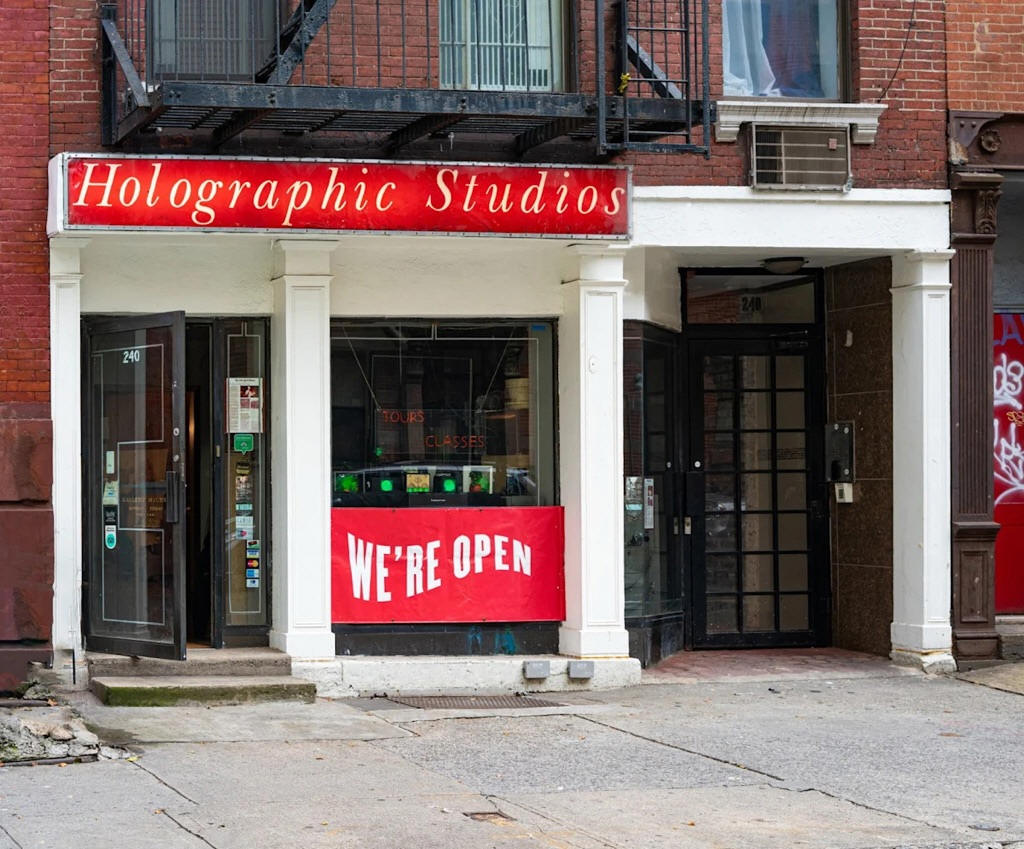
Jason Arthur Sapan, is the founder of Holographic Studios in NYC, the oldest
operating hologram art studio. Sapan is a pioneer of Holographic art. His
studio is world renowned for more than half a century. He has released a
public statement describing his independent examinations of George
Washington Indian Peace Medals presented by Connecticut historical
researcher Gary Gianotti,confirming that the founding US government art
engravers at the birth of the US Federal government, mechanically by hand
accomplished a previously unknown form of Diffraction art on Gianotti's 1789
and 1792 silver George Washington medals. Sapan's statement follows the
recent national publication of Gianotti's call for a reassessment of some of
America's earliest surviving federal diplomatic artifacts.
Sapan writes that when he was first contacted about the possibility of
holographic or diffraction-related optical effects on eighteenth-century
medals, he did not believe it possible. Gianotti spent years on a study with
micro and esoteric signatures and maker's marks that were a norm that
mainstream coin and medals experts rejected. In his past published papers on
the study. 2023 Gianotti hired a professional photographer to better capture
visibly signed signatures of the artist on the medals he found. During the
experiments with different light methods and lenses odd images were captured
that he believed were holographic art discovered that predate the birth of
holography in the 1940's. When Gianotti contacted Sapan, his immediate
reaction was disbelief.
"My first thought was that this is impossible," Sapan wrote, explaining that
holography depends upon modern optical principles developed 160 plus years
after these medals were created.
His first examination focused on Gianotti's officially attributed 1792
George Washington Indian Peace Medal.
According to Sapan, nothing appeared unusual until the medal was illuminated
with a point-source halogen light.
"I suddenly saw a flash of color where a moment earlier there was nothing
but metal. I almost dropped it."
Sapan immediately called his students into the room to independently observe
the phenomenon.
"As soon as they looked they had the same experience. We were seeing
something that theoretically could not exist. Yet, there it was. All of us
were stunned."
Determined to understand what he had observed, Sapan researched David
Rittenhouse, the first Director of the United States Mint. He discovered
Rittenhouse's documented work involving diffraction-the optical phenomenon
that separates light into its constituent colors and forms part of the
scientific foundation of modern holography.
"Holograms work by bending light waves, just as diffraction does," Sapan
explained. "I felt that I was seeing a lost technology that had waited for
centuries to be rediscovered. And here it was in my hands."
Following that examination, Gianotti states that Sapan later examined his
1789 George Washington Indian Peace Medal in his collection months later.
where Sapan likewise reported observing diffraction-related optical
characteristics. Gianotti believes Sapan's observations legitimately confirm
one of the most significant optical discoveries in American art. This gives
the case for continued scientific examination of additional authenticated
early American medals and related federal-period artifacts that Gianotti
owns and has access to let scientists and Sapan confirm that the mechanical
work is there. He leaves art interpretations to individuals who can see
thesehidden early art images being revealed before them.
Sapan's scientific confirmation and conclusions carry weight because of his
long career in holography art. Hecreated art pieces under the commission of
Andy Warhol and many famous figures, including Royal families from around
the world. His statement notes that he began working in holography during
Bell Laboratories' first public exhibition of holography and lasers in 1968,
became a professional holographer in 1975, and today operates what he
describes as the world's oldest continuously operating holography laboratory
and gallery. His work has included commissions for IBM, Sony, Mitsubishi,
AT&T, the American Museum of Natural History, the Philadelphia Stock Market,
and portraits of numerous internationally known public figures.
For more than thirty years, Gianotti has investigated rare early American
artifacts, seeking to bring together documentary research with modern
scientific analysis. He says Sapan's authentication confirmation of the
medals as legitimately having unique optical mechanics as the earliest form
of a type of diffractive art to modern holography is a major rewriting of
optical science and US art history being presented. This represents an
important contribution to that ongoing effort. He hopes it will encourage
historians, museum conservators, physicists, metallurgists, and optical
scientists to examine additional surviving artifacts from the nation's
earliest years.
Sapan concludes his media statement with these words:
"The discovery of this lost technology is in my opinion a groundbreaking
occurrence. It represents the first chapter in a mystery that will open new
doors to our understanding of the past."
As the United States approaches its 250th anniversary, Gianotti believes the
collaboration between historical research and modern optical science offers
a new opportunity to study America's earliest federal artistic and
diplomatic achievements through interdisciplinary investigation on two of
the most significant surviving Federal Government very first sovereign
diplomat art.
Media Contact: Gary Gianotti
Email: gary.gianotti1@icloud.com |