|
Lily Maxwell is often missed
from the history books, despite being one of the most important figures in
the women’s suffrage movement.
When women all across Scotland go to vote in next year’s Holyrood election,
they have the women of the 19th and 20th centuries to thank for being able
to participate in democracy.
Several of the most prominent suffragists and suffragettes have sealed their
legacy in history books. One of the most famous, Emmeline Pankhurst, even
has her own statue outside the Palace of Westminster in London.
But the name of an unassuming working-class woman from Scotland is often
overlooked, despite changing history forever by being the first female to
ever vote in the UK - all thanks to the error of men.
As is still too often the case in the 21st century, those involved in
19th-century politics were born into that life, well-connected with a name
and a big bank account to back them up.
Lily Maxwell had none of these things. Yet she defied society by officially
casting her vote in the Manchester by-election of November 1867 thanks to a
loophole in the law, something that should have secured her place in
history.
Edward James, one of the MPs
for Manchester, died from typhoid fever after holidaying in Switzerland,
triggering a by-election.
This by-election was to be won convincingly by Liberal MP Jacob Bright, who,
along with his wife Ursula Mellor Bright, was an early supporter of the
National Society of Women’s Suffrage, also known as the suffragists.
His campaign team had been leafing through the electoral register when they
spotted something out of place - a woman’s name.
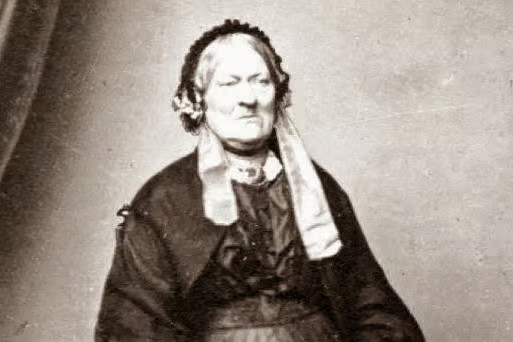
Maxwell had spent decades working as a servant in Manchester. In fact, the
one surviving photograph of her had written on the back: “Lily - an old
servant of the family.”
She eventually managed to save up enough money to open her own crockery shop
in Chorlton-Upon-Medlock.
The 66-year-old was widowed, and after her husband’s death the property was
transferred to her. As a shop owner, she was liable to pay rates to the
local council. All male ratepayers were allowed to vote.
At this time, women were not allowed to vote. Five months earlier, MPs in
the House of Commons had rejected a proposal to extend voting rights to
women by 196 votes to 75. Those who supported the move had tried to do this
by replacing the word “man” in the Reform Act 1867 with the word “person”.
Yet the men who had compiled the list of eligible voters had not noticed
that voter 12326 was not in fact male.
Lydia Becker, secretary of the Manchester suffragists, quickly learned of
this mistake and immediately travelled to Maxwell’s house to inform her of
this loophole and encourage her to vote.
Maxwell needed no encouragement. In fact, she already knew who she was
giving her precious vote to - the pro-women’s suffrage Jacob Bright.
Lydia Becker and a host of her fellow campaigners marched Maxwell to
Chorlton Town Hall on polling day to watch the historical moment unfold in
person.
It was said the room erupted in cheers for Britain’s first ever female
voter.
Bright won the seat with a 1,700 majority and made special mention of
Maxwell in his victory speech. He said: “[She is] a hard-working, honest
person, who pays her rates as you do.
“If any woman should possess a vote, it is precisely such a one as she.”
Two months later, the Englishwoman’s Review said: “It is sometimes said that
women, especially those of the working class, have no political opinion at
all. Yet this woman, who by chance was furnished with a vote, professed
strong opinions and was delighted to have a chance of expressing them.”
Not everyone was quite so happy at the occasion. The Yorkshire Post, for
example, said the polling staff at Chorlton Town Hall should have ignored
Maxwell’s right to vote “as he would have ignored that of a child ten years
old”.
Word of this loophole soon spread, and thousands of other female property
owners tried to register to vote as well.
Their suffrage claim was presented to the courts by Richard Pankhurst, the
future husband of the suffragette Emmeline Pankhurst.
However, the judges rejected this bid and in November 1868 closed this
loophole and declared women’s suffrage illegal. A small handful of women
were still able to vote in the 1868 general election as they had not been
removed from the electoral register in time, but for the vast majority it
was a bitter blow to their cause.
Bright took up his seat on the green benches as a MP and spent his time in
Westminster pushing for women’s right to vote. He took over the
parliamentary leadership of women’s suffrage, and in 1869 secured the right
for some women to vote in local council elections.
The same good fortunes cannot be said for Maxwell. In the 1870s, her shop
began to fail and she fell into poverty. Destitute, she died penniless in
1876 in the Withington Workhouse.
Maxwell has largely been forgotten in the history of the women’s suffrage
movement in Britain. Yet she did something extraordinary more than half a
century before women were given the right to vote in the 20th century.
Fast forward to 2025 and the Scottish Parliament has the most female MSPs
since devolution. There has been a female first minister, three female prime
ministers and we now have our first female chancellor.
Great steps in gender equality within politics have happened in recent
decades - but it all comes back to the tale of Maxwell and the very first
female vote. |



