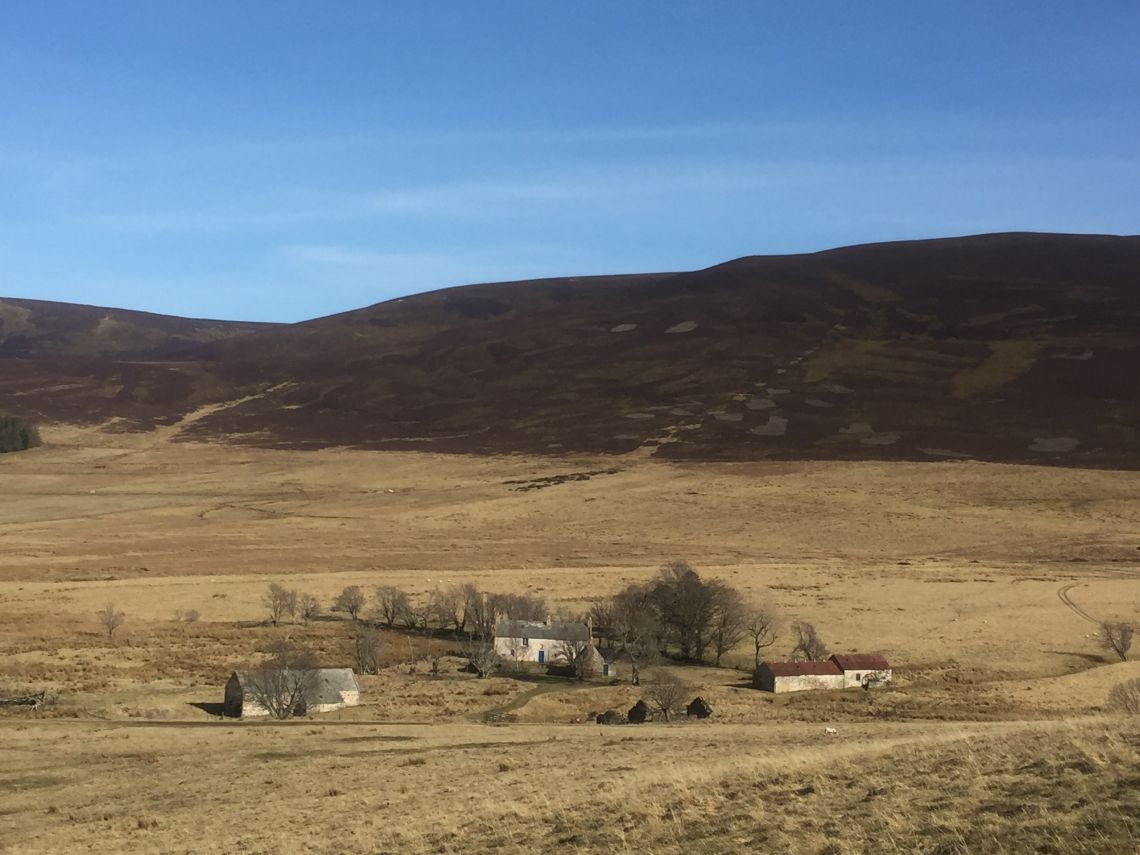
Today’s vlog takes us deep into the Braes of Glenlivet, where we visit
Scalan Seminary, a remote and atmospheric relic of Scotland’s hidden past.
Tucked away at the foot of the Ladder Hills, this 18th‑century seminary was
once the clandestine training ground for the so-called “heather priests” —
Catholic clerics educated in secret during a time when their faith was
illegal. From 1717 to 1799, more than a hundred priests were trained here,
often under threat from Hanoverian soldiers, and reborn time and again even
after being burned down by government troops.
Named after sgalan (Gaelic for turf roof), the seminary was discreetly
rebuilt in 1767 and remained virtually hidden until the surrounding farmland
reclaimed it. The site includes restored steading buildings and historic
corn mill wheels, offering both a serenity and a surprise — farmers’
graffiti mingles with ecclesiastical graffiti, telling of two very different
but intertwined ways of life
crownestatescotland.com
We wandered the well-worn farm track, stepped inside the old chapel and
classrooms, and felt the weight of generations who clung to a forbidden
faith amid spectacular Highland remoteness. In 2019, thanks to restoration
efforts, the north mill’s waterwheel and lade were revived and interpretive
panels now bring the story to life
Scanlan
Family Tree
Compiled by Peter Lawrence Scanlan, M. D. and Other Members of the Family
(1950) (pdf)
Video of Mass at Scalan
The Secret Seminary honouring the 250th Anniversary of Bishop George Hay
Mass at Scalan the Secret Seminary honouring the 250th Anniversary of Bishop
George Hay. On Trinity Sunday 1769, Fr George Hay a Scottish Priest was
consecrated a Bishop in secret. An illegal act. During those years following
the Scottish Reformation the Catholic Faith was outlawed. It was to remote
wild places such as Scalan College in the highlands where this ancient faith
was rekindled by training for priesthood to administer to the Church
underground. The Protestant Reformation tried but ultimately failed to wipe
Catholicism from Scotland. Bishop George Hay is fundamental to the revival
story of Scottish Catholicism. It was fitting that 3 Bishops and one
Archbishop along with many priests, deacon and pilgrims honoured this
historic occasion.
Scalan Heritage Trail
Follow the track from the car park, before passing through a gate and
heading across a grassy track over open land reaching the old College of
Scalan after about 1km. The secluded building of Scalan (from the
Gaelic sgalan, meaning turf roof) was once a seminary (a college for
training priests) and was one of the few places in Scotland where the
Catholic faith was kept alive during the troubled times of the 18th
century. The Scalan is open all year for visitors to savour how “with
courage and dogged perseverance” the Catholic faith survived and a
detour to explore the building is thoroughly recommended.
Leaving the Scalan’s fenced enclosure take the grassy track to the left
which heads southwards towards the hills. The path deviates slightly
from the track at the ford, crossing instead over a boardwalk. Rejoin
the track and follow it along the Crombie water to the remote ruins of
the Clash of Scalan (from the Gaelic clais, meaning furrow, narrow,
shallow valley). Turn westwards (to your right) amongst the ruins and
follow the path across a ford over the Crombie water. You then head
uphill following an old stone dyke which peters out just below a fence.
Oystercatcher, curlew and lapwing are commonly seen in this area,
nesting in the springtime and later in the summer gathering in large
flocks before flying back to the coast for the winter. Cross the fence
at the stile and pause to admire the views. To the north beyond the
distillery is the rounded shape of the Bochel, an isolated hill at the
head of the Braes of Glenlivet, while eastwards the Ladder hills stretch
into the distance towards the expansive bowl of the Suie.
From the stile a diversion can be made to the summit of Tom Trumper by
heading uphill along a line of grouse butts. A cairn lies just below the
actual top and it is worth continuing a little further on to enjoy the
views westwards to the Cairngorms. This section of path may not be
accessible when shooting is in progress during the grouse season
(Aug-Dec).
Continue from the stile downhill alongside the fence, before rejoining
the original track near the first gate. Turn left and return along the
track to the car park. At the car park it is worth enjoying the short
walk around the Carrachs Ponds. These ponds were created in 2010 to mark
International Year of Biodiversity, and have provided a new wetland
habitat that benefits a wide range of creatures.
This comment system
requires you to be logged in through either a Disqus account
or an account you already have with Google, X, Facebook or
Yahoo. In the event you don't have an account with any of
these companies then you can create an account with Disqus.
All comments are moderated so they won't display until the
moderator has approved your comment.