|
In a Transatlantic first.
Operating from the "City of Discovery" Dundee, Professor Iris Grunwald
performed the first remote thrombectomy to remove blood clots from the
brain to restore blood flow on a human cadaver. Meanwhile in Florida Dr
Ricardo Hanel used the robotic device to operate on a body from across
the Atlantic some 6,500 kilometres apart.
Dr Grunwald says: "What amazed me most was how tactile the experience
was. My hands felt exactly as they usually would if I had been doing a
conventional thrombectomy."

The demonstrations were achieved using a robotic system from Sentante, a
Lithuanian firm who say their success indicates the tool could help
improve outcomes for stroke patients by making such a procedure more
accessible in remote areas that lack specialists.
Sentante reports just 212 patients underwent the procedure in Scotland
last year representing 2.2 per cent of people who had an ischaemic
stroke which occurs when a blood clot blocks a vessel in the brain.
Tech giants Nvidia and Ericsson were involved in the project ensuring
connectivity of the robot.

Life-Saving Surgery
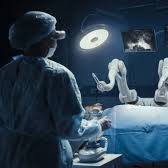
Sentante's system connects standard laboratory equipment to a device
that captures the hand movements of far-away surgeons who "operate" with
the aid of X-ray images on highly-detailed screens.
The movements are replicated in real-time by a robot at the patient's
bedside.
The Florida demonstration indicates that many more stroke patients could
benefit from what represents potentially life-saving surgery.
For an ischaemic stroke the difference between walking out of hospital
and a lifetime of disability can be just two to three hours.
Today, patients are often transported long distances to reach one of a
limited number of thrombectomy centres.
By contrast - In Florida Dr Hanel comments: "To operate from the US to
Scotland with a 120 millisecond - blink of an eye - lag is truly
remarkable."
The BBC described the novel procedure as a potential "game changer" if
it becomes approved for use on patients.
Medics believe the technology could transform stroke care as a delay in
accessing specialist treatment can have a direct impact on chances of
recovery.
No Longer Science Fiction
An ischaemic stroke is a medical emergency. Globally such strokes kill
an estimated 3.3 million people annually, according to the World Stroke
organisation.
The treatment has been described as "witnessing the first glimpse of the
future." Dr Grunwald adds: "Where previously this was thought to be
science fiction, we demonstrated that every step of the procedure can
already be done."
The University of Dundee is the global training centre of the World
Federation for Interventional Stroke Treatment, and is the only place in
the UK where doctors can operate on cadavers with liquid which mimics
human blood circulated in the vessels.
Juliet Bouverie, chief executive of the Stroke Association Charity, told
BBC News the transatlantic procedure was a "remarkable innovation,"
adding: "For too long people living in remote and rural areas have been
deprived of access to thrombectomy."
While there have been remote thrombectomies carried out on a silicon
model, 3D printed replica and an animal - this is considered to be the
first procedure on a human body.
Now robotics like this could rebalance the inequity which exists in
stroke treatment.
Clinical trials start next year...
 |



