|

It is heartening to experience
the Scottish language displaying a versatility second-to-none driven by
a Diaspora estimated to be as many as 80 million strong globally.
This is proving integral to its survival for the foreseeable future.
Unlike, unfortunately, many other languages, dialects and creoles
forecast to fall by the wayside between now and the middle of this
century.
Such is the Scottish language's stand-out strength in this Digital Era
terms of syntax, grammar and phonetics.
Not only on an informal basis with words, expressions, phrases, idioms
and short forms being increasingly utilised through innumerable social
media sites and mobile channels.
Also, and more formally, re-applied by the technology industry globally.
Often to explain out highly complex online IT solutions, software apps
and various tools and practices.
Increasingly involved is tech's new digital cousin artificial
intelligence in terms of computational linguistics and use of language
generally. Herein lies a cautionary tale.
The cyber jury remains out amid reports of AI agents going rogue. This
does not fill one with confidence when it comes to safeguarding human
rights and personal safety ie our universal basic freedoms and
protections.
Techreview.com warns that researchers argue it is impossible to fully
secure Large Language Models against cyber attacks.
This is because "vulnerability is baked into how they work," the
influential site adds, with no user-training yet available to find a
fix.
Here's hoping AI-centred LLMs significantly improve on the actual use of
language and this leads to making it safer online all round. Language
and cybersecurity are inextricably linked.
Big Tech, rather than shrouding developments in opaque linguistic terms
as if to mystify the browser, could do a lot worse than adopting the
KISS principle - keep it simple stupid!
The question is can this happen? As the IT leviathans continue to
aggressively compete for the trillions of AI dollars anticipated from
the online phenomenon.
The good news is Digital Natives continue to enthusiastically utilise
the Scottish language involving anything from socials to computer coding
and everything in between.
The late Harvard professor and author Mark Plensky, who coined the
expression, was wise to include Scotland in his seminal global research.
It is evident digitally-savvy Millennials, Gen Z and Alpha, and very
soon Beta, are attracted to strong onomatopoeic - echoic - features
embedded in the Scottish language.
As BBC Bitesize puts it they continue to warm to nouns and verbs
phonetically resembling or suggesting a sound "like what it means".
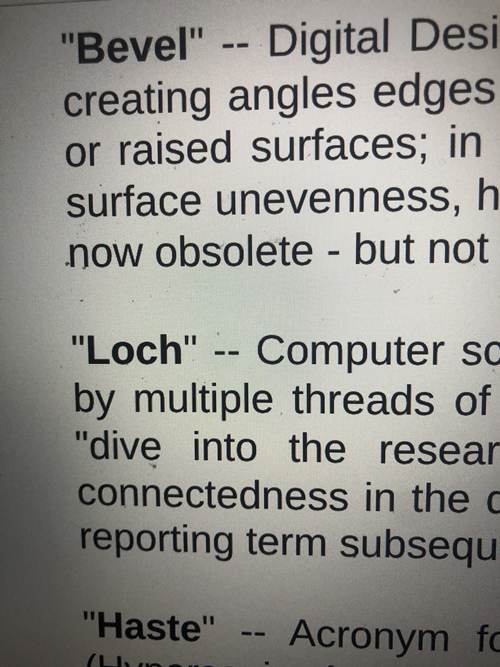
The initial 100-strong Glossary, compiled by me, of innumerable cadences
and inflections evident throughout the Scottish language represents a
starting point.
I say initial, as it is apparent there are many, many more making this
task far from complete. After all, just how long is a piece of Digital
string…
 |



